By Cinnatus Dumbuya
FREETOWN
Isaac Sesay, a slim, tall man in his mid-30s, is a nursing student at the University of Sierra Leone's medical school.
He had been about to graduate when the deadly Ebola virus broke out in the West African country.
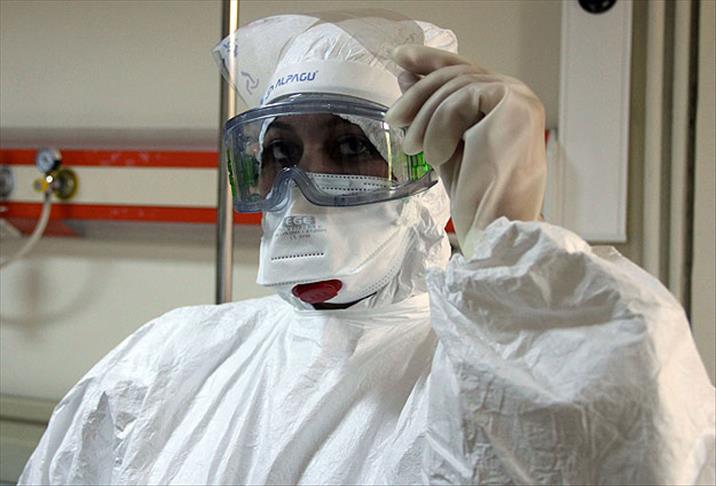
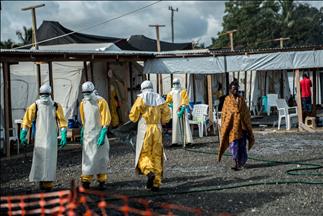
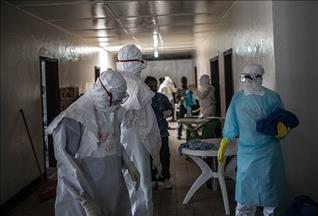
Suddenly, Sesay found himself working at an Ebola treatment center – something that he, like his colleagues, was not prepared for.
He volunteered to work at the Kenema Ebola Holding and Treatment Center at a time when morale among health workers was particularly low.
"The nurses were scared because they had lost colleagues to Ebola," Sesay told The Anadolu Agency. "They were scared to provide care for patients who appeared intensely weak."
Sesay stressed that patients admitted to hospital early had a better chance of surviving Ebola than those admitted after the virus has already reached an advanced stage.
Most nurses, he noted, were too scared to attend to advanced cases.
"So I had to take the risk; I had to provide care for these helpless patients," said Sesay.
He said Ebola patients needed holistic care in order to survive the ordeal.
"For Ebola patients to survive, they need total care. That means that, in addition to administering treatment, someone must be there to monitor their feeding and bathing," Sesay explained.
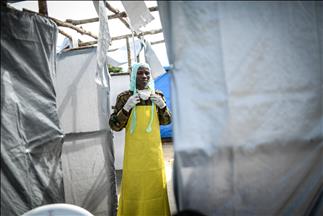
Although only a volunteer at the hospital, he was nevertheless on the frontlines of Ebola treatment.
"I was primarily responsible for passing intravenous lines into the veins of patients brought to the hospital," Sesay said. "We treat patients based on the symptoms they're showing."
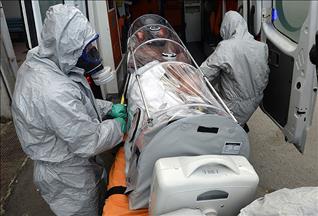
In recent months, Ebola – a contagious disease for which there is no known treatment or cure – has killed 5,459 people, mostly in West Africa, according to the World Health Organization.
At least 1,267 of these deaths were registered in Sierra Leone alone.
-Personal ordeal-
Sesay has already lost a number of relatives to the deadly virus.
"My father was the first to die and my mother fell ill soon after we buried my dad," he told AA. "It was unclear whether or not my father died of Ebola, because he was never diagnosed as such."
"But I suspect my mother contracted the virus while caring for him," he added.
In only a matter of weeks, Sesay lost his father, mother, brother and uncle, along with a number of aunts and other relatives.
He convinced the rest of his family to immediately seek medical help.
"They were reluctant to go to the hospital for fear of being taken to a hospital, where they thought they would be injected to die," Sesay recalled.
"I convinced them [to go to hospital] and offered to go with them," he said, adding that all his family members – except for him – had tested positive for Ebola.
"Eleven members of my family were infected; five died out of the hospital," he added.
"I admitted and cared for five at Kenema Hospital, including my stepmother, who died at the hospital. But the remaining four survived the virus," he said.
Despite the ordeal, Sesay remains determined to continue fighting the deadly virus, taking solace in trying to save more lives.
After Ebola cases appeared to subside in Kenema in the country's eastern region, he relocated to the northern city of Makeni, where infection rates remain high.
"I am happy that survivors all over Sierra Leone know that I have contributed immensely to their survival, through the help of God," Sesay told AA proudly.
He added: "Survivors have been able to go back to their families; children who would have been orphaned have been reunited with their families; families that would have been broken are still united; and breadwinners that would have [died] have survived and been reunited with their families."
www.aa.com.tr/en