12 March 2016•Update: 22 March 2016
By Parach Mach
JUBA, South Sudan
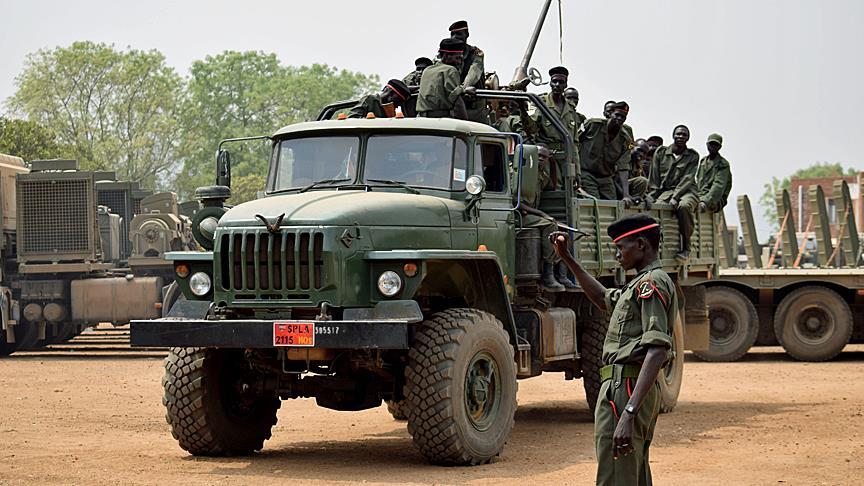
South Sudanese government forces suffocated about 60 victims in Unity state late last year before dumping their bodies in an open field, Amnesty International (AI) said Friday.
The investigation into the incident was “protracted”, according to the organization.
The murders took place in Leer County on or about Oct. 20-23 when a group of government forces seized 60 boys and men. The victims were put in a shipping container in a compound used by the government as its headquarters.
“The arbitrary arrest, torture, and mass killing of these detainees is just one illustration of the South Sudanese government’s absolute disregard for the laws of war. Unlawful confinement, torture, willfully causing great suffering, and willfully killing are all war crimes,” said Lama Fakih, senior crisis advisor at AI.
The rights group said it was unable to find any survivors but found skeletons and concluded "there is no doubt" the incident took place. The group based its findings on interviews it conducted with more than 42 witnesses, including 23 people who said they saw the men and boys being forced into a shipping container and later saw their dead bodies either being removed or at a mass burial site.
According to witnesses, around the dates in question, government soldiers arbitrarily arrested dozens of men and boys in the village of Luale and the town of Leer. They then forced them, with their hands tied behind their backs, into one or more shipping containers located at the Comboni Catholic Church.
The South Sudanese government denied the claims.
South Sudan Information Minister and government spokesperson Michael Makuei Lueth says the allegations by AI were obtained from individuals with a negative political agenda to fuel hatred within the country. He said government forces -- the Sudan People’s Liberation Army (SPLA) -- are obligated to protect civilians and their property within the law enshrined in the South Sudan Transitional Constitution of 2011.
“These are lies aimed at tarnishing the legitimate government,” Makuei said. The fabrications, he says, are by rebels loyal to former Vice President Riek Machar who has been shifting their demands, making a major impediment to reaching a peaceful settlement.
"Continuous accusations by rebels and allies do not go well with the implementation of peace. Well-wishers and friends of South Sudan should put peace as a priority and find ways to support the peace,” he added.
The report said metal containers are often used as makeshift prison cells in South Sudan, where temperatures in the northern battleground state of Unity regularly top 40 degrees Celsius (104F).
Other crimes listed included rape, murder, and the capture and looting of UN river barges. Witnesses described hearing detainees crying, screaming and banging on the walls of the shipping container, which they said had no windows or other forms of ventilation. They said civilian and military officials had direct knowledge the detainees were in distress and dying but did nothing to help them.
One witness said she saw the then-area commander order soldiers to open the container and remove the bodies of four men before closing the container on the remaining detainees who were still alive. “We could see the people inside and they were not alive … what we saw was tragic … the container was full of people. They had fallen over one another and onto the floor. There were so many people,” said the witness.
Later Friday, the Office of the UN High Commissioner for Human Rights in Geneva also published a similar report on South Sudan's attacks to its civilians.
The U.S. said it was "appalled" by the violence against civilians and the destruction of property by the government of South Sudan, following the UN report.
"The U.S. Special Envoy to Sudan and South Sudan will be joining Human Rights Council in Geneva next week to discuss an appropriate response with international partners," the State Department's said.
It urged South Sudan to "thoroughly investigate the atrocities alleged in this report" and to hold accountable those who are responsible for these acts.
The UN report includes several "horrendous" human rights violations, including a government-operated "scorched earth policy," and deliberate targeting of civilians for killing, rape and pillage.
Last August, South Sudan's government and opposition began a process to reach a comprehensive peace agreement, with the signing and initialing of a pact negotiated by the Intergovernmental Authority on Development (IGAD).
South Sudan's civil war began in December 2013 when Kiir accused his former deputy Machar of planning a coup, setting off a cycle of retaliatory killings that has split the poverty-stricken, landlocked country along ethnic lines.