Two faces of revolution: Egypt and Tunisia
Situation in Tunisia draws attention as the igniter of Arab revolution, following military coup in Egypt
TUNIS
All attention has been focused on Tunisia, the state that has lighted the fuse of the Arab revolution, following the military coup Egypt.
Twice has there been the revolt in Tunisia, preparing grounds for military coup since January 14, 2011.
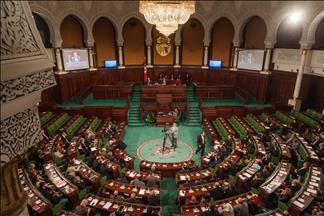
Following the ouster of the 23-year-long ruler of Tunisia Zine El Abidine Ben Ali, the Islami inclined Al-Nahda Party was observed to be favored in polls and hence won the elections by gaining 89 of the 217 seats in parliament.
two attempts of coup, first on April 9, and second on February 6, 2013, took place the three-party coalition and managed its own basis and NGOs as well, successfully turning the incidents to its advantage.
On the other hand, the Tunisian army has no tradition of intervening in unlike the Egyptians. Having said that, the former interior minister and the current Prime Minister of Tunisia Ali Laareydh was able to discharge those involved in corruption within the military and police force.
At this point, it is quite plausible to say that the coalition government in Tunisia was successful in making the armed forces neutral whereas the Morsi government in Egypt found dismissing commander-in-chief of the Egyptian Armed Forces Mohamed Hussein Tantawi Soliman sufficient.
The Muslim Brotherhood (Ikhwan) and the Freedom and Justice Party of Egypt were accused of not following a comprehensive and reconciliatory covering all parties whereas Al-Nahda, although the strongest party to come out of the ballot, decided to share its power with secular and social democrat parties, reiterating "States don't have religion, citizens do."
Economically, there was development in Tunisia and increase in tourism revenues, while the situation was the total opposite in Egypt. Investors steered towards Tunisia and university exams were conducted without incidents following the revolution.
Al-Nahda also attached great importance to public relations and was mainly successful in convincing the US and EU that Al-Nahda was a strong defender of the democracy. The Global Social Forum was also successfully held in Tunisia in 2013, without any incidents.
Rashid al-Ghannushi, of Ennahda Movement and charismatic leader of Al-Nahda, to many western countries and delivered "Islam and Democracy" titled conferences. The most famous think-tank of the US, the Brookings Institute, hosted al-Ghannushi where he delivered a conference on "Tunisian Democracy."
After all, the violent clashes in Egypt will definitely make the Tunisians think twice prior to supporting any anti-government protest that might take place.
Unless an extraordinary external intervention will take place, an interruption in Tunisian democracy is not expected. It could also be inferred that the internal dynamics of Tunisia don't have the basis for a military intervention of mass protest.