Beyza Binnur Donmez
05 June 2026•Update: 05 June 2026
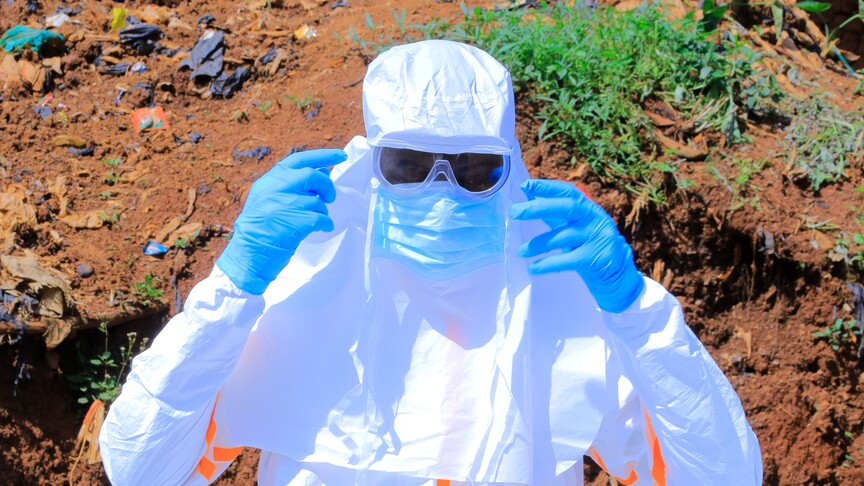
The World Health Organization (WHO) and the Africa Centres for Disease Control and Prevention (Africa CDC) launched a joint Ebola response plan on Friday, requiring $518 million to contain a rapidly expanding outbreak in the Democratic Republic of the Congo and prevent further regional spread.
WHO Director-General Tedros Adhanom Ghebreyesus, speaking after returning from the outbreak's epicenter in Ituri province, said responders were still "playing catch-up" as the virus continues to spread.
"The outbreak is moving fast," Tedros told a hybrid joint press briefing, adding that the response must be driven by government leadership, community ownership, and close coordination among partners.
The joint preparedness and response plan, developed by WHO, Africa CDC, and partners, is based on the principle of "one plan, one budget, one team" and covers emergency coordination, surveillance, laboratory testing, infection prevention, clinical care, community engagement, research, and logistics. Tedros said the time-bound plan for this year cost $518 million.
Africa CDC Director-General Jean Kaseya said the outbreak has reached 397 confirmed cases and 63 deaths, with more than 5,009 contacts under follow-up. He put the case fatality risk at around 15.9%.
Eleven countries are considered at risk. Since the outbreak was declared on May 15, it has expanded from one province and three health zones to three provinces in Congo and 26 affected health zones in Congo, Kaseya explained.
"This is showing that the outbreak is moving, with the epicenter still in Ituri, where we have more than 90% of all cases and 70% of deaths," he stressed.
Kaseya described the current Bundibugyo outbreak as "the most serious" of the three recorded outbreaks caused by that strain and the "fourth-largest" Ebola outbreak by confirmed cases. If infections continue to rise, it could become the third largest, he said.
Officials cited misinformation, insecurity, and high population mobility as major challenges. Tedros warned that "misinformation is almost as dangerous as the virus itself," while Kaseya said some communities questioned why vaccines and treatments remain unavailable after nearly two decades of Ebola outbreaks.
Kaseya said that partners had pledged nearly $498 million but warned that little of the funding had yet reached affected countries, urging commitments to be converted into actual disbursement.