Sahin Demir
08 September 2026•Update: 08 September 2026
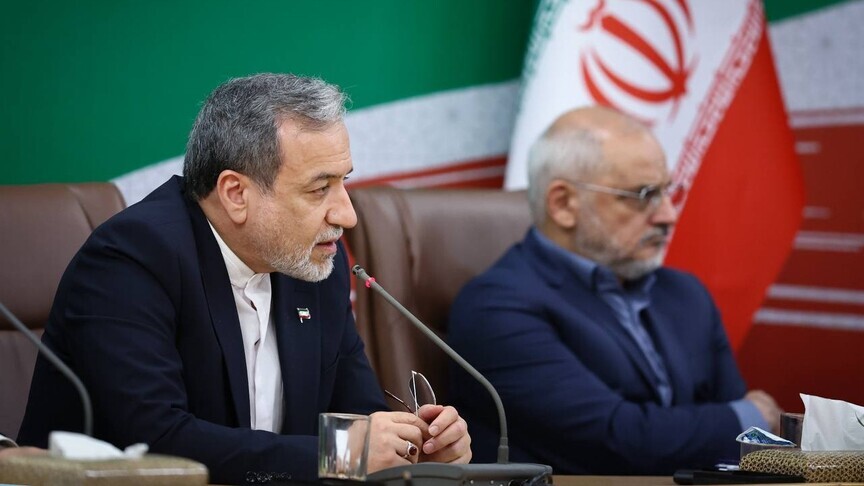
Iranian Foreign Minister Abbas Araghchi said Tuesday that a US return to its commitments under the Islamabad memorandum of understanding would pave the way for easing current regional tensions.
Araghchi made the remarks during a phone conversation with his Japanese counterpart Toshimitsu Motegi, according to a statement by the Iranian Foreign Ministry.
The two ministers discussed bilateral relations as well as the latest regional and international developments.
Araghchi blamed the current tensions in the region on what he called Washington’s violation of its commitments under the Islamabad memorandum.
“The solution is simple. The US side’s return to and compliance with its commitments and signature under the Islamabad memorandum will pave the way for a return to normal conditions,” he said.
The Iranian minister also briefed Motegi on the latest negotiations between Iran and Oman over the Strait of Hormuz.
Araghchi said the two countries had made “significant progress” in talks aimed at establishing a temporary transit route through the strait, adding that consultations would continue on mechanisms for its future management.
Tokyo calls for 'maximum restraint'
Motegi, for his part, expressed "deep concern" over the resumption of attacks between the US and Iran, according to a statement by Japan's Foreign Ministry.
"It is important to achieve an early de-escalation of the situation and resume talks between the US and Iran as soon as possible," he said, requesting Iran to "show maximum flexibility to avoid a prolonged continuation of the current impasse."
Motegi expressed "concern over Iran’s continued attacks on civilian vessels and strongly requested Iran to exercise maximum restraint," said the statement.
Reiterating Japan’s position that it "is of utmost importance to restore free and safe navigation through the Strait of Hormuz without additional costs at the earliest possible date," Motegi said the future of the strait should be discussed, in accordance with international law, by the international community as a whole, including the littoral states, the states using the waterway, and the International Maritime Organization.
He called on Iran to urge the Houthi group in Yemen to "exercise restraint," and underscored the "importance of ensuring stability in the Bab el-Mandeb Strait,” explaining that Japan “would work together with the Government of Yemen to this end."
The Islamabad memorandum was signed in June following mediation by Pakistan and Qatar, providing for an end to hostilities and a framework for negotiations between Tehran and Washington.
Iran has accused the US of failing to implement key provisions of the understanding, including measures related to sanctions and the naval blockade, while Washington and Gulf countries have called for free and unrestricted navigation through the Strait of Hormuz.
Iran and Oman have since been holding talks on a temporary transit route through the strategic waterway, with Tehran saying the arrangement would be temporary while discussions continue on a permanent mechanism.