
WASHINGTON
A mass swarm of cicadas have taken over much of the US East Coast and Midwest, emerging after spending 17 years underground.
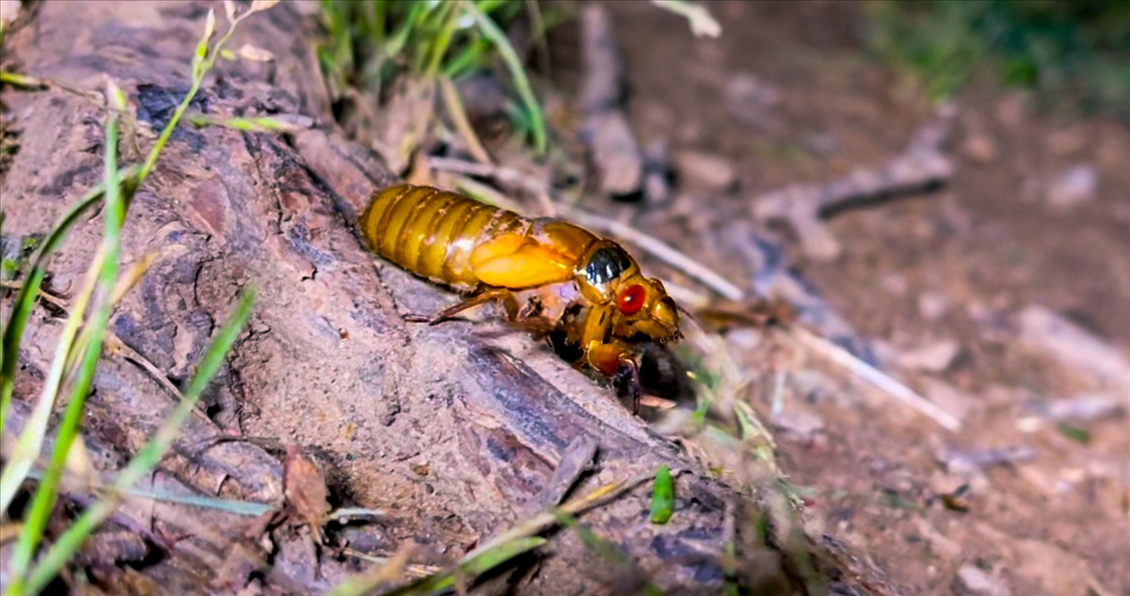
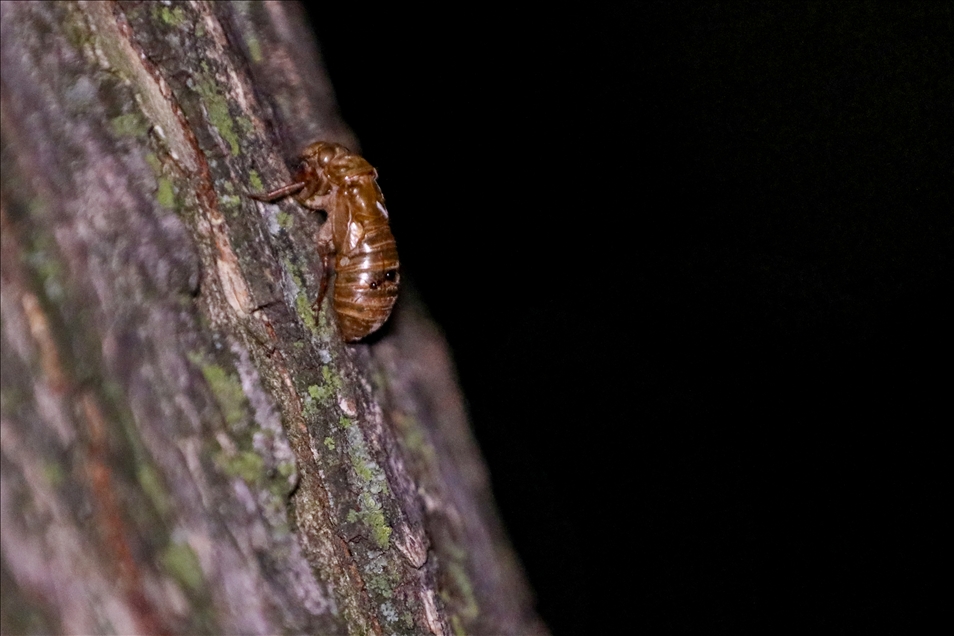
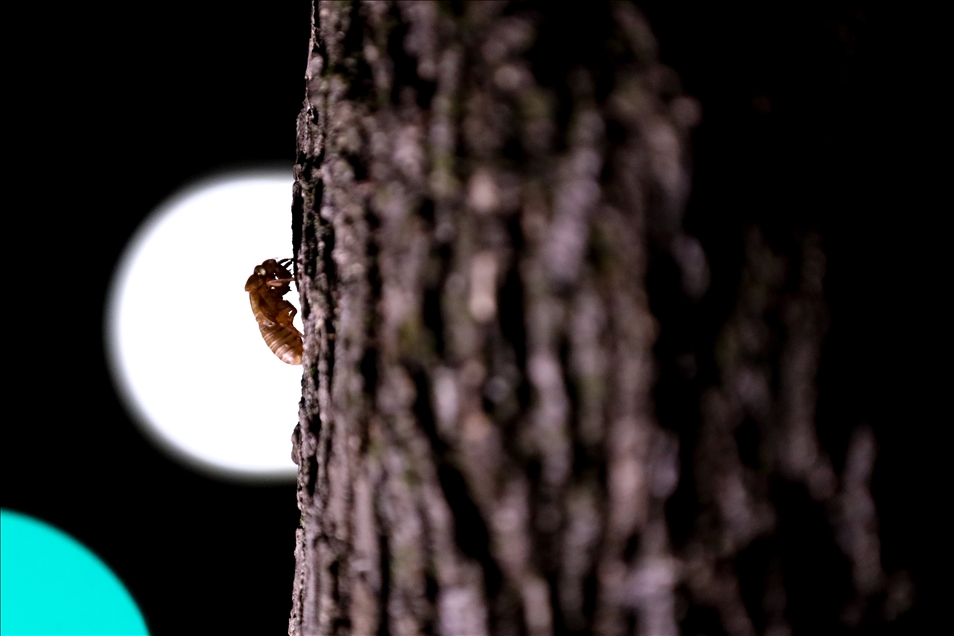
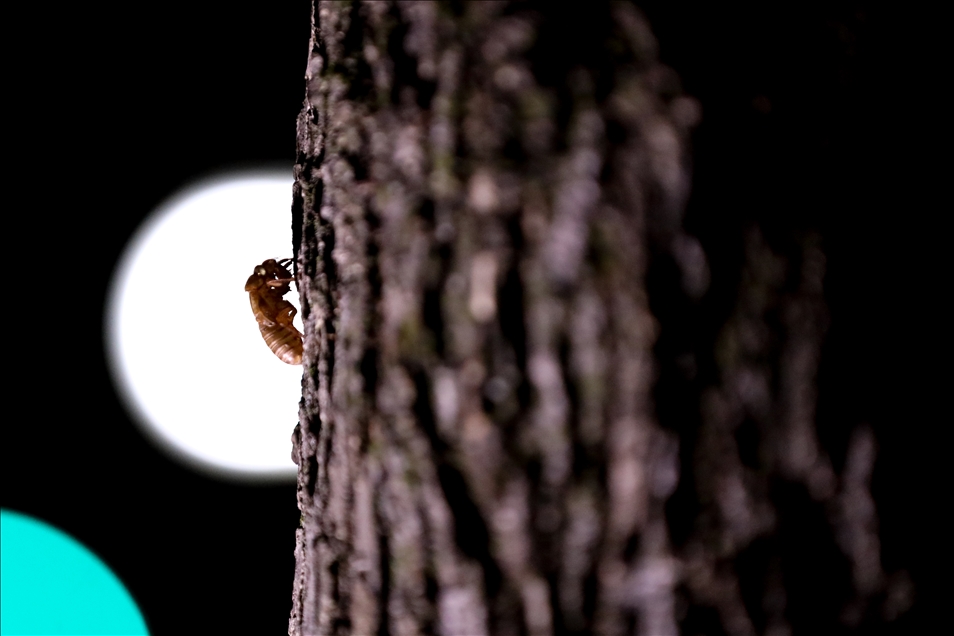
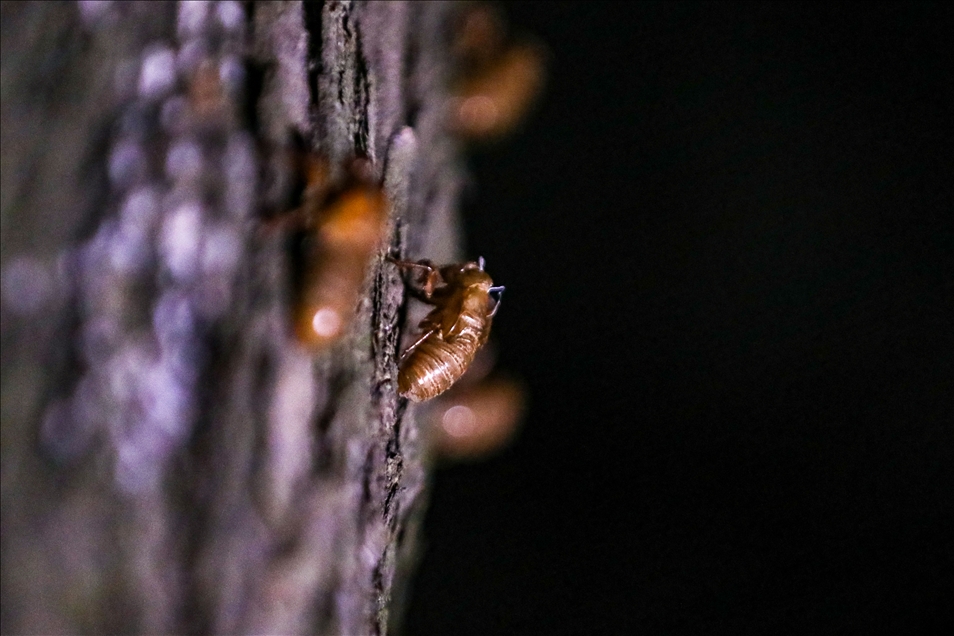
WASHINGTON, USA - MAY 26: A cicada that have been living underground reemerges in Washington, USA on May 26, 2021 invading parks and people's gardens after nearly two-decade-long absence. Cicadas species fall into two broad groups: Annual that can be seen every year, and periodical that emerge in cycles that last 13 or 17 years, depending on the type, mature cicada nymphs emerge for a brief adult stage, synchronously and in huge numbers. ( Yasin Öztürk - Anadolu Agency )
The Brood X tsunami of the little insects have been spotted as far south as Georgia and as far north as New York. They have also emerged in the Midwest where they have been seen in parts of Illinois and Indiana.
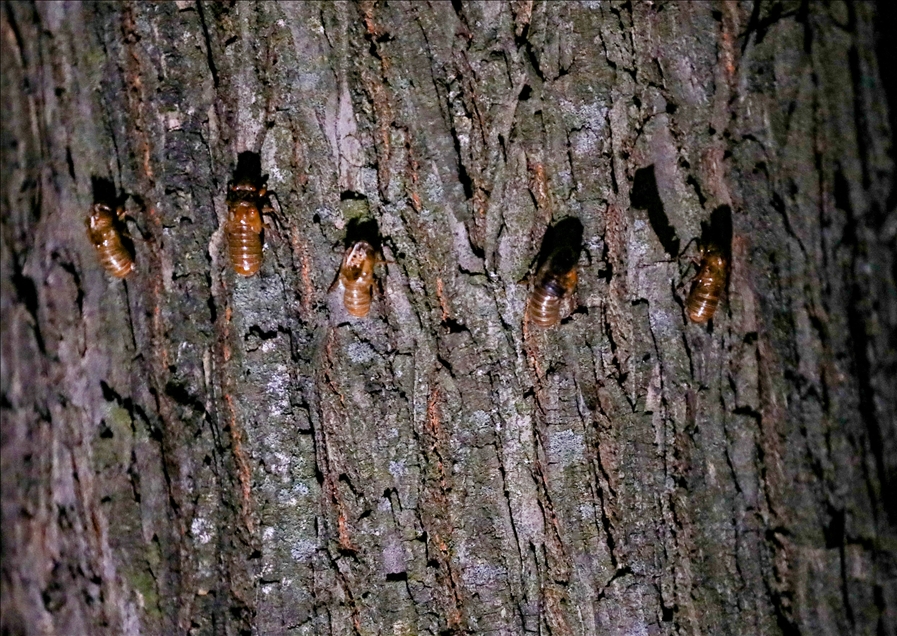
In the US capital region, the bugs have erupted en masse with nary a tree nor shrub free of the black and yellow insets or their shredded shells.
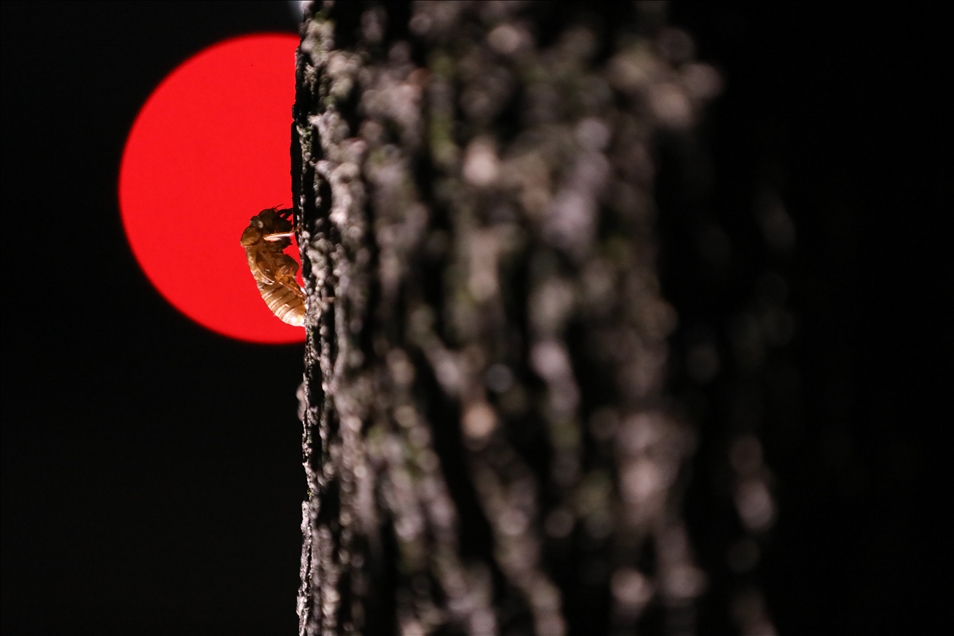
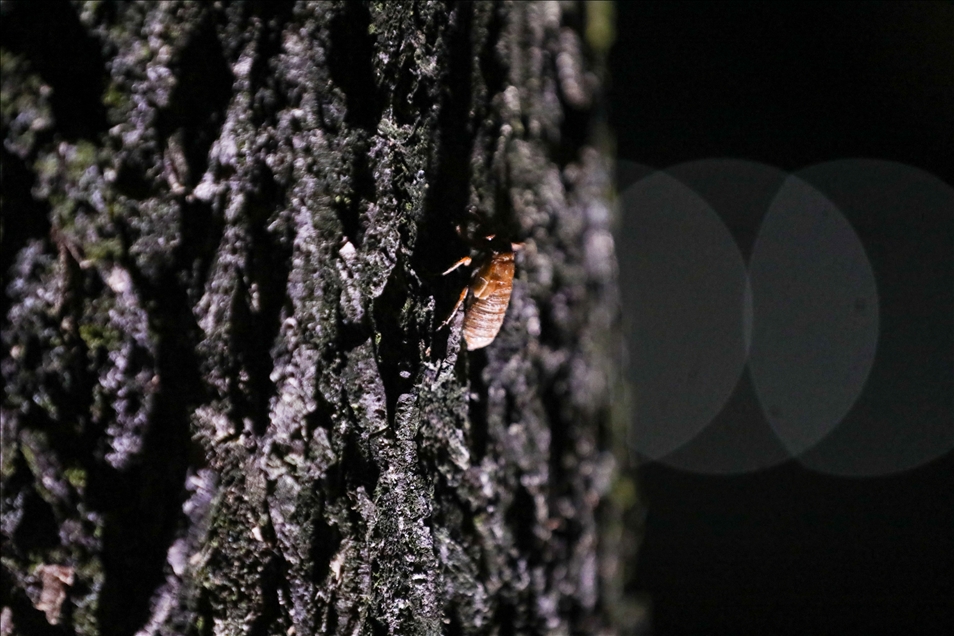
Most of a cicada's life is spent about 1 to 2 feet (30 to 60 cm) below ground where they feast on sap from tree roots. Shortly after they emerge in a form known as nymphs they shed their exoskeletons and grow wings.
It takes a couple of days for their shells to harden, but once they do mating begins and the insects produce a high-pitched and ever-present buzz that can be heard night and day. After mating, females will lay hundreds of eggs in tree branches and shrubs before this brood dies off in late June or early July.
The recently-hatched nymphs will then burrow underground where they will wait 17 years before emerging again.
Some broods run on a 13-year cycle, but Brood X runs on 17-year iterations.
Estimates vary on the number of cicadas in Brood X, but they are widely believed to number in the trillions.