Yasin Güngör
18 June 2026•Update: 18 June 2026
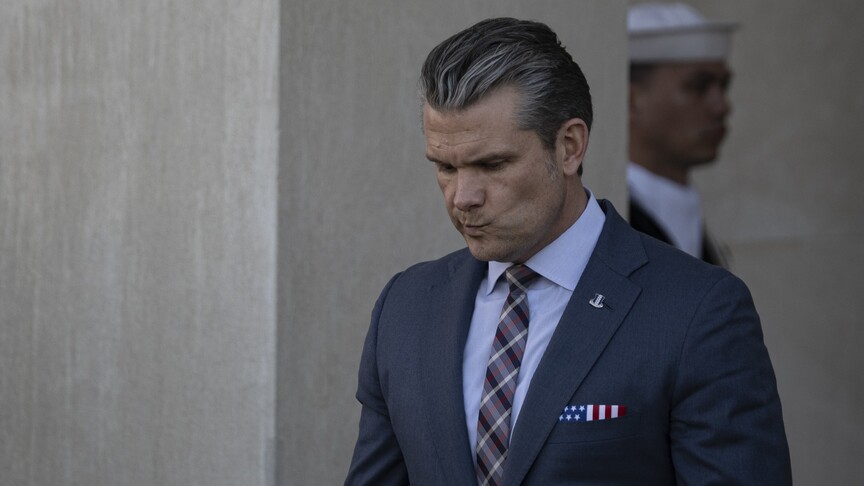
US Defense Secretary Pete Hegseth said Thursday that the US military will remain a decisive force behind diplomatic efforts with Iran, vowing to restart hostilities if Tehran violates a new peace framework.
“We're going to be the big stick behind the negotiations,” Hegseth told reporters in Brussels following a NATO defense ministers’ meeting. He characterized a recent Memorandum of Understanding (MoU) as a “performance-based” agreement that relies on strict verification rather than trust, contrasting it with what he called the "paper tiger" policies of previous administrations.
Hegseth emphasized that the pact was "born of strength" following months of an "impenetrable" naval blockade and aerial strikes. He warned that the Pentagon is prepared to recommence its bombing campaign if Iran fails to dismantle its nuclear program and surrender all enriched material. “If Iran doesn't comply, then we're more than able to reimpose an ironclad blockade,” the defense chief added, although he said Washington does not "prefer" it.
Regional posture, allies
Regarding the Strait of Hormuz, Hegseth noted that European and Asian nations should take the lead in securing the waterway since they rely more heavily on its energy flows. French President Emmanuel Macron said Wednesday that a multinational maritime security initiative involving around 20 countries, developed by France and the UK, was ready to facilitate the resumption of maritime traffic and protect commercial vessels.
Hegseth said that while the US will "step back" to allow commerce as the blockade opens as part of the agreement with Iran, Washington will continue to calibrate its regional troop levels based on necessary capabilities. "We've had basing that region for a long time; a lot of that will stay just as it is, and we'll look at how many troops we need in the area."
The Pentagon chief also delivered a blunt warning to the UK concerning strategic assets like the base in Diego Garcia. He said that while the US-British defense alliance "is an important one," Washington will not tolerate allies "standing at the end of a runway with a clipboard" to restrict American flight operations during military contingencies.