Yasin Gungor
20 September 2026•Update: 20 September 2026
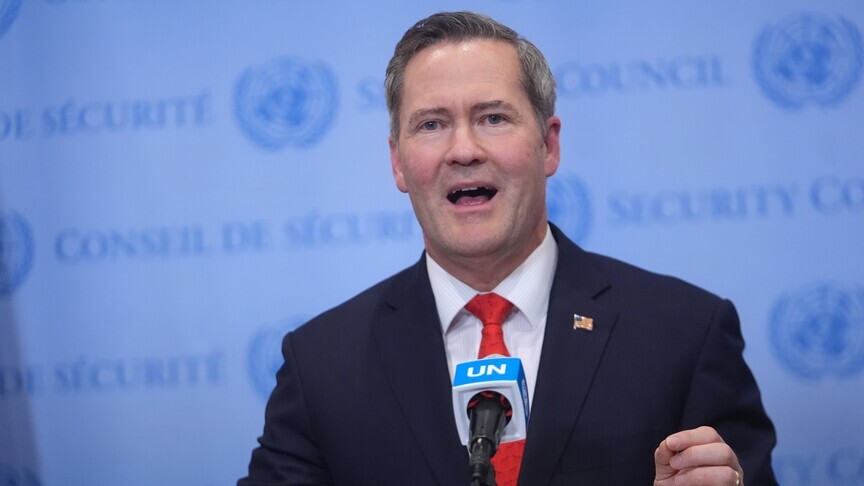
The US faces a more complex challenge from China in competing for artificial intelligence (AI) than it did during the Cold War, when the two countries had fewer economic ties, US Ambassador to the United Nations Mike Waltz said Sunday.
"Unlike in the Cold War or any other adversary we've had in the past—Germany, Japan, etc.—we've never been so intertwined economically with a competitor or potential adversary like we are with the People's Republic of China, so it is a much more complex situation," Waltz told US television network CNN.
Waltz indicated that Washington sees space for narrow bilateral guardrails during an upcoming summit between US President Donald Trump and Chinese President Xi Jinping, pointing to rules regarding algorithmic diffusion, nuclear weapons systems, and keeping humans in command loops.
However, he drew a firm line against domestic regulatory limits. "What we cannot do is put a throttle on our innovators, on our entrepreneurs, on so many great Americans in our system that's so unique that are creating the solutions of the future," Waltz said.
Arctic security and polar trade corridors
Addressing northern defense, Waltz framed a new security agreement between the US and Denmark over Greenland as an urgent requirement for strategic early warning.
"If we're ever attacked by any type of intercontinental missiles, they'll come over the Arctic," Waltz explained, stressing that radar and sensor installations in the region require robust protection and unrestricted access.
The envoy connected northern access to continental missile defense systems, an icebreaker pact reached with Finland, expanded military spending within NATO, and resource extraction across polar energy and critical mineral reserves.
He noted that retreating ice leads shipping to bypass southern chokepoints and traverse Arctic routes, making diplomatic pacts with Denmark and Greenland essential to safeguarding the High North.
Maritime defense and Iran war pressure
Turning to Middle Eastern waterways, Waltz said the US and its allies will take "decisive action" against any actors disrupting civilian maritime traffic across the Bab al-Mandeb, Strait of Hormuz, and Suez Canal.
Responding to reports that military confrontations could stretch toward 2029, Waltz said time favors Washington.
He explained that sanctions will remain indefinite until verified nuclear and behavioral concessions take place, claiming that the pressure directly targets Tehran's power structure because the Islamic Revolutionary Guard Corps (IRGC) controls 40% to 50% of the Iranian economy.
Meanwhile, CNN reported that the Trump administration prefers that Saudi Arabia counter the push rather than using American force directly.
A US official told the network that Washington is expanding targeting data and intelligence sharing with Riyadh, while sources noted Saudi officials expressed confidence in their forces following a decade of training.