ISTANBUL
Friday will mark the 23rd anniversary of the closing of one of the world’s largest nuclear test sites in Semipalatinsk, Kazakhstan – a date chosen by the UN in 1991 to mark the fight against weapons of mass destruction.
Amid the ongoing chorus of conflicts using so-called ‘conventional’ weapons it is easy to overlook the continued existence of nuclear arms – many held by the world’s leading democracies.
Now a Turkish scientist has been elected as director of the Comprehensive Nuclear-Test-Ban Treaty’s international monitoring wing.
Professor Nurcan Ozel, who has lectured at the Department of Geophysics, Kandilli Observatory and the Earthquake Research Institute at Bogazici University in Istanbul, was chosen for the CTBT post on August 21.
The UN commemoration date has sparked fresh debate about the role of nuclear weapons in international politics.
Gulay Mutlu, from the USAK Center for Eurasian Studies, a Turkish think-tank, tells Anadolu Agency: "Chemical and nuclear weapons have a devastating effect which could cause the end of humankind and wipe out all species from face of the earth as we witnessed in the atomic bombings of the cities of Hiroshima and Nagasaki in Japan by the United States in 1945."
Mutlu says that the “limitless will” of human kind for nuclear weapons was the most important motivation for Kazakh leader Nursultan Nazarbayev to close the former Soviet test site.
"The Soviet Union, which conducted 450 nuclear tests in Kazakhstan between 1949 and 1991, caused more than 1.5 million people to get cancer and die. These former tests still affect the life and health of people there," Mutlu adds.
Kazakhstan was a model state for nuclear decommissioning. With its steps to outlaw nuclear testing after the fall of the Soviet Union and advance global nuclear disarmament, the country insists that one of the most important steps toward global nuclear disarmament will be the entry into force of the CTBT.
As an aspiring treaty which bans nuclear testing everywhere whether on land, in the atmosphere, underwater or underground, the CTBT has been signed by 183 countries and ratified by 162 so far – including Turkey in 2000.
However, China, Iran, Egypt, India, Israel, North Korea, Pakistan and the U.S. have yet to sign up.
According to the CTBT data, the history of nuclear testing started in July 1945 at a desert site in New Mexico in the United States when the country set off the first atomic bomb.
Between the dates of 1945 (when the U.S. bombed Hiroshima and Nagasaki) and the first signature of the CTBT in 1996, more than 2,000 nuclear tests were performed around the world.
The leading country in undertaking nuclear tests is the U.S. with 1,032 incidents between 1945 and 1992. The U.S. is followed by the Soviet Union which made around 715 tests between 1949 and 1990. The U.K., France and China have also repeatedly conducted tests.
However, nuclear testing still causes international tensions. Sebnem Udum, assistant professor at the International Relations Department at Turkey's Hacettepe University, says: "North Korea, due to its regime and the threat perception, is one of the most prominent countries conducting nuclear tests."
Pyongyang’s latest nuclear test was conducted in February 2013. The country, which held many tests between 2006 and 2009, claimed in January last year that it would conduct further tests to include rockets and nuclear warheads capable of striking the U.S.
According to Udum, nuclear disarmament by Gaddafi's Libya and chemical weapons decommissioning by Syria are have not been good examples for countries like North Korea and Iran "because they interpreted/perceived that weapons of mass destruction could still be valuable and have utility for their self-defense."
North Korea has launched nuclear tests as they feel themselves "excluded and alienated", Udum says.
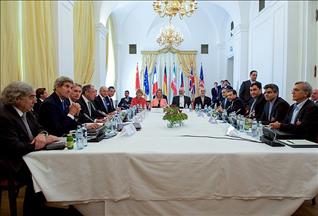
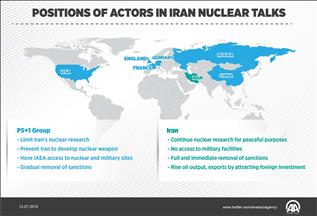
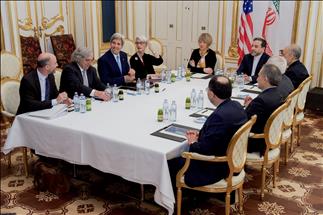
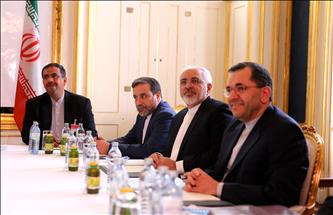
"It is really important that the nuclear talks between the P5+1 – namely the U.S., Russia, China, the United Kingdom and France, plus Germany – and Iran should be continued as open and as comprehensively as possible."
Mutlu says: "The people living in those countries which are carrying out nuclear tests should be convinced that nuclear is not just a way of defense but the best way of destruction."
The nuclear talks between the P5+1 and Iran started last year November in Geneva and parties agreed on a joint plan of action for a six-month period of negotiations. However, parties did not reach an agreement and the deadline for negotiations was extended.
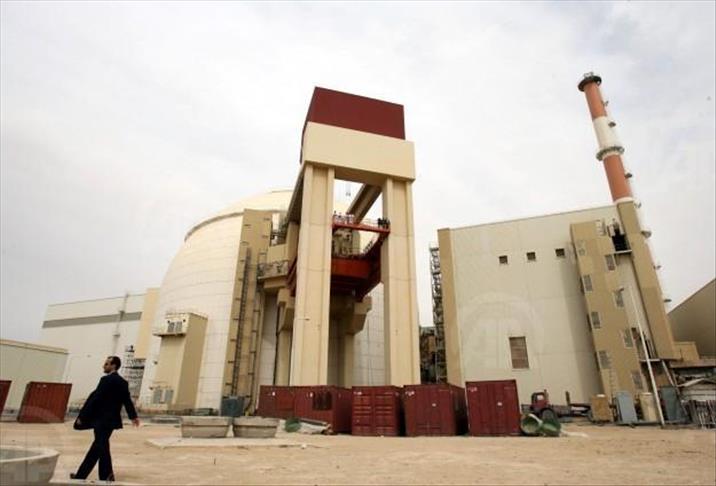
Iran claims its nuclear program is purely for civilian use but others, particularly the U.S. and Israel, fear Iran is enriching uranium for a weapons program.
The talks have been running since last November.
www.aa.com.tr/en