- Taiwan, trade and rollback of US ‘containment’ policies expected to dominate Beijing’s agenda, says China analyst Einar Tangen
- Taiwan analyst Chienyu Shih says Trump may soften rhetoric on Taipei, which Beijing could view as a ‘verbal concession of substantive significance’
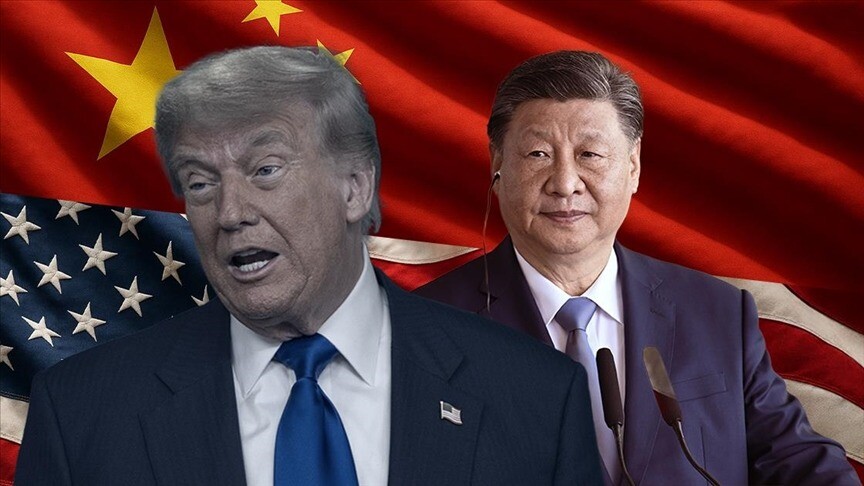
As war in the Middle East and tensions in the Asia-Pacific fuel global instability, Chinese President Xi Jinping is expected to press US President Donald Trump for more stable ties during their summit in Beijing this week.
The summit, the first visit to China by a sitting US president in nine years, comes at a moment of growing friction between the world’s two largest economies, as disputes over tariffs, military competition and US support for Taiwan continue to strain relations.
Despite the ongoing geopolitical turmoil, Xi is expected to focus on “predictability” in ties with the US, Sourabh Gupta of the Institute for China-America Studies told Anadolu.
“China values consistency more than concessions. Trump’s unpredictability is itself a strategic liability from Beijing’s perspective,” Beijing-based analyst Einar Tangen told Anadolu.
Beijing’s agenda with Trump remains “stability on China’s terms,” Tangen added, summarizing China’s priorities as “Taiwan, trade and containment rollback.”
However, he said while Beijing has made significant preparations, it is aware that the summit will be mostly about optics.
“This summit will produce headlines, not history,” he said.
The meeting also comes amid rising military competition in the Asia-Pacific region, where Washington has strengthened ties with allies hosting US military bases, particularly Japan and the Philippines.
Lower tariffs, more investments
Trade and tariffs are expected to dominate much of the summit.
Trump’s second term has seen Washington impose sweeping tariffs on allies and rivals alike, while China has retaliated instead of backing down.
At the same time, Chinese investments in the US have faced growing restrictions under what Washington describes as national security concerns.
Chinese electric vehicles, smartphones, social media and software companies have all faced increasing pressure in the US market.
China’s demands heading into the summit are “consistent and specific,” Tangen said: “Respect red lines, ease pressure and stop moving the goalposts.”
Xi is expected to push Trump for a “rollback of tariffs and export controls” as well as “reduced political and economic containment,” Tangen added.
Gupta agreed, adding Xi would press for a “reduction of tariffs” and ask Trump to “invite Chinese companies to invest in the US and guarantee stability of their investments.”
‘Clearer limits’ on US support for Taiwan
Taiwan is also expected to feature prominently during the talks.
China considers the self-governed island part of its territory and has not ruled out the use of force for reunification, while continued US arms sales to Taipei remain a major source of tension between Beijing and Washington.
Trump has already approved, but delayed, one of the largest US arms packages for Taiwan worth more than $11 billion and has said he intends to discuss the issue directly with Xi – a departure from previous US administrations, which largely maintained strategic ambiguity regarding the extent of Washington’s support for Taipei.
On Friday, Taiwan’s opposition-controlled legislature also approved an additional $25 billion in defense spending for major US weapons purchases.
During the summit, Gupta said Xi will ask Trump for “support” on Taiwan’s reunification with China by “lowering/ceasing sales of arms to the islands’ authorities.”
According to Tangen, Taiwan remains “China’s most sensitive national issue.”
Beijing is expected to seek “clearer limits” on US support for Taiwan, including “stronger US adherence to the one-China framework, reduced arms sales and military signaling,” he said.
For China watchers in Taiwan, analyst Chienyu Shih said there is speculation Trump may adjust his rhetoric on Taiwan even if broader US policy remains unchanged.
“The most serious scenario would be if President Trump were to make an off-the-cuff statement, such as: ‘I oppose Taiwanese independence,’ particularly if he were to link this to trade, the Iran issue, or summit agreements,” said Shih, a research fellow at Taiwan Institute for National Defense and Security Research.
“This would constitute a verbal concession of substantive significance to Beijing.”
Iran war, global stability
Although Taiwan and trade are expected to dominate the summit, analysts say the Iran war and instability in the Strait of Hormuz will also weigh heavily on discussions.
The war has disrupted global energy markets and negatively affected major economies dependent on Middle Eastern oil imports, including China.
“Ending the war will certainly be an important topic of discussion,” Hongda Fan, director of the China-Middle East Center at Shaoxing University in China, told Anadolu.
“If the situation in the Persian Gulf remains highly tense before the meeting, this meeting could very well contribute positively to de-escalating the situation, and might even directly end the war,” he added.
Gupta said Xi would “probably ask Trump to moderate his demands so that soft landing in negotiations with Iran can be achieved.”
According to Shih, any Iranian move to disrupt shipping through the Strait of Hormuz could become tied to wider negotiations between Beijing and Washington involving “tariffs and trade, Taiwan and regional security.”
Shih said China is likely to balance pressure and incentives toward Tehran.
“Beijing may provide diplomatic cover at the United Nations, oppose the imposition of the harshest US sanctions, support Iran’s right to the peaceful use of nuclear energy, encourage post-conflict reconstruction, and maintain oil purchases,” he said.
But, he added, China “is unlikely to fall in step with the United States.”
Tangen described China’s broader approach as Beijing “positioning itself as a global stabilizer.”
“Beijing is signaling interest in diplomacy on Iran and Ukraine, presenting itself as an alternative to US-led ‘own goal’ interventionism,” he said.