Seyma Erkul Dayanc
25 August 2026•Update: 25 August 2026
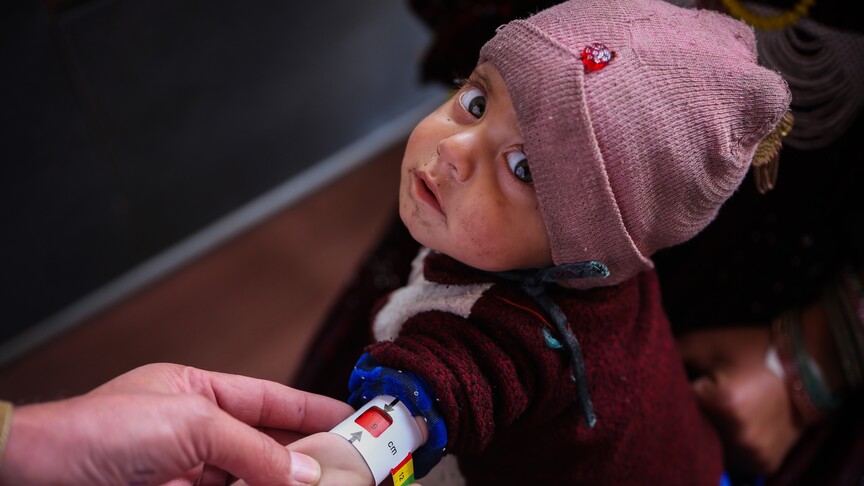
Around 3.7 million children in Afghanistan are suffering from wasting, including about 1 million with life-threatening severe acute malnutrition, UNICEF said Tuesday.
UNICEF Representative in Afghanistan Tajudeen Oyewale said nearly 40% of children admitted to hospitals with severe wasting and medical complications are babies under 6 months old.
Children under 2 account for 83% of severe acute malnutrition cases, he said.
More than half a million children have been admitted since the beginning of the year for high-risk moderate wasting and severe wasting, according to Oyewale.
The number of severe acute malnutrition cases admitted with medical complications rose by one-third, from 6,000 in July 2025 to 8,000 by July 2026, he said.
“In parts of southern Afghanistan, some hospitals are now seeing three or four severely malnourished children for every available bed,” Oyewale said.
UNICEF said half of Afghanistan’s children are living in severe child food poverty, meaning they consume foods from two or fewer food groups a day.
Children living in severely food-insecure households can reportedly be up to six times more likely to suffer from wasting during peak malnutrition periods, according to UNICEF.
Oyewale said successive years of drought, destructive heavy rainfall and flash floods were compounding the situation, alongside regional instability affecting cross-border trade and livelihoods.
Six million people, more than half of them children, have returned to Afghanistan since 2023, placing additional pressure on jobs, household resources and health and nutrition services, he said.
More than 100 sites treating children with severe wasting have closed this year compared with 2025 because of resource constraints, UNICEF said.
Hundreds of other centers providing nutrition support to children and malnourished pregnant and breastfeeding women have also lost funding, it added.
The Nutrition Sector response in Afghanistan faces a 57% funding gap, while UNICEF’s nutrition program, which requires around $180 million this year, is currently 22% funded, according to the agency.
“At precisely the moment when the needs are increasing, the services available to children are being reduced due to funding cuts,” Oyewale said.