Berk Kutay Gokmen
17 November 2026•Update: 17 November 2026
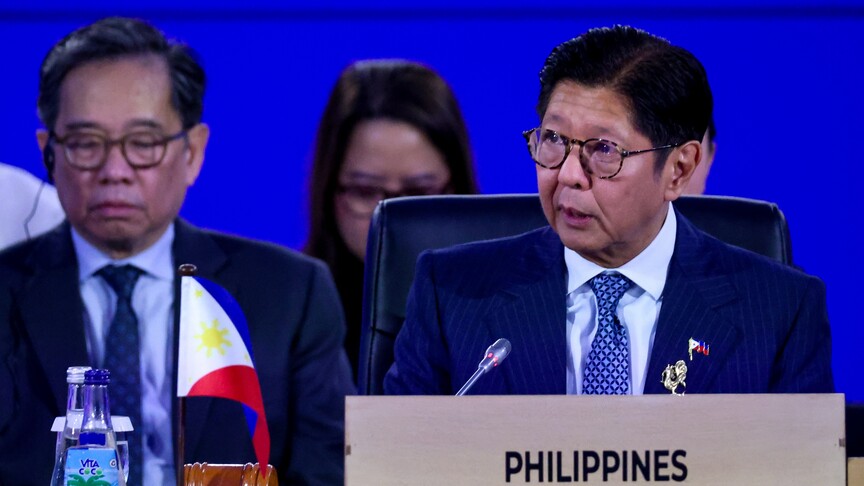
Philippine President Ferdinand Marcos Jr. said Tuesday that ASEAN leaders had agreed to pursue a progress-based approach to restoring Myanmar’s representation in the regional bloc, stressing that any steps forward would depend on tangible efforts by the country’s leadership and other stakeholders to advance peace.
Addressing a news conference following the conclusion of the 49th ASEAN Summit in Manila, Marcos said the bloc had prioritized humanitarian assistance to address the mounting civilian toll of Myanmar’s ongoing conflict. The Phillipines concludes the chairship of 11-member ASEAN for 2026 while Singapore is the incoming chair.
He highlighted the work of Philippine Foreign Secretary and ASEAN special envoy Ma. Theresa Lazaro in facilitating dialogue, expanding humanitarian assistance and calling for an end to hostilities.
“The one that is easily understandable and immediately implementable is the assistance on the humanitarian side,” he said, adding that ASEAN members had agreed to make this the first step. Marcos also stressed that Myanmar’s political future must be “Myanmar-led and Myanmar-owned.”
The leaders also reviewed the implementation of ASEAN’s Five-Point Consensus, with Marcos saying responsibility for progress now rested largely with Myanmar’s current leadership.
“It is incumbent upon them that we see also that they are making their efforts,” he said, emphasizing the need for progress from all sides and stakeholders before the bloc could move further along the path to peace.
On the South China Sea, Marcos welcomed what he described as positive momentum in negotiations on a long-awaited Code of Conduct (COC), saying most of the substantive issues had already been settled, although an agreement was not finalized during the Philippines’ ASEAN chairmanship.
He said between 85% and 90% of the negotiations had been completed. The remaining work largely concerns defining terms to ensure that all parties have a common understanding of the rules, principles and norms governing conduct in the disputed waters.
Marcos thanked ASEAN member states and China for their participation in the negotiations, saying all parties had worked hard to bring discussions to their current stage. He said the remaining definitions and language needed to be clearly established so that the agreed rules would be understood and accepted by everyone involved.
On environmental cooperation, Marcos said ASEAN leaders had called for stronger measures to prevent recurring forest fires, including tougher laws and enforcement against harmful practices.
He also highlighted the importance of information-sharing among member states to improve regional efforts to prevent and address forest fires.Regarding the global economic outlook, Marcos said developments in one part of the world increasingly have consequences far beyond their immediate surroundings, making stronger partnerships both within and outside ASEAN essential.
He pointed to the growing number of countries joining the Treaty of Amity and Cooperation as a reflection of the bloc’s efforts to broaden its international partnerships. “What happens in one place does not can never be said to not affect any other place,” he said.