Aamir Latif
02 September 2026•Update: 02 September 2026
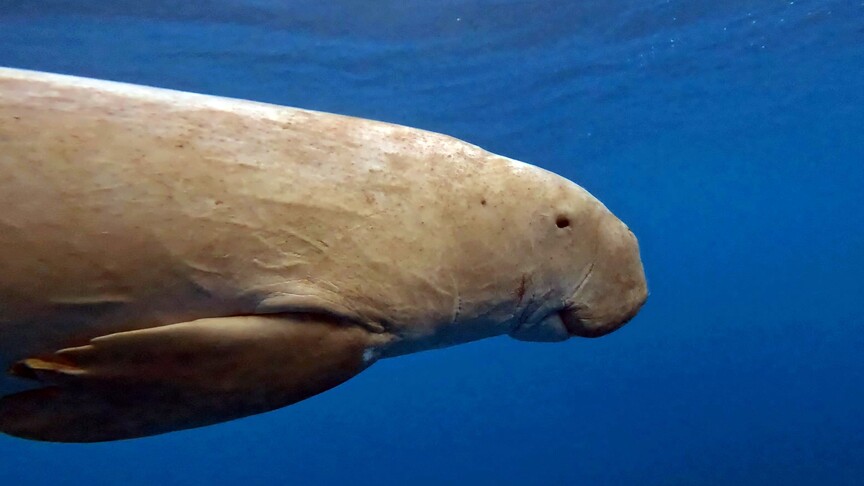
Australian researchers have recorded a 50% decline in the numbers of dugongs in one of the most globally important populations in the Gulf of Carpentaria off the northern coast of Australia, the Australian Broadcasting Corporation reported.
The marine mammals are classified as vulnerable on the international conservation agencies' threatened species lists.
Chris Cleguer, a researcher at James Cook University (JCU), said aerial surveys his team carried out in the gulf in 2025, in partnership with Charles Darwin University (CDU) scientists and Indigenous ranger groups, produced a shocking result about the animal's current numbers.
In 2007, he added, there was an estimated gulf-wide population size of about 10,000 dugongs, which was reduced to 5,000 across the gulf in 2025.
The raw count found 305 dugongs in the gulf in 2025 compared to 471 in 2007.
The biggest change, Cleguer said, was in Queensland waters, where 63 dugongs were recorded in 2025, compared to 231 in 2007.
He added that because there was such a large gap of 18 years between the surveys, it had been difficult to work out the trajectory or cause of the change.
"The analysis is ongoing; we still need to add more data to our analysis, but the numbers are concerning," he said.
Researchers warn that it could be very difficult for dugong populations to recover.
"It is really concerning. They're long-lived animals, they're slow to breed and reach maturity, so that shift or decline in the population, we're looking at years to recover," according to CDU marine scientist Rachel Groom.
While scientists are unsure what may have caused the change in numbers, they have also recorded large declines in the seagrass meadows that dugongs depend on for all of their food in recent years.
They suspect commercial gill-net fishing was reducing dugong numbers.
Queensland and the Northern Territory have stopped gill-net fishing in some parts of the gulf, and the Territory has promised a ban by the end of next year.