Amir Latif
13 September 2026•Update: 13 September 2026
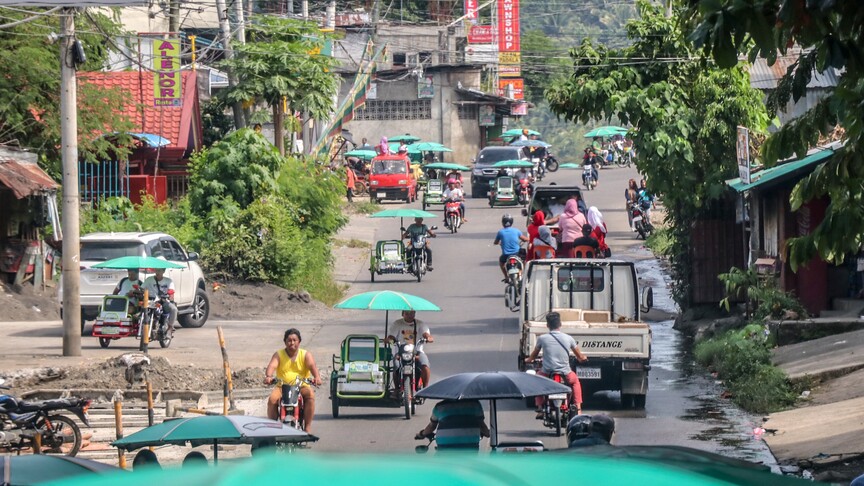
The Philippines' Muslim-majority Bangsamoro autonomous region is set to hold its first parliamentary election on Monday, which is seen as a crucial step in the quest for self-governance and lasting peace after decades of resistance.
Nearly 2.4 million voters are set to make a choice, with 80 seats at stake in the elections that will determine members of parliament, the region’s legislative body, the state-run Philippine News Agency reported on Sunday.
These include 40 political party representatives, 32 district representatives, and eight sectoral representatives.
Voting will run from 7 am local time Monday (2300GMT Sunday) to 7 pm (1100GMT Monday).
The elections will use automated counting machines previously deployed during the May 2025 midterm elections.
The Bangsamoro Autonomous Region in Muslim Mindanao is home to around 5 million people, the majority of whom are Muslims.
It covers five provinces, three cities, and 63 villages across eight special geographic area clusters.
In January 2019, a referendum approved the "Bangsamoro Organic Law," officially establishing the "Bangsamoro Transition Authority" in the region, following decades of resistance by the Murad Ebrahim-led Moro Islamic Liberation Front.
Ebrahim was appointed as the first interim chief minister of the autonomous region the same year. He was succeeded by Abdulraof Macacua in March last year.
1st elections after several delays
Monday's elections will be held after being delayed four times.
The Philippine Supreme Court postponed the first parliamentary elections in the Bangsamoro region for the third time last year.
The election, originally scheduled for 2022, was postponed to May 11 of last year, then rescheduled for October, before being postponed again.
For young voters and women, the historic polls are more than an exercise in choosing leaders.
"Among those preparing to take part are women and young Bangsamoro, whose voices are being given space in the new parliamentary system not only through their votes, but also through sectoral representation, voter education and participation in the electoral process," said a statement from the Bangsamoro government.
Under the Bangsamoro Autonomy Act, regional parliamentary political parties are required to ensure that at least 30% of their party nominees are women. As far as practicable, at least one in every three party nominees must be a woman.
The provision establishes a gender quota aimed at increasing women’s representation in the first regular Bangsamoro Parliament.
The election commission also reserves one seat each for women, youth, traditional leaders, and the ulama, and two reserved seats for settler communities and Non-Moro Indigenous Peoples in the Parliament.
Long struggle until 2019
The chair of the Commission on Elections, George Garcia, said the polls represent a continuation of the Bangsamoro struggle for self-government through the peace process.
The Moro Islamic Liberation Front led the region’s struggle for autonomy since the mid-20th century, ultimately resulting in peace talks and the transitional government’s formation after a referendum on Jan. 21, 2019.
Before the Bangsamoro Transition Authority was founded in 2019 following the referendum, the Moro Islamic Liberation Front, led by Murad Ebrahim, had asked for a six-year transition period during peace negotiations with the Manila national government.
But negotiations resulted in a three-year transitional government under Ebrahim as chief minister until 2022.
The two sides agreed to allow the transitional government to take control of regional governance and run affairs until 2022, when elections were agreed to be held.