- Pacific leaders seek greater control over their security and resources as China, the US and their partners compete for influence
- Summit will test whether island nations can overcome divisions over Taiwan, ocean minerals and competing defense partnerships
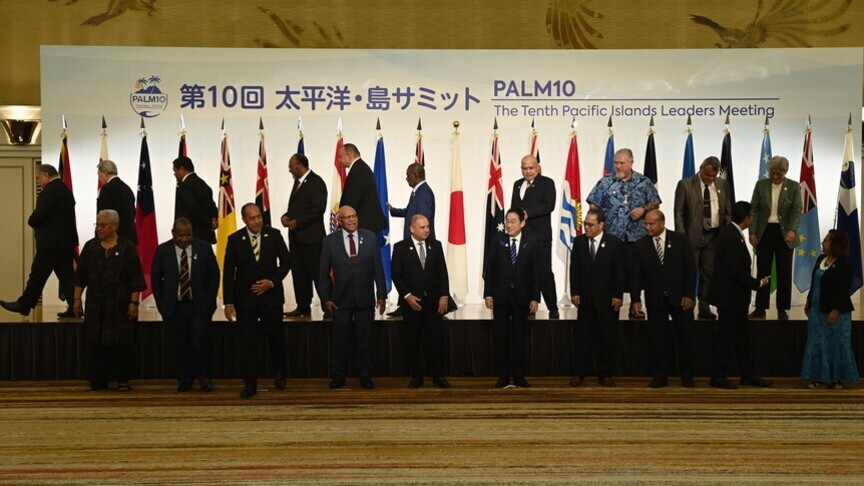
Leaders of Pacific island nations will gather in Palau from Aug. 30 to Sept. 4 for a summit that could test whether the region can maintain a common voice while major powers compete for strategic influence and access to its vast ocean resources.
The 55th Pacific Islands Forum Leaders Meeting will be held under the theme “Building Economies: Life. Action. Unity.”
The forum has 18 members: Australia, the Cook Islands, Fiji, French Polynesia, Kiribati, the Marshall Islands, the Federated States of Micronesia, Nauru, New Caledonia, New Zealand, Niue, Palau, Papua New Guinea, Samoa, the Solomon Islands, Tonga, Tuvalu and Vanuatu. American Samoa and Guam are associate members.
The US and China are the dialogue partners of the forum.
Although its members have small populations, the forum represents an immense expanse of the Pacific Ocean. Its decisions therefore carry significance far beyond the islands, particularly as competition intensifies among China, the US and Washington’s regional allies.
For Pacific governments, however, the central question is whether foreign attention can be converted into climate protection, infrastructure, economic opportunities and control over their own resources — without turning the region into an arena for strategic confrontation.
Climate finance and economic resilience
Pacific leaders have repeatedly described climate change as the greatest threat to the region’s security. Rising seas, coastal erosion, saltwater intrusion and stronger storms are already damaging homes, roads, freshwater supplies and traditional livelihoods.
The Palau summit is expected to move the Pacific Resilience Facility closer to becoming operational. Designed as a Pacific-owned financing mechanism, the facility aims to fund small community-level projects that often struggle to secure support from large international climate funds.
Leaders are expected to launch a call for pilot proposals in Palau. The initiative will test whether the region can build a financing system that is easier for vulnerable communities to access and less dependent on complicated international procedures.
Funding nevertheless remains a challenge. Pacific governments want wealthy countries — particularly major historical emitters — to provide grants rather than loans that would add to the debt burdens of small economies.
Energy security will also feature prominently. Most island nations rely heavily on imported fuel, leaving them exposed to global price shocks and supply disruptions. Palauese President Surangel Whipps Jr. has advocated a regional transition toward 100% renewable energy, while calls have emerged for the appointment of a Pacific energy commissioner.
Economic development is closely tied to the ocean. Fisheries generate vital public revenue, while tourism supports jobs across the region. Illegal and unregulated fishing, depleted stocks and marine degradation therefore constitute economic as well as environmental threats.
The most contentious resource question may be deep-sea mining. Mineral-rich nodules on the Pacific seabed contain metals sought for batteries, electronics and defense technology.
Palau supports a precautionary pause on extraction until its environmental consequences are better understood. Nauru, Kiribati and Tonga, however, have explored mining opportunities as a potential source of income. China and the US are also competing for access to critical minerals.
China and Taiwan
The summit comes amid growing concern about militarization. China’s test of a nuclear-capable ballistic missile into the Pacific in July exposed divisions among forum members.
Some governments criticized the test, while others with close relations with Beijing resisted a regional condemnation.
The disagreement illustrates the forum’s central diplomatic problem: members maintain different security partnerships and diplomatic alignments.
China has expanded its presence through infrastructure, policing and development agreements, including its security relationship with the Solomon Islands. Australia and the US have responded by increasing aid, defense cooperation and diplomatic engagement.
Fiji and Australia signed a defense treaty in July, while Solomon Islands Prime Minister Matthew Wale has promoted discussion of a broader Pacific security agreement.
Taiwan’s participation will provide another test of regional unity. Taiwanese Foreign Minister Lin Chia-lung is expected to attend dialogue sessions and related events, according to Taiwan’s Foreign Ministry.
Palau, the Marshall Islands and Tuvalu are Taiwan’s three remaining diplomatic partners in the Pacific. Beijing, which considers Taiwan part of China, opposes its presence at international gatherings.
Taiwan and other external partners were excluded from last year’s summit in the Solomon Islands. Its return in Palau reflects the host country’s close relationship with Taipei but could sharpen tensions with Beijing and forum members that recognize China.
The summit's outcome will show whether Pacific leaders can prioritize regional priorities over outside rivalries.