Since the historic normalization of ties in the 1970s, high-level visits between the US and China have served as the primary barometer for global geopolitical stability.
Over more than 50 years, these visits have evolved from secretive Cold War maneuvers to complex economic summits, involving 13 visits to China by US presidents and numerous reciprocal state visits by Chinese leadership to American soil.
The diplomatic exchange began in earnest in 1972, ending decades of silence and setting a precedent for "face-to-face" crisis management. Despite periods of intense friction over trade, human rights, and regional security, the tradition of presidential travel has persisted as a critical tool for maintaining open communication channels between Washington and Beijing.
US-China diplomacy began with President Richard Nixon’s landmark visit to China on Feb. 21, 1972.
Nixon became the first sitting American president to visit the People’s Republic of China, meeting Chairman Mao Zedong and Premier Zhou Enlai during a week-long tour of Beijing, Hangzhou and Shanghai.
The visit ended more than 20 years of isolation between the two countries and produced the Shanghai Communique, which laid the groundwork for normalized diplomatic relations.
President Gerald Ford followed with a visit in December 1975, meeting Mao and Vice Premier Teng Hsiao-ping.
The same year, Chinese leader Deng Xiaoping traveled to the US, the first visit by a Chinese leader to the US since the 1949 revolution.
Deng’s tour, which included stops in Washington, D.C., Atlanta, and Houston, focused on modernization and economic cooperation, signaling China’s "Reform and Opening-up" era to the American public.
President Ronald Reagan visited China in April 1984. During his visit to Beijing, Xian and Shanghai, he met with President Li Xiannian and Premier Zhao Ziyang, as relations expanded during the Cold War.
From February 25–27, 1989, President George H W Bush visited Beijing for talks with President Yang Shangkun and Premier Li Peng. Bush had previously served as the head of the US liaison office in Beijing during the 1970s.
However, relations sharply deteriorated later that year following the Tiananmen Square crackdown, and there was no visit by any American president for nearly 10 years.
After years of tension, President Bill Clinton visited China in June 1998 in an effort to stabilize relations.
The nine-day state visit to China was the most extensive by a US leader since the end of the Cold War. Visiting Xi'an, Beijing, Shanghai, Guilin, and Hong Kong, the trip aimed to stabilize a relationship strained by the 1996 Taiwan Strait Crisis.
The visit was notable for a live televised debate at Peking University, highlighting a period of growing cultural and intellectual exchange.
President George W Bush made four visits to China – the highest number by any US president.
His first visit was in Beijing from October 18–21 2001 to attend the APEC Summit Meeting. He returned in February 2002 and met with President Jiang Zemin and Premier Zhu Rongji in Beijing.
From November 20–21, 2005, Bush was again in China to meet with President Hu Jintao and Prime Minister Wen Jiabao.
Bush traveled to Beijing in August 2008 to attend the opening ceremonies of the Summer Olympic Games. There, he also dedicated a new US Embassy complex.
This visit underscored an era of "personal diplomacy" between Bush and Hu, focusing on counter-terrorism and global economic stability during the onset of the Great Recession.
President Barack Obama visited China three times between 2009 and 2016.
From November 15–18, 2009, Obama met with Hu along with National People’s Congress Chairman Wu, and Premier Wen. He also visited the Great Wall during his trip.
His second visit was in November 2014, where he visited Beijing and attended the Asia Pacific Economic Cooperation CEO Summit Meeting and the Trans Pacific Partnership Leaders Meeting.
During reciprocal visits in 2014 (Obama to Beijing) and 2015 (Xi to Washington), the two leaders reached a breakthrough agreement on climate change.
These visits provided the diplomatic momentum necessary for the signing of the Paris Agreement, proving that despite growing competition in the South China Sea, the two powers could lead on global environmental issues.
In 2016, Obama attended the G-20 Summit Meeting in Hangzhou.
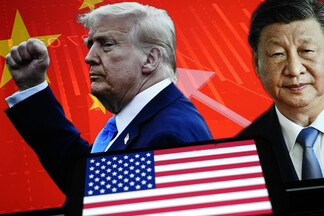
Under President Donald Trump, relations became increasingly confrontational.
In April 2017, the world’s focus shifted to the gilded corridors of Mar-a-Lago, President Donald Trump’s Florida estate, as he hosted President Xi Jinping for their first face-to-face encounter. Moving away from the rigid protocols of Washington, the two leaders sought to forge a personal rapport over a formal dinner, infamously interrupted by news of US missile strikes in Syria.
The summit was characterized by an attempt to "reset" the economic relationship. The leaders launched a 100-day plan for trade talks and discussed the urgent need to coordinate on North Korea’s nuclear provocations. While the setting was informal, it marked the beginning of a high-stakes era of "transactional diplomacy" that would eventually lead to the most significant trade tensions in decades.
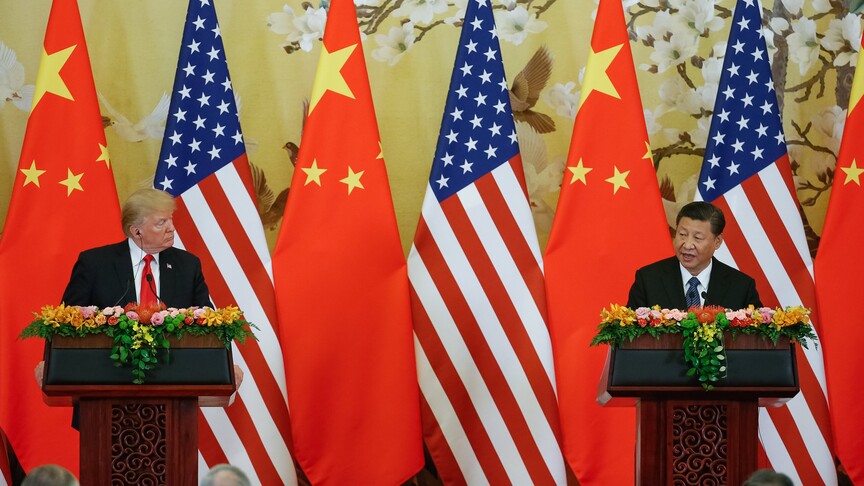
Trump visited Xi in Beijing during his visit from November 8–10, 2017.
Despite early efforts to build personal ties, the two countries soon entered a trade war marked by tariffs and growing strategic rivalry.
President Joe Biden became the first US president who failed to visit China during his term since the establishment of diplomatic relations between China and the US.
However, he hosted Xi in California for the APEC Summit 2023. On the sidelines of the gathering, he traveled to the secluded Filoli Estate for a meeting with Biden, aimed at “putting a floor” under a relationship that many feared was deteriorating.
It was a summit focused on managing tensions rather than resolving them, signaling that while the two powers remained strategic rivals, they were once again willing to engage to prevent further escalation.
news_share_descriptionsubscription_contact