Modest fashion is increasingly moving beyond religious and geographical boundaries, with contemporary designs, fabrics and styles helping the sector attract Muslim and non-Muslim consumers across international markets, according to industry figures gathered in Malaysia.
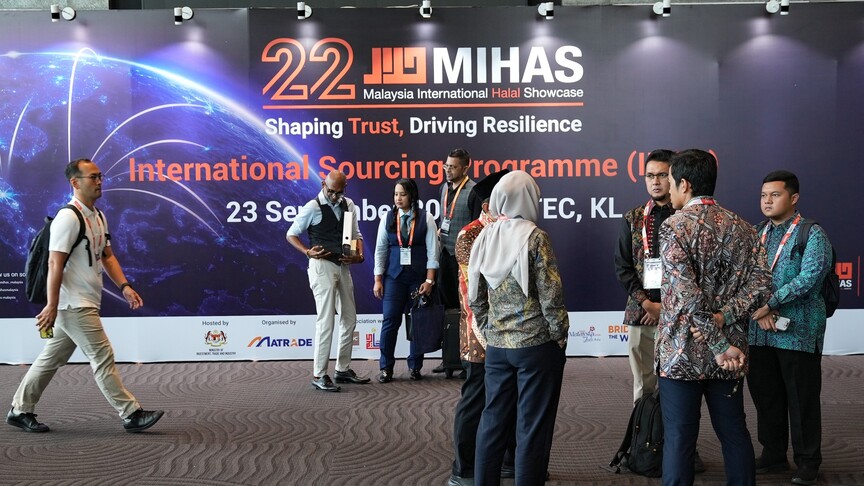
Designers and fashion industry representatives spoke to Anadolu on the sidelines of MIHAS Modest Fashion Week, held as part of the 22nd Malaysia International Halal Showcase (MIHAS 2026) in Kuala Lumpur.
The fashion week combines industry discussions with runway shows featuring different approaches to modest clothing, bringing designers and businesses together as part of the wider halal economy.
‘Halal is a lifestyle’
Jay Ishak, curator of MIHAS Modest Fashion Week and founder and CEO of International Fashion Chamber Malaysia, also known as My Fashion Chamber, said modest fashion should not be viewed as something limited to a particular religion.
“Modest fashion is fashion that is modestly worn. It’s not necessarily wearing hijab or turban,” Ishak said.
She said modest fashion generally involves greater coverage and looser clothing but can appeal to people regardless of their religious background.
Describing halal more broadly as a lifestyle, Ishak said the concept and modest fashion are not confined to Muslims.
“It doesn’t matter whether you’re Muslim or you’re non-Muslim. It’s a lifestyle,” she said.
“Modest wear can be worn by anyone, any religion, any faith.”
The first day of MIHAS Modest Fashion Week focused on contemporary ready-to-wear fashion, combining a forum on the market with a runway presentation.
Ishak said other presentations during the event explore different interpretations of modest fashion, including “Heritage Reimagined” and “Modest Luxe.”
New designs broaden appeal of modest fashion
Malaysian designer Mawar Abdullah, director and designer of modest-wear brand Hoor, said interest in modest clothing is increasingly extending beyond Muslim consumers, with new fabrics, designs and styles helping attract a wider audience.
“I foresee that modesty itself is growing. Everybody is starting to love modesty, not just specifically for Muslims,” she said.
Abdullah said contemporary design allows modest clothing to provide greater coverage while remaining fashionable and visually appealing.
She said the use of different fabrics and designs has helped change perceptions of modest clothing and given consumers more choices.
“I believe that people can still look really gorgeous even by covering,” she said.
She said the appeal of modest fashion has already gone beyond its traditional consumer base, noting that many of Hoor’s customers are non-Muslims who have embraced its designs.
According to Abdullah, some customers initially approached modest clothing as a fashion trend but developed a stronger preference for the style after wearing it.
Her Malaysia-based brand, which recently marked its fifth anniversary, showcased eight of its latest designs under an Arabic-inspired theme, emphasizing comfort alongside contemporary modest design.
International designers eye Southeast Asian market
International designers are also looking to Malaysia and the wider region for new business opportunities.
Peruvian designer Carla Testino, who has around 15 years of experience in craftsmanship and leather handbags, said she participated in the event as she seeks to expand into markets in the region.
“I’m very interested in this part of the region, part of the world, because we are penetrating these markets,” Testino said.
She identified Malaysia as a potential base for reaching other markets in Southeast Asia and the Gulf.
“We consider Malaysia a distribution hub for our products, and then we will expand to Thailand and Singapore, and probably the GCC countries,” she said.
MIHAS Modest Fashion Week is part of MIHAS 2026, a four-day international halal trade showcase being held at the Malaysia International Trade and Exhibition Centre (MITEC) under the theme “Shaping Trust, Driving Resilience.”
The wider event brings together 1,700 companies across some 2,000 booths, with around 50,000 visitors from 45 countries expected.
MIHAS covers 14 sectors across the halal economy, including food and beverages, modest fashion, pharmaceuticals, cosmetics and personal care, logistics, Islamic finance, technology, services and Muslim-friendly tourism.
Organizers are targeting 5 billion Malaysian ringgit ($1.23 billion) in total sales through the exhibition and its business-matching program.