Seyma Erkul Dayanc and Riyaz ul Khaliq
28 August 2026•Update: 28 August 2026
- ‘Given the massive damage to critical infrastructure, assessments are underway and help needed will be sought as necessary,’ Nepal Foreign Ministry spokesperson tells Anadolu
The death toll from the devastating floods in Nepal and China rose to 543, with more than 1,200 people, most of them foreign nationals, still missing as Kathmandu began assessing the damage on Friday, according to officials.
Nepalese government said the death toll from Wednesday's floods has reached 538, the Kathmandu Post reported.
China confirmed two more deaths on Friday, raising the death toll to five in the southwestern Xizang Autonomous Region, also known as Tibet, state-run Xinhua News reported.
The latest casualties has brought the combined death toll to 543.
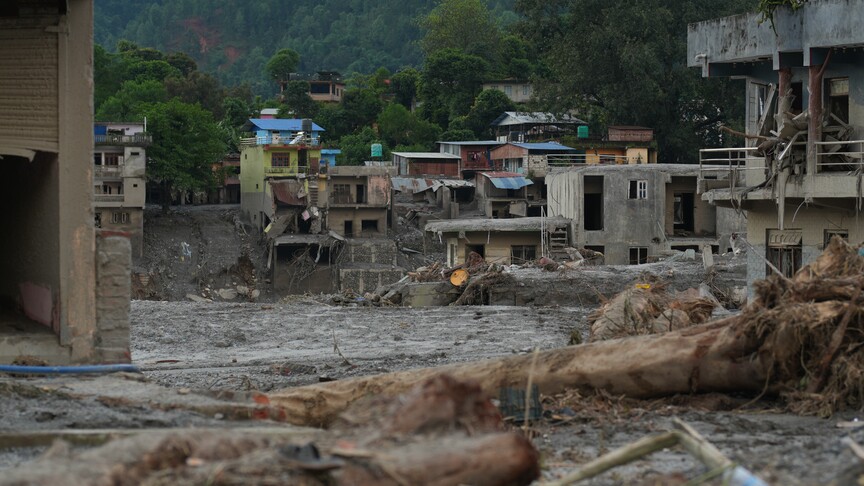
Floods and landslides struck northern and central Nepal early Wednesday, sweeping through communities along the Bhotekoshi and Trishuli rivers and carrying people and debris downstream.
The deceased are being recovered far downstream, the government said.
A new warning of additional floods was issued by Nepali authorities Friday after a large barrier lake formed amid flash floods "reportedly breached," surging waters into Nepalese rivers.
Nepal's Foreign Ministry said 596 people from 33 countries were still missing.
Another 127 Nepalese nationals were unaccounted for, according to the Nepal Tourism Board.
China said 558 people, including 260 foreigners, remained missing in Tibet as search and rescue operations continued.
Figures shared by Nepal and China showed some 1,281 people, including 856 foreigners, were still missing.
Most of the missing foreigners, 288, are from neighboring India, including 73 nationals working on the Trishuli-1 Hydropower Project.
'93,000 people affected'
Hundreds of residents, construction workers and tourists in affected areas of Gyirong County in Tibet have been evacuated and resettled in safer places, Chinese state-run Xinhua News Agency reported.
Accoridng to International Red Cross, "current estimates suggest around 93,000 people may have been affected, while assessments continue in hard-to-reach areas."
"Many homes have been destroyed or severely damaged, and multiple bridges have been washed away and major roads damaged, cutting off some of the worst-affected communities," it said Friday, launching aid campaign for Nepal.
"The remoteness of the affected areas, combined with damaged infrastructure, is making it harder both to assess the full scale of the disaster and to deliver assistance to people who need it most."
Damage assessment underway
Nepal's Foreign Ministry spokesman Lok B. Chhetri told Anadolu on Friday that the government had begun assessing damage caused by the disaster.
"Our security agencies are currently handling the situation effectively," Chhetri said in a written statement.
Asked whether Nepal had sought international aid, Chhetri said: "Requests can be made for any specific and specialized service, as the operations continue."
The extent of the disaster remained unclear as authorities continued to reconcile casualty and missing-person reports from different areas.
"Given the massive damage to critical infrastructure, assessments are underway and help needed will be sought as necessary," Chhetri said.
The floods and landslides swept away homes, bridges, roads and other infrastructure in northern and central Nepal, leaving communities and travelers cut off from the rest of the country.
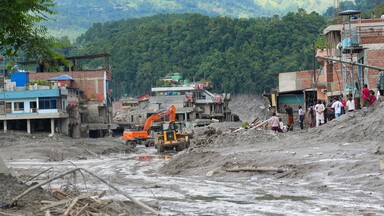
Search and rescue operations continued, with the Nepali Army, Nepal Police and Armed Police Force deployed for search, rescue and evacuation efforts.
Helicopters were being used to reach isolated areas and evacuate survivors, while ground teams continued searching riverbanks and downstream settlements.
The Nepal Tourism Board said it was continuing to verify the whereabouts of tourists and travelers who were in or passing through Rasuwa, Nuwakot and Dhading when the floods struck.
The floods also severely damaged transport links and other infrastructure, complicating rescue efforts in affected areas.