Saadet Gokce
08 October 2026•Update: 08 October 2026
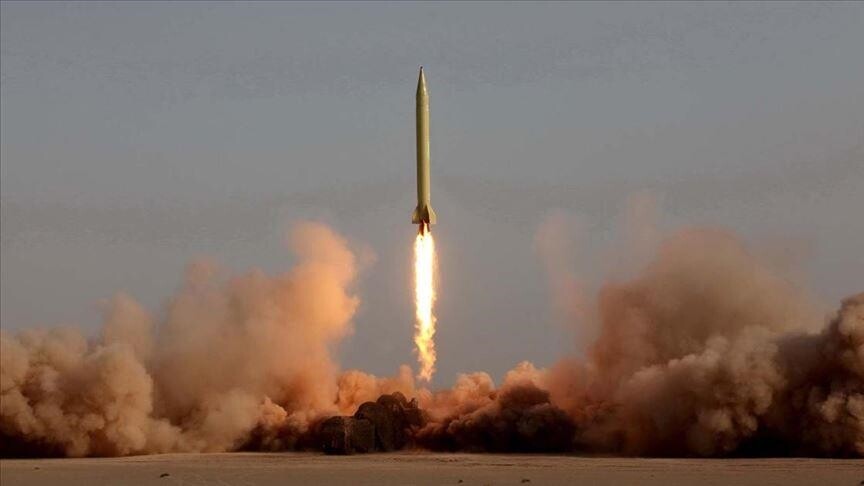
South Korea conducted its first test launch of a hypersonic glide vehicle Thursday, a presidential spokesperson said.
The test was conducted to verify core hypersonic technologies, including flight trajectory and speed, for a strategic asset capable of surprise precision strikes against enemy targets, Kang Yu-jung said, according to the Yonhap news agency.
“The HGV successfully separated from its booster and seamlessly executed its planned flight path under hypersonic conditions,” she said.
“This successful launch marks a major milestone in that preparations are complete to secure a new deterrent capable of striking critical targets across the theater of the Korean Peninsula,” Kang added.
She said the launch aimed to test super-high-temperature thermal protection materials, guidance and control systems, as well as irregular maneuverability at low altitudes.
President Lee Jae Myung, Defense Minister Kang Shin-chul and other officials witnessed the launch, according to Kang.
HGV missile systems use a booster to accelerate and ascend into the upper atmosphere before separating from the booster and gliding at lower altitudes at hypersonic speeds.
While the location was not officially disclosed, Yonhap reported that the launch took place on a barge at a test center operated by the Agency for Defense Development in Taean, about 130 kilometers (81 miles) south of Seoul.
Lee commended the HGV development team, stressing that national security should be protected through the country's own strength.
“The government will fully support the development and operational deployment of advanced weaponry so that our people can live without concern,” Lee said, according to Kang.
Lee later inspected the military's Hyunmoo-5 surface-to-surface missile, known as the “monster missile” for its massive weight and destructive power.
It was the first time the government officially referred to the previously undisclosed weapon by its name, Hyunmoo-5.
Yonhap said the launch was “widely seen as a countermeasure” to last month's land mine explosion on South Korea's side of the Military Demarcation Line that severely injured two South Korean soldiers.
Seoul accused Pyongyang of deliberately planting two mines inside the Demilitarized Zone, while North Korea rejected the accusation, calling it “blame shifting.”
On Saturday, North Korea also launched an intermediate-range strategic missile capable of changing its flight trajectory at low altitude and using artificial intelligence technology during a firing drill off its east coast.