By Addis Getachew
ADDIS ABABA
African journalists and journalists of African descent who attended a gathering in Addis Ababa devoted to ways of objectively reporting on Ebola appeared to have different opinions.
Three-time Pulitzer Prize winner Michel du Cille, for his part, was of the view that objectivity was a farfetched requirement in reporting Ebola-related stories.
"You cannot balance an Ebola story because you have to show death, and death is not positive," Du Cille said.
Du Cille, who in 1986 shared a Pulitzer Prize for Spot News Photography with fellow Miami Herald staff photographer Carol Guzy for their coverage of the November 1985 eruption of Colombia's Nevado Del Ruiz volcano, added that Ebola was about people who fell dead in front of a treatment center and got buried then and there.
"How can I show balance in this situation?" Du Cille asked.
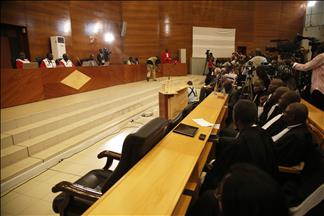
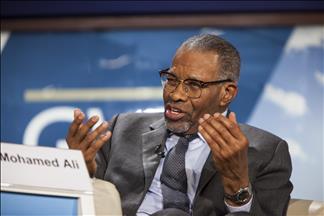
He and fellow newspapermen were attending the Tenth African International Media Summit, which kicked off at the African Union Commission Conference Center in Addis Ababa on Thursday.
The event was co-organized by the commission and the African Communications Agency.
It was held under the title, "Mobilizing Media: Re-Writing the Narrative on Ebola through a Responsible and Coordinated Effort."
Du Cille said he could only show balance in reporting about food distribution and doctors who worked too long to help people recover.
"Journalists bear the responsibility not to sensationalize the reality and to present it objectively and as is," Du Cille said.
He expressed sorrow that Ebola was damaging the social fabric in affected countries, where people could not bury their dead in a dignified manner.
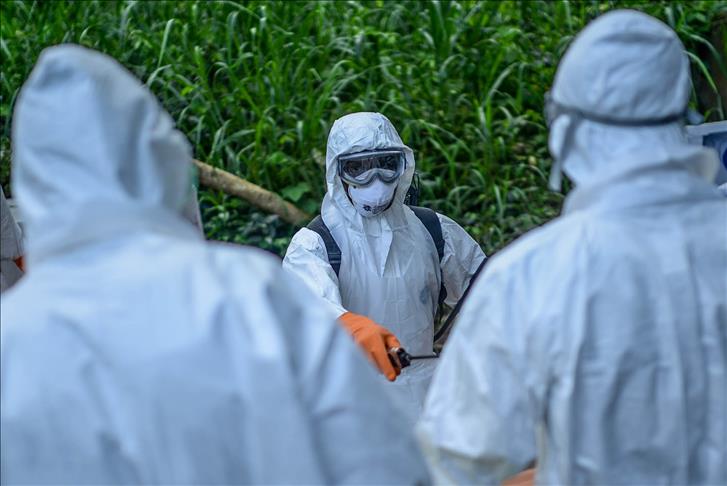
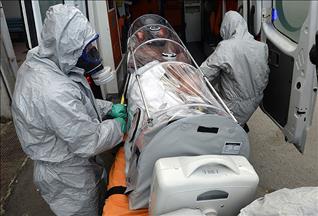
Ebola, which has quickly turned into an international threat, has killed more than 6,000 people, mostly in West Africa, according to the World Health Organization.
Fear
Liberian Ambassador in Ethiopia Vivienne Titi Wreh has seen for herself the fear that Ebola has sent everywhere in the world.
The Liberian diplomat saw this fear in the eyes of her domestic workers when she returned to her home in Addis Ababa after a brief visit to Liberia.
"Isolation is still there; discrimination is still there," Titi Wreh, who also attended the summit, said.
Summit organizers say the event will seek to find effective strategies for media reporting, noting that these effective strategies might help rewrite the negative narrative.
They said African journalists could report balanced stories about a developing continent that attempted to act in solidarity – from the government to the grassroots – with the aim of defeating the deadly Ebola virus.
Liberian President Johnson Sirleaf, meanwhile, also addressed the gathering in a written message.
"There is no coincidence that Ebola has taken hold in three fragile states – Liberia, Sierra Leone and Guinea – all battling to overcome the effects of the interconnected wars," Sirleaf said in her message.
She said everybody – from governments to international organizations, from financial institutions to NGOs, and from politicians to ordinary people – had a stake in the fight against Ebola.
"The time for talking or theorizing is over," the Liberian president said. "Only concerted action will save my country, and our neighbors, from experiencing another national tragedy."
Over two days, summit participants are expected to discuss the impact of media in Africa and the African diaspora and the role of social/digital media, along with untold stories from the frontline.
The event also features training on how to "develop positive storylines around Ebola" and "present useful information through experts/sources that inspire community confidence."
www.aa.com.tr/en