By Ovunc Kutlu, E. Gurkan Abay, and Abdelmoneim Haikal
ANKARA
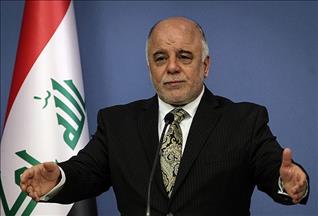
A federal oil and gas council should be established to resolve disputes between the Iraqi federal government in Baghdad and the Kurdish Regional Government in Erbil amid oil export issues in Iraq, says an Iraqi senior advisor.
"A Federal Oil and Gas Council should be established as soon as possible to have a federal institution in place," said Luay Al-Khatteeb, a senior advisor to the Federal Parliament of Iraq for energy policy and economic reform.
"The problem in Iraq is constitutional and institutional. There is no structure for federal revenue sharing. There is no federal oil law and there is no main federal regulator for the oil and gas industry," he told AA.
Relations between Erbil and Baghdad have been strained since the Kurdish Regional Government, KRG, began exporting oil independently to the world markets via pipelines through Turkey in January.
Nouri al-Maliki, the former Iraqi prime minister, had retaliated to the unilateral move by cutting the Kurdish government's share in Iraq’s federal budget.
Iraq’s federal government had said KRG exported Iraqi oil illegally without Baghdad’s authorization, while Erbil argued the oil sales were in compliance with the new Iraqi constitution.
"We need to have this institution in place where the Ministry of Natural Resources, the Kirkuk government, and the Basra government - the main producing province of Iraq - should sit in on that council with the ministry of oil around that table, chaired by the Prime Minister," Al-Khatteeb said.
"Unless this is resolved, these kinds of political deals will always be patchy and short-lived and could easily be hindered in the federal parliament," he added.
According to the latest agreement between the parties on Monday, the KRG will send 250,000 barrels of oil per day, and Kirkuk province will export 300,000 barrels per day, while Baghdad will allocate 17 percent of the Iraqi budget to the KRG.
"The deal can be revoked if the parliament rejects some requests by the KRG regarding the allocation of funds to the region. If there is disagreement in the Iraqi parliament on budget allocations for the KRG, then we are back to square one," Al-Khatteeb said.
"However, there are some sources suggesting that any breach of the deal could grant KRG full rights over the export from the Kurdistan region and Kirkuk, and therefore Baghdad will no longer be able to challenge Erbil on exporting oil independently," he added.
The KRG had announced in October that its oil exports would increase from 250,000 to 450,000 barrels per day by the end of 2015.
- Iraqi export targets and Turkey's role
Al-Khatteeb stressed that Iraq is already producing more than three million barrels per day excluding Kurdistan’s output, adding "It could really hit 3.2 million next year and it is possible to achieve exports of 2.7 million, all from the south and mostly from the Basra oil-rich province.”
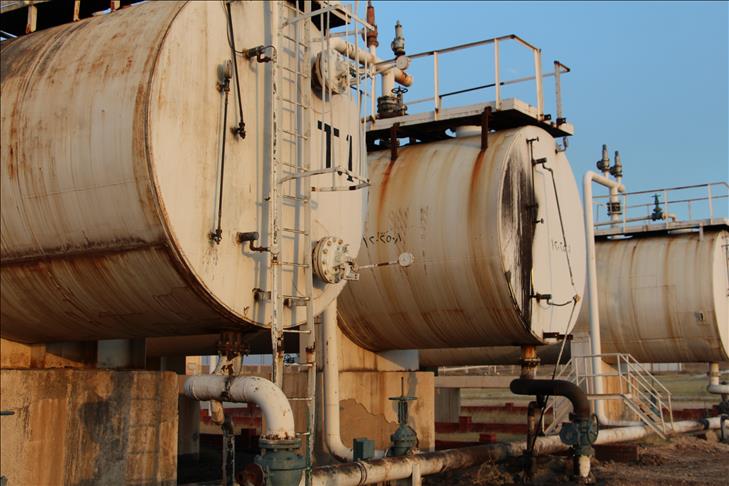
The Basra Oil Terminal, formerly known as Mina al-Bakr, on the Persian Gulf exported a little over 1.5 million barrels per day of oil in 2012, according to the U.S.' Energy Information Administration, while KRG exports its oil to the international markets via its northern neighbor Turkey.
“Turkey wants to see a stable Iraq. They are interested in commercial exchange and the flow of energy, whether oil or gas, so they can do business and charge transit fees like all energy hubs in the world," said Al-Khatteeb.
"They will try to seek the maximum benefit from the KRG and the maximum benefit from the federal government,” he added.
- ISIL threat to Iraqi oil
Al-Khatteeb stated that control of the militant group Islamic State of Iraq and the Levant, known as ISIL, over oil assets was affected significantly after Sept. 24, adding the group had control over a number of producing fields on the northwest part of Iraq and the midlands.
"They did seize control of about six to eight fields during the first three months, and they managed to produce between 25 to 30 thousand barrels at that time," he said.
Having taken major oil fields in the north of Syria and the northwest of Iraq, ISIL is rumored to produce, refine and sell oil while earning millions of dollars.
"ISIL controls one-third of the two countries - the northeastern part of Syria and northwestern part of Iraq. Their objective is to gain as much revenue as possible to finance their operations," he added.
According to the U.S. Central Command, ISIL made around $2 million per day selling illegal oil at the end of September.
Al-Khatteeb underlined that any oil production in Iraq will not be impacted by ISIL, adding "all the key fields that Iraq rely on, especially the six fields in the southern corridor, are far from the fault lines (conflict zones)."
www.aa.com.tr/en