BEIJING
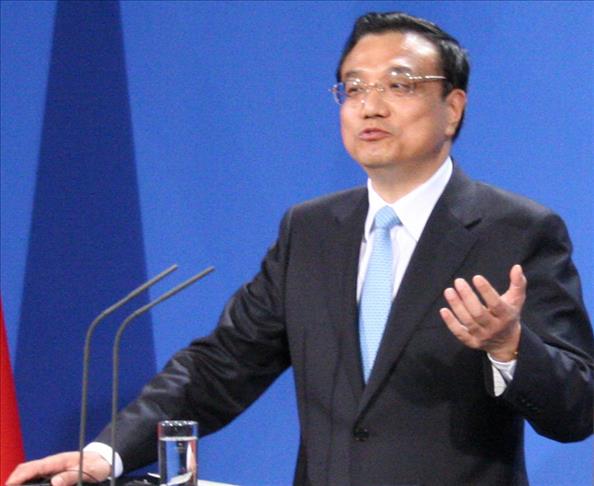
Slower economic growth and tighter controls on pollution were unveiled as key themes for the coming year as Chinese Premier Li Keqiang opened parliament’s annual session on Thursday, state media reported.
Li warned of "formidable difficulty" in 2015 as he set out a slower growth target of 7 percent in a speech to the National People's Congress, Xinhua news agency reported.
However, Li said he was "fully confident" of the potential and resilience of China's development. Last year’s gross domestic product growth was 7.4 percent, the slowest in 24 years.
"Over the past year, the international and domestic environments faced by China in its development have been complicated and challenging,” Li told representatives. “The road to global economic recovery has been rough, with many ups and downs, and the performance of the major economies has been divergent.
"Downward pressure on China's economy has continued to mount, and we have faced an array of interwoven difficulties and challenges.”
Other economic indicators were also set at lower rates than last year. The consumer price index was set at 3 percent and unemployment at 4.5 percent.
China's GDP stood at 63.6 trillion yuan ($10.39 trillion) in 2014, meaning 7 percent growth would produce an annual increase of more than $800 billion at current prices, Fan Jianping, chief economist for the State Information Center of China, said.
That would produce a dollar rise greater than that provided by 10 percent growth five years ago, Fan told Xinhua.
China, the world's second largest economy, is attempting to move from export-led growth fuelled by state investment to one driven by higher domestic consumption and a larger service sector.
Turning to the “blight” of pollution, Li said environmental laws would be strictly enforced as he listed the environment as a major development goals for the first time in the annual government work report.
He said the government aimed to cut energy intensity – the units of energy used per unit of GDP – by 3.1 percent in 2015.
Li also pledged to continue reducing the emission of major pollutants that are a major contributing factor to the smog affecting China’s cities. Last year, eight of China’s 74 major cities failed to meet the national clean air standard.
Coal-burning power plants will be upgraded, vehicles using alternative fuel promoted and high-polluting vehicles registered before 2005 will be banned, Xinhua reported.
China will also "put great weight" on developing alternative energy sources such as wind power.
"We must strictly enforce environmental laws and regulations; crack down on those guilty of creating illegal emissions and ensure they pay a heavy price for such offences," Li said.
Li touched on corruption briefly, telling lawmakers the government's "tough stance" was here to stay and denouncing laziness and corruption among a small number of civil servants.
In a poll taken before the session for Xinhua and the People’s Daily newspaper, income inequality and corruption were listed as the two subjects of most concern to the public.
President Xi Jinping launched an anti-corruption campaign shortly after taking office and it has seen tens of thousands of officials investigated – from high-ranking “tigers” to lowly “flies.”
Last year, more than 71,000 corrupt officials were punished for violating anti-corruption rules.
The government also confirmed that the military budget would rise 10.1 percent, as indicated on Wednesday.
Although the congress is China’s foremost legislative body, it is widely viewed as a rubber stamp for decisions taken by the Communist Party leadership.
Around 3,000 legislators gather yearly for the session at Beijing's Great Hall of the People. This year’s session runs to March 15.