Mucahithan Avcioglu
10 June 2026•Update: 10 June 2026
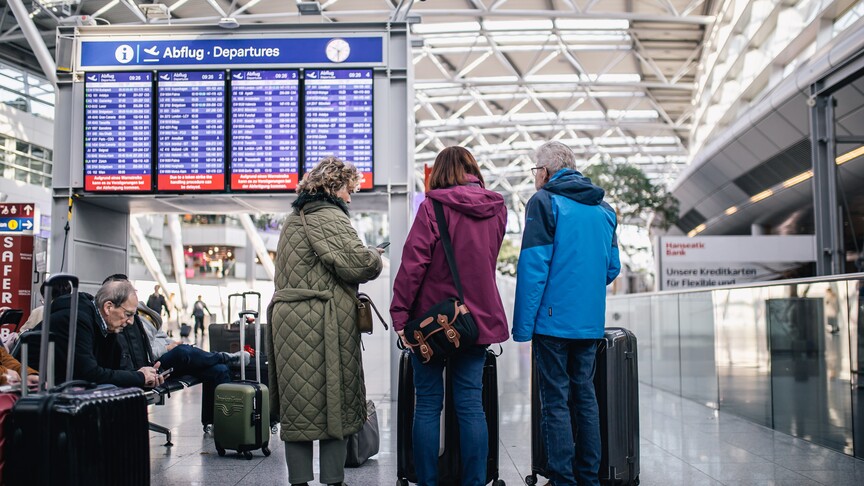
The German government has approved a new aviation strategy aimed at strengthening the country’s position as a sustainable, secure, and competitive aviation hub, the federal government said Wednesday.
The strategy sets out short- and medium-term measures for the next 15 years and is designed to provide a predictable legal framework for policymakers, businesses, the military, and society.
The government said the plan is built around four main pillars: economic and technological competitiveness, positioning aviation as both a military and civilian security technology, strengthening the sector’s resilience to future crises, and placing aviation within a sustainable, climate-friendly, and environmentally compatible framework.
The strategy also emphasizes the rapid market introduction of sustainable and renewable aviation fuels as a key element in meeting climate goals.
The government acknowledged that Germany’s aviation sector is facing significant challenges, including rising costs, a difficult macroeconomic environment, intensifying international competition, and geopolitical tensions.
Passenger numbers in Germany have remained below the average of other European countries for several years, according to the strategy.
Several airlines, including Irish low-cost carrier Ryanair, have reduced their networks in Germany, citing high operating expenses. Airlines have also criticized the federal government’s policies on aviation tax and air traffic control charges.
Industry groups have called for urgent reductions in aviation tax and security fees, as well as less bureaucracy, while the German Aviation Association criticized the strategy for lacking concrete measures.
Environmental and transport groups also said the strategy falls short on climate and health protection, arguing that it focuses heavily on growth.
As part of its efforts to support the sector, the German government plans to cap increases in air traffic control and security screening charges until 2029 and reduce the aviation tax.
The new measures are expected to take effect on July 1.
The strategy also includes steps to accelerate the digitalization and integration of regional, cargo, and 24-hour airport networks into logistics systems.
The government further aims to adopt a national “U-Space” law by the end of 2026 to regulate unmanned aviation activities and tap the economic potential of drones.