Burhan Sansarlıoğlu
18 September 2026•Update: 18 September 2026
Global markets are trading positively as uncertainty over the Fed’s future policy roadmap eases and risk appetite rises amid declining crude oil prices and bond yields.
November-delivery Brent crude oil dropped 1.3% to $103.40 a barrel, fueling optimism that inflation can be brought under control.
Expectations that alternative routes for oil shipments from the Middle East to global markets could be found contributed to the decline in oil prices despite persistent concerns over the conflict between Saudi Arabia and the Iranian-backed Yemeni Houthis.
US President Donald Trump said Washington is at a critical point in deciding the direction of the war with Iran and that he is torn between whether he wants to “go in and annihilate them or do I not,” according to a recent interview with Axios.
The yield on the 10-year US Treasury note is trading flat at 4.94% amid growing hopes that falling oil prices will ease inflationary pressures, while gold is up 0.5% at $4,636 per ounce.
The US Dollar Index remains above the 100-point threshold amid strong expectations that the Fed will maintain its tight monetary policy this year.
Meanwhile, the average diesel price in the US hit a new record of around $6.40 a gallon on Friday, according to the American Automobile Association (AAA).
The number of initial jobless claims in the US fell to 196,000 in the week ending Sept. 12, below estimates.
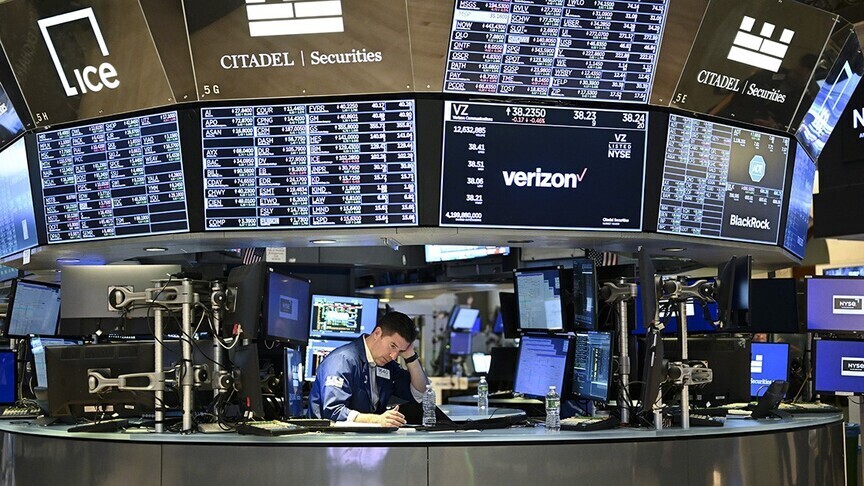
The New York Stock Exchange closed Thursday with gains, as the Dow Jones Industrial Average rose 0.61%, the S&P 500 gained 1.14% and the Nasdaq was up 1.69%. US stock indexes opened Friday higher.
European stock markets also posted gains on Thursday, driven by surging auto, telecom and retail shares, while optimism that geopolitical tensions may ease contributed to the trend.
The Bank of England (BoE) maintained its policy rate at 3.75%, in line with estimates, while six members, including BoE Governor Andrew Bailey, voted to keep rates unchanged and three voted to raise the rate by 25 basis points to 4%.
The BoE projected that inflation could rise slightly above 4% in the first quarter of next year, while the bank also said it would reduce its bond portfolio by £46 billion ($61.5 billion) through 2034.
Bailey said the BoE may have to further tighten its monetary policy if the Middle East conflict persists.
Meanwhile, the eurozone’s consumer price index (CPI) rose 0.4% on a monthly basis and 3.2% year on year. While the monthly increase was in line with estimates, the annual rise was slightly below expectations.
Trump threatened to impose tariffs on the EU or even completely halt trade with the bloc over its proposal to make Canada its first “associate member.”
“If it’s a bad intention, we’ll put very heavy tariffs on Europe,” he said.
The UK’s FTSE 100 gained 1.19%, France’s CAC 40 rose 0.57%, Italy’s FTSE MIB 30 gained 0.8% and Germany’s DAX 40 was up 0.77% on Thursday. European stock markets opened Friday with mixed results.
Near Friday’s close, Asian equity markets traded positively as energy prices fell and tech stocks rebounded.
The Bank of Japan (BoJ) raised its policy interest rate by 25 basis points to 1.25% on Friday, reaching its highest level in 31 years in a decision made by a vote of seven to two.
The bank said the economy is growing moderately and that this trend will continue, but the situation in the Middle East and rising demand for artificial intelligence (AI) continue to pose inflationary risks.
The BoJ also signaled that rate hikes will continue depending on economic activity and financial conditions. The recent decision was not unanimous, fueling uncertainty over whether the bank will continue on its tightening path, which led to a further depreciation of the yen.
The US dollar/Japanese yen exchange rate rose 0.2% to 157.2, while Japan’s inflation came in slightly below estimates at 1.9% in August.
Near Friday’s close, South Korea’s Kospi rose 2.6%, Japan’s Nikkei 225 gained 1.8%, Hong Kong’s Hang Seng gained 0.7% and China’s Shanghai Composite was up 1%.