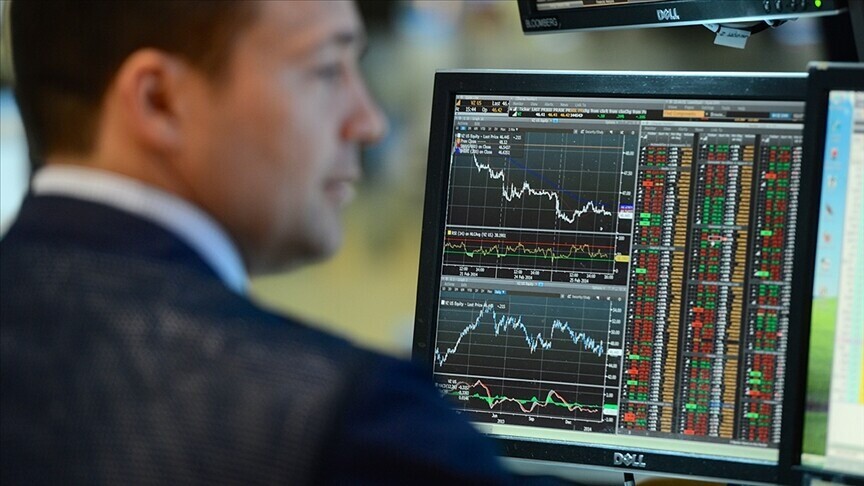
Global markets traded downward due to mounting risks to energy corridors amid the US-Iran tensions, while US tariffs made a comeback, targeting imports of goods produced via forced labor.
Military actions in the Middle East are intensifying with each passing day, influencing the market direction.
US President Donald Trump is allegedly considering a large-scale attack against Iran, while the US Central Command (CENTCOM) said it launched a new attack on military targets in the country.
The US reportedly targeted the southwestern city of Ahvaz near the Iraqi border with missiles, as Iranian media reported explosions were heard in areas near the Strait of Hormuz.
The conflict risk in the Strait of Hormuz spilled over into the Red Sea, fueling existing concerns over oil supply.
Brent crude surged 4.7% to $94.9 a barrel on Thursday, reaching its highest since June 11.
Rising oil prices affect inflation and economic growth expectations, while also fueling concerns over potential hawkish moves by central banks amid the current tightening cycle.
The Fed’s likelihood of issuing an additional rate hike in December after a hawkish move either in September or October rose to 78%, according to money market estimates.
Bond markets came under selling pressure with no signs of easing amid rising inflation expectations and forecasts around the Fed’s future policy roadmap.
The US two-year Treasury yield reached 4.38%, testing its highest since Feb. 12, 2025, while the 10-Year Treasury yield rose to 4.72%, its highest in around 17 months.
Concerns that rising borrowing costs could pressure investment and consumption persist, raising questions over the profitability outlook of firms, especially those focused on artificial intelligence (AI).
Meanwhile, the Office of the US Trade Representative said 10% or 12.5% tariffs will be imposed on some 60 trading partners, following investigations under Section 301 of the 1974 Trade Act over the failure to ban the import of goods produced via forced labor.
The tariffs will be applied at 10% to trading partners that have banned the import of forced labor goods, have committed to such a ban through bilateral trade deals, or have implemented a partial regime, while the 12.5% rate will be imposed on partners that have yet to impose such an import ban.
Argentina, Bangladesh, Cambodia, Canada, Ecuador, El Salvador, Guatemala, Honduras, India, Indonesia, Jordan, Malaysia, Mexico, Pakistan, Sri Lanka, Trinidad and Tobago, and the UK will be subject to a 10% tariff, while for products originating in the EU and Taiwan, the total tax burden will be 10% based on the most-favored-nation tariff rate.
Products from Japan, South Korea, and Switzerland will face a 12.5% tariff.
These tariffs will apply to goods entering the US or being released from storage as of Friday.
At the same time, the US’ initial jobless claims fell 22,000 to 187,000 people in the week ending July 18, its lowest since 1969.
The US 10-Year Treasury yield stabilized at 4.71% on Friday and the US Dollar Index traded flat after rising 0.4% on Thursday to 101.5.
Gold fell 2% to $4,049 per ounce on Thursday amid growing rate hike expectations and a stronger dollar, while the precious metal is trading down 0.6% at $4,027 per ounce on Friday.
Brent crude oil fell 0.6% to $94.3 a barrel on Friday following a significant gain on Thursday.
The S&P 500 fell 1.21%, the Nasdaq Composite dropped 2.15%, and the Dow Jones Industrial Average declined 0.97% on Thursday. American indexes opened Friday on a mixed trend.
At the same time, European stock markets saw a selling trend on Thursday amid the indirect negative impact of the Middle East geopolitical risks on the energy sector in the region.
The European Central Bank (ECB) maintained its three key policy interest rates on Thursday, within estimates.
ECB President Christine Lagarde said the full impact of the energy shock caused by the Middle East war on inflation has yet to come to the fore, contributing to the fears that current risks could deepen further across the region.
Lagarde assured that the monetary policy decision was unanimous and that the bank is well-positioned to monitor developments and upcoming data in the coming weeks.
She warned that the energy shock could further intensify and its impact on other prices and wages could be stronger than expected.
She added that the bank is closely monitoring second-round effect risks from the energy shock but there have yet to be clear signs.
The UK's FTSE 100 fell 0.73%, France's CAC 40 declined 1.64%, Italy's FTSE MIB 30 decreased 2.8%, and Germany's DAX 40 was down 1.56% on Thursday. European indexes opened Friday on a mixed trend.
At the same time, Asian equity markets were dominated by a selling pressure in line with current developments, while Japan’s annual inflation accelerated to 1.7% in June, within estimates, versus 1.6% in May, as rising oil prices impacted the broader economy.
Japan’s manufacturing Purchasing Managers’ Index (PMI) reached 54.7, its services PMI totaled 51.9, and the composite PMI came in at 53.1, according to data released on Friday.
Japan’s manufacturing and services PMIs fell month-on-month but its composite PMI rose.
The Bank of Japan is likely to implement one rate hike by the end of the year, following these developments.
Risks in the Middle East and uncertainties over profit and revenue expectations in the semiconductor sector contributed to the selloff in Asian markets.
Near Friday’s close, Japan’s Nikkei 225 fell 2.8%, South Korea’s Kospi declined 4.5%, Hong Kong's Hang Seng dropped 1.2%, and China's Shanghai Composite was down 0.7%.