Michael Sercan Daventry
12 November 2015•Update: 12 November 2015
LONDON
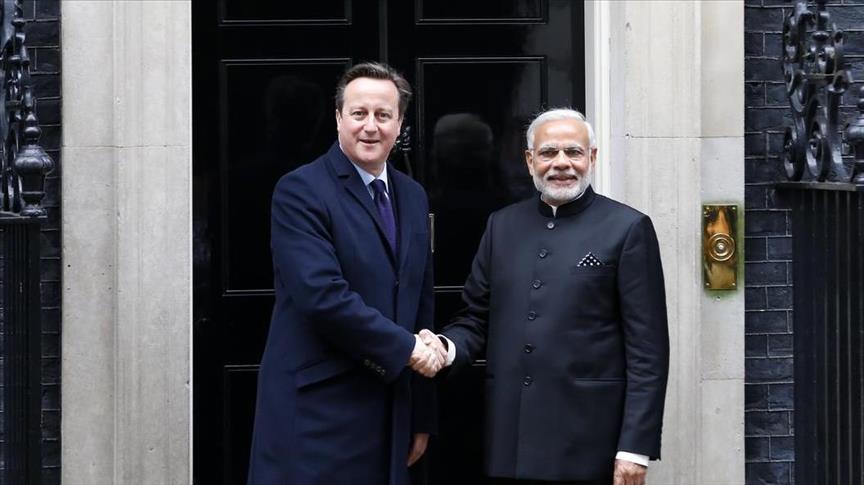
Indian Prime Minister Narendra Modi has hailed his country’s ties with Britain at the start of his three-day visit during which he is expected to seal some landmark trade deals.
Speaking at a joint press conference with his U.K. counterpart David Cameron Thursday afternoon, Modi said that “the familiarity of history, the extraordinary people-to-people ties, and our shared values” gave the U.K.-Indian relationship “a special character”.
Collaborations worth £9 billion ($13.7 billion) between British and Indian companies were announced at the start of the visit, including a five-year partnership for Britain to help develop the Indian cities of Amravati, Indore and Pune.
Plans were also announced to issue Indian bonds worth £1 billion ($1.52 billion) in London, the first time government bonds have been issued in the rupee currency outside of India.
“We both have big ambitions for the relationship between our countries. We want a modern, essential partnership founded on old ties but defined and fuelled by the modern, diverse, dynamic countries that we are both today,” Cameron said.
The Indian premier was due to address the U.K. parliament later on Thursday, following a central London fly-past of the Red Arrows aerobatics display team in his honor. During his stay he will meet Queen Elizabeth and hold an event for members of Britain’s Indian community at Wembley Stadium.
Modi’s visit is not without controversy. Protesters gathered outside the U.K. Prime Minister’s offices meant he had to arrive through a rear entrance instead of driving his convoy into Downing Street as is traditional for visiting foreign leaders.
An open letter published to coincide with the visit urged Cameron to raise the issue of freedom of expression in India during Modi’s visit.
The message, signed by 200 writers, including Ian McEwan and Salman Rushdie, expressed concern about what it called “the rising climate of fear, growing intolerance and violence towards critical voices who challenge orthodoxy or fundamentalism in India”.
Addressing Cameron, the letter said: “we urge you to engage with Prime Minister Modi both publicly and privately on this crucial issue. Please speak out on the current state of freedom of expression in his country, urging him to stay true to the spirit of the democratic freedoms enshrined in India’s Constitution.”
A number of high-profile public intellectuals, including 37 journalists, have been killed in India since 1992, according to the message, which was sent on behalf of the PEN International association of writers.