ANKARA
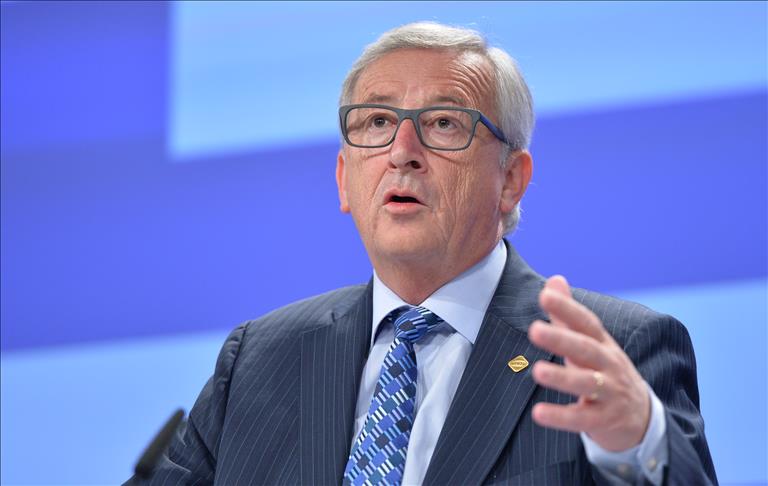
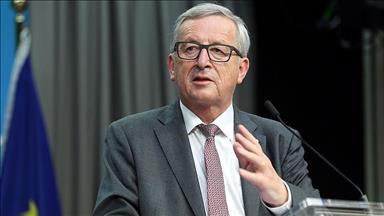
European Commission President Jean-Claude Juncker said on Monday that Greeks should vote "yes" in the referendum on the bailout proposals to be held on Sunday.
Greeks will vote on July 5 in a referendum on whether to accept bailout terms proposed by the Eurogroup and its other European creditors after the country rejected on Friday an offer from its international creditors to extend the country's bailout by five months.
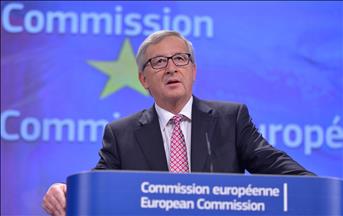
“A ‘yes’ vote means ‘yes' to the EU,” Juncker said in a speech before journalists in Brussels. “I ask the Greeks to vote ‘yes’ regardless of the way the referendum is expressed.”
"A ‘no’ vote is a vote against the euro and staying in the EU,” he added.
Juncker stressed that the proposals made in the bailout plan devised by the Eurogroup, the International Monetary Fund (IMF), the EU, and the European Central Bank did not include wage cuts or pension cuts, but rather supported increased social fairness.
“Our proposals have never included wage cuts. On the table is a proposal to modernize the wage grid of the public sector,” Juncker said.
“Nor have we proposed cuts in the level of pensions,” Juncker continued. “We seek a reform of the pension system, but one that will not reduce existing pensions.”
Juncker also stressed that the creditors had agreed to the Greek government demand for collective bargaining practices.
“We have simply asked that best-practice methods be used in cooperation with the International Labor Organization,” said Juncker.
“We have asked the Greek government to remove incentives for early retirement, but we have offered to allow the substitution of any other measures the government chooses, so long as the numbers add up,” Juncker said, referring to the amount of spending reductions involved.
Further, Juncker pointed out, Greece would be obliged to make $12 billion less in spending cuts than were originally demanded.
“We are also demanding cuts in the defense budget, but that seems only fair,” he added. “Just as it is only fair that Greece establish an independent tax administration, of the kind used in all other European countries.”
Juncker said that the proposals challenge vested interests to reach a fair accord.
“This is not a game of liar’s poker,” he said. “This is an effort by all the nations of the eurozone working together.”
Juncker warned that it is incumbent on the Greek government to tell its citizens the truth.
“We have never considered a Greek exit from the euro, or from the EU,” Juncker said. “But there is no way to provide a ready solution without sacrifice.” Juncker cited the austerity programs that have been held in Ireland, Portugal and Spain as examples of economies that have emerged from austerity successfully.
“I call upon the Greeks to say ‘yes,’ Juncker said. “Plato shouldn’t play in second division.”