30 December 2015•Update: 31 December 2015
By Kyaw Ye Lynn
YANGON, Myanmar
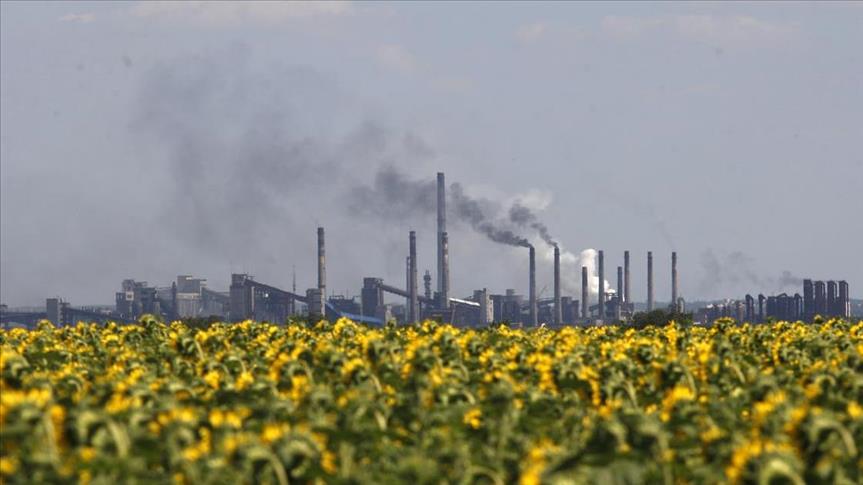
Myanmar’s parliament has approved the demarcation of land in the first phase of a long-delayed economic zone planned to house an industrial park in an underdeveloped and troubled region housing a majority of the country's Rohingya Muslims.
State run media reported Wednesday that the proposal for the underdeveloped and troubled western state of Rakhine presented by President Thein Sein to powerful House Speaker Shwe Mann was supported Tuesday by 424 out of 511 lawmakers in the Union Parliament.
“The parliament votes just for demarcation of land for the project. Other things such as business model are in the hand of the next government,” the Irrawaddy online magazine quoted Shwe Mann as saying.
Lawmakers of ethnic Rakhine parties, alongside several from the opposition National League for Democracy (NLD) that won last month’s general election, voted against the proposal, it reported.
Lawmakers pointed out that Myanmar companies should not be restricted by a 15 percent share in creating joint ventures for the planned Kyaukphyu special industrial zone (SEZ), which will include an industrial park, a residential estate and two deep-sea ports on nearby islands.
According to the proposal, around 85 percent of investments for the project are due to come from Chinese companies – among the conditions that have drawn protests from local residents and businesses.
The approved first phase of the planned development project involves setting aside 1,737 hectares of land along the western coast of Rakhine, one of the poorest states in Myanmar.
The government announced Monday that the tender for the two deep-sea ports and the industrial park in the project’s initial phase was awarded to China’s CITIC Ltd, a Hong Kong-listed company.
However, no company had met the requirements for implementing the high-end housing project.
Local community-based organizations have been calling on the government to suspend the SEZ.
Over the weekend, more than 600 residents who will be impacted by the proposed project gathered in Kyaukphyu to call on the government to not permit it to proceed until their concerns about employment opportunities and development were addressed.
After a three-day conference in Kyaukphyu town last week, members of the Rakhine community had issued a statement demanding the project’s suspension.
A spokesperson for the conference, attended by 225 representatives from 107 civil society organizations, had told Anadolu Agency, “we don’t want a coal-fired power plant and the oil refinery industry in the project, but authorities have not replied until now.”
Tun Kyi also stressed by phone that they were urging lawmakers “not to approve the proposal as the compensation plan for land in the project area is still unclear.”
The SEZ project -- planned to spread across three Rakhine townships, mainly Kyaukphyu, was first announced in Sept. 2013 and bidding closed in Nov. 2014.
Amid the delay in the announcement of successful tenders -- originally slated for earlier this year --- Chinese partners have been eager to see the project approved before the new government takes power in March 2016.
The project also covers the servicing of the Shwe gas field in the Bay of Bengal, which in turn services a pipeline carrying oil and gas to China – Myanmar’s largest trade partner.
Since it began operations in mid-2013, the China-Myanmar pipeline has been pumping an estimated $45 million worth of oil and gas daily through shipments of 500 million cubic feet from Kyaukphyu in the Bay of Bengal, according to media reports.
Hla Thein, chairman of the Rakhine Social Association, has warned that it would be a “huge mistake” to implement the project “without addressing the demands of local people, such as the electricity problem.”
He told Anadolu Agency that the SEZ should “also benefit local people, not only big companies,” urging the government to “provide suitable vocational training for local people before implementation of the project so that they can get a job easily.”
The proposed project in Kyaukphyu is among planned three special economic zones – including the Dawei SEZ in southern Tanitharyi Division and the Thilawa SEZ on the outskirts of Yangon – as Myanmar seeks to develop its economy after emerging from almost 50 years of isolation under brutal military rule.