BRUSSELS
The European Union's Energy Commissioner has announced that new homes in the 28-nation-bloc are to be built to near-zero carbon emission standards within five years.
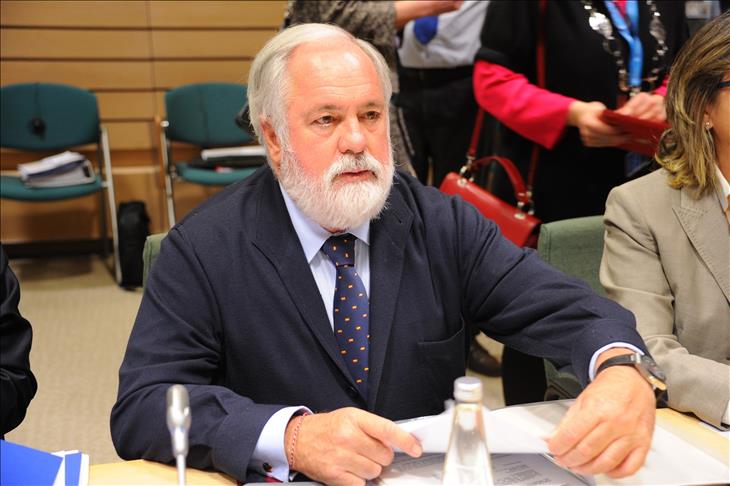
Under the move unveiled by Miguel Arias Canete during an energy conference on Brussels on Tuesday, member States will be directed to ensure that all new buildings in the bloc are built to a near-zero-energy design by 31 December 2020.
Canete said: "To make our existing buildings more efficient and reach the 'nearly zero-energy' standards for new buildings, renewables and energy efficiency will have to work hand-in-hand.
"I will make sure that the funding is there to make that happen."
Housing 'energy inefficient'
After 31 December 2018, new buildings occupied and owned by public authorities will also be required to be near-zero-energy buildings.
Canete said 75 percent of EU’s housing stock was currently energy inefficient.
The near-zero energy requirements for homes is part of the bloc’s Energy Union strategy, which includes allowing member states to transport at least 10 percent of their electricity across borders to neighboring countries by 2020 and reduced the bloc's domestic greenhouse gas emissions by at least 40 percent by 2030.
The energy union strategy also aims to reduce the EU’s energy dependency on external states, including its main gas-supplier, Russia.
High costs
As the largest energy importer in the world, the EU imports 53 percent of its energy at an annual cost of around €400 billion, according to the European Commission.
Canete added the EU’s energy imports would have been much higher without renewable energy supply.
He said: "We know the EU imports over €400 billion worth of energy every year.
"But we should also remember that, without renewables, this figure would have been at least €30 billion higher!"
Canete said he would unveil a Renewable Energy package - which includes new policy for bio-energy - at a later date to ensure the EU meets its 2030 targets.