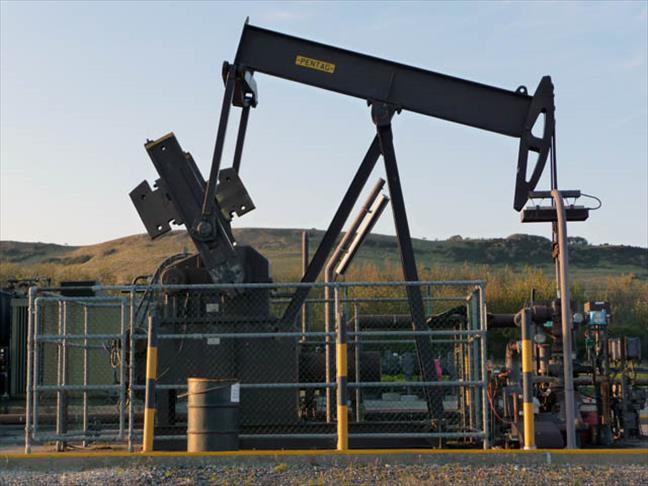
The value of the estimated 150 thousand barrels lost through oil theft each day, which amounts to more than $5 billion per year, would be sufficient to fund universal access to electricity for all Nigerians by 2030, the report says.
South Sudan, Niger, Ghana, Uganda and Kenya are seeing rising output; but by the late 2020s, production in most countries – with the exception of Nigeria – will be in decline, according to the report.
Regional production is predicted to fall back in 2020 from above six million barrels per day to 5.3 million barrel per day in 2040, but demand for oil products is anticipated to double to 4 million barrels per day – an upward trend amplified in some countries by subsidised prices. The result is to squeeze the region’s net contribution to the global oil balance, the report says.
Oil resources are being developed primarily in Nigeria and Angola with the production of 5.7 million barrels per day of crude oil in 2013. The region exported more than 5 million barrels per day of crude, and imported around 1 million barrels per day of oil products.
- Natural gas and Liquified natural gas
Gas production is set to rise to 230 bcm in 2040, led by Nigeria and Mozambique's expansion of output by 60 bcm in 2040, and Angola and Tanzania each by 20 bcm, the report predicts.
Alongside the benefits from an estimated $150 billion in fiscal revenue by 2040 – both of these countries are also determined to promote domestic gas markets which will need to be built from a very low base.
- Energy Demand
The report says that energy demand in sub-Saharan Africa grew by around 45 percent from 2000 to 2012, but accounts for only 4 percent of the global demand despite being home to 13 percent of the global population.
The region’s largest energy demand centres are Nigeria and South Africa, which together account for more than 40 percent of the total energy demand, according to the report.
On-grid power generation capacity was 90 gigawatt in 2012, with around half being generated in South Africa. 45 percent of this capacity comes from coal mainly in South Africa, 22 percent from hydro power, 17 percent from oil, and 14 percent from gas from Nigeria.
Insufficient, unreliable or inaccessible grid supply has resulted in large-scale private ownership of oil-fuelled generators and a greater focus on developing mini and off-grid power systems, according to the report.
In the African region, generally renewables-based capacity is growing rapidly but from a very low base with the exception of hydropower, and the region accounts for 18 percent of the world's uranium supply.
www.aa.com.tr/en