04 November 2015•Update: 05 November 2015
By Ben Tavener
SAO PAULO
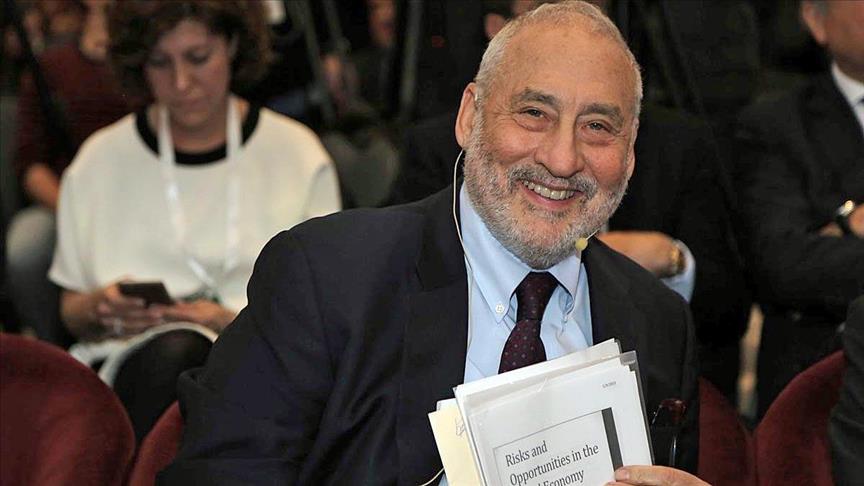
Attempts by Brazil to implement austerity measures to right its recession-hit economy could result in long-term damage to growth, renowned economist Joseph Stiglitz said in an interview published Tuesday.
The Nobel Prize-winner told Brazil's Folha de S.Paulo newspaper that the government's priority should be to counter rising inflation and high interest rates in order to improve the climate for investors.
"Brazil is paying an extremely high price for [high interest rates]," Stiglitz said, highlighting the "unusual cycle" for an emerging country. "If Brazil could manage to reduce inflation, it could have lower interest rates and this would allow for faster growth."
Inflation continues to rise despite the central bank's attempts to tackle price increases by raising the benchmark Selic interest rate to an eye-watering 14.25 percent.
The economist hinted that the high inflation rate could also be helped by greater cooperation between employers and employees, such as agreements to freeze prices and salaries.
Known for his anti-austerity stance, Stiglitz criticized the Brazilian government's plans to buoy the economy by implementing swingeing fiscal adjustments. "These policies will, in all probability, hamper economic growth even further ... as you are not investing in human capital and new technologies today: therefore, the effects will be felt long-term," he added.
The economist also suggested the New Development Bank – formerly known as the BRICS Development Bank – and the Asian Infrastructure Investment Bank should be used to good effect for stimulating investment.
Stiglitz also defended cuts to social programs that have been key to lifting 36 million Brazilians out of poverty and putting 40 million into the economic middle classes in recent years.
A spokesperson for Brazil's finance ministry told Anadolu Agency said there was no official comment on the interview.
Finance Minister Joaquim Levy has repeatedly said austerity measures, such as cuts to public spending and higher taxation, are key to solving Brazil's economy. "We still have to tighten our belt and rebalance the accounts. That is crucial for us to see growth in the future," he recently told lawmakers in the lower house of Congress.
But Brazil President Dilma Rousseff has publicly backed efforts to push the measures through Congress, despite facing fierce opposition within her leftist Workers' Party.
Stiglitz's comments on the same day as a weekly Central Bank survey of more than 100 economic institutions once again worsened its outlook for the Brazilian economy.
The inflation rate is expected to reach 9.91 percent this year -- well above the central bank middle target of 4.5 percent. Economists believe the rate will fall to around 6.29 percent in 2016 -- within the current tolerance band of two percentage points.
Economists predict 2015 and 2016 will see the recession continue, with negative growth of 3.05 percent and 1.51 percent, respectively.