by Zaki Shaikh and Andrew Jay Rosenbaum
LONDON
As the Russian economy dives deep into recession, risks loom for the future.
“Low oil and gas prices, geopolitical tensions and ongoing international sanctions deepen recession in Russia. The growth outlook for Russia in 2015-2016 is negative, with the economy expected to contract by 3.8 percent in 2015,” the World Bank reported on Dec. 23.
“The economy continues to adjust to the 2014 terms-of-trade shock amid a tense geopolitical context marked by ongoing international sanctions. Oil and gas prices remained low through the first half of 2015, further underscoring Russia’s vulnerability to volatile global commodity markets,” the World Bank said.
The erosion of real income significantly increased the poverty rate and exacerbated the vulnerability of households in the lower 40 percent of the income distribution, the bank said.
During 2015, Russian trade turnover declined by more than 30 percent, Russian Economic Development Minister Alexei Ulyukayev said in an interview on Russia 24 News channel on Tuesday.
High ruble volatility is also hitting the Russian economy, Ulyukayev said. "The problem is not the high or low exchange rate, but the fact that it varies greatly."
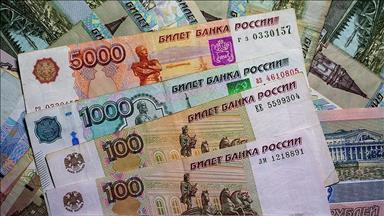
The ruble lost about 50 percent against the dollar in 2015, and the low value is fueling inflation. In November, annual inflation reached 15 percent, according to World Bank statistics. But the low value of the ruble is not causing Russian exports to increase, according to the report -- exports usually rise as a currency depreciates.
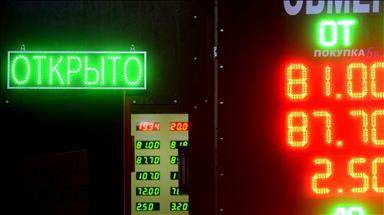
And the ruble may drop further, to 94 against the dollar, according to research by Bank of America Merrill Lynch released on Dec. 14. This would make consumer goods even more expensive at a time when consumer incomes are declining.
While Russia has imposed economic sanctions on Turkey, Russian businesses are suffering from the decline in trade with one of its key markets, Ulyukayev told Russia 24.
"There are some industries, such as, for example, the tourism industry, which is highly dependent [on Turkey], where the limitations are most noticeable, but for other industries, the volume of products imported is very high,” he added.
With oil prices at decade lows, the situation is unstable, declared Russia’s former Finance Minister Alexei Kurdin to the Svobodnaya Pressa website Dec 28. “Under such conditions we cannot claim that the worst has passed,” Kurdin said.
“If oil prices remain at this level for another six months or a year, we will see the continuation of economic decline. Next year will bring a serious challenge. Since there will be less revenue, a reduction in public spending is inevitable,” Kurdin warned.
Experts at the Central Bank of Russia do not expect prospects of steady growth beginning earlier than 2017. Prospects for industrial growth are not bright, central bank governor Elvira Nabiullina told the press on Dec. 28.
The risk scenarios developed by the Bank of Russia, envisage oil prices declining to $35 per barrel, Nabiullina said. In such a situation, the Russian economy could slow by an additional 2-3 percent in 2016, according to the World Bank.
But non-oil sectors are also facing revenue reductions, according to the central bank’s Trends Indicators report released in Dec 2015.
A dangerous risk is the depletion of Russia’s foreign exchange reserves, according to the report.
The sharp decline in state oil revenue in the next two years will cause a complete depletion of the Reserve Fund and National Welfare Fund (NWF). These funds are used to replenish foreign exchange reserves, but those will also run out by the middle of 2017, the report said.
This means that there will be no resources for Russia to fund its budget deficit by 2017, or possibly earlier than that, according to the report. The Russian Development Bank (VEB) is also out of funds, and in debt for $18 billion, according to the bank’s balance sheet as of Dec. 31.
The Russian government is pondering the sale of state assets to fill the gap, Finance Minister Anton Siluanov said in an interview with Rossiya-24 television on Dec. 31. The minister forecast earnings of about $13 billion on these sales, but analysts noted that the amount earned will depend heavily on valuations of the state-owned companies on the block.
In 2014, arms sales brought $10.2 billion in revenue to the Russian government, but Nicholas Arefyeva, deputy chairman of the Duma Committee on Economic Policy told the Svobodnaya Pressa website on Dec 28 that it is unlikely that sales will reach that level in 2016.
Further, Russian corporate debt is now at more than $ 500 billion, Arefyeva said. “Previously, the state and the oil companies took loans to refinance foreign loans, but as a result of sanctions now we are cut off from such finance,” he added.
Russians are suffering in the recession “An already troubling rise in the poverty rate, which climbed from 13.1 percent in the first half of 2014 to 15.1 percent in the first half of 2015, is accelerating,” the World Bank said.