ANKARA
By Ovunc Kutlu
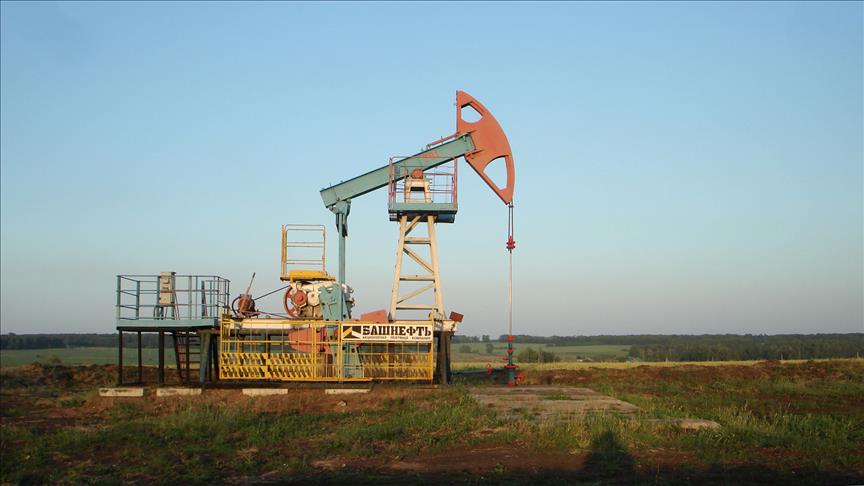
Western sanctions that prevent Russian energy companies importing high-tech equipment and services will make it difficult for Russia to explore and produce shale oil and gas, but will not stop its progress, experts say.
"Without the necessary high-tech drilling equipment and know-how, Russia cannot manage unconventional fields," said Sijbren de Jong, a strategic analyst at the Hague Centre for Strategic Studies.
Due to unrest in Ukraine, western countries imposed sanctions on Russia in September.
These sanctions prevent it from importing technology, equipment and services from western companies for its energy exploration projects.
Royal Dutch Shell paused its shale oil exploration operations with Gazprom Neft, while American oil giant ExxonMobil suspended its joint venture with Rosneft in the Arctic in early October.
"Nobody wants to sell advanced technology to the Russians right now. So, it will be very difficult for Russia to develop those fields if sanctions are still in place," de Jong said.
Nevertheless, Russia might continue exploring shale oil and gas independently, with the technology available at its disposal.
Gazprom Neft announced in early October that it started drilling the first horizontal well to explore the Bazhenov complex of the Palyanovsky deposit at the Krasnoleninsky field.
According to some estimates, the oil reserves in the Bazhenov formation reservoir may reach 100-170 billion tons in Western Siberia alone, Gazprom Neft stated in a press release on Oct. 2.
"Technology sanctions on shale projects in Russia will not stop developments," said Cyril Widdershoven, an oil and gas expert working for the Dutch consultancy company, TNO.
"Current drilling techniques just need to be tweaked towards the shale gas and oil approach. However, new technology will not be available, so Russia will not be able to address new fracking technology in full," he continued.
It may not be too urgent for Russia to develop shale oil and gas immediately or in the near future, since its oil production remains a little over 10 million barrels per day.
Its gas production has also been steady around at 21-22 trillion cubic feet, or 600-620 billion cubic meters, between 2011 and 2013, according to U.S. Energy Information Administration data.
"For the next few years, shale gas will not be necessary to cope with Russian export commitments. However, to increase its overall global position and possible export needs to Asia in the future, new reserves are always attractive, including shale gas," Widdershoven added.
Yet, if Russia commits to explore new shale reserves, it might want to plan ahead, since its previous endeavors ended without significant results.
"Russia would need to tap into difficult fields like Shtokman and Yamal, and shale oil fields are all very complex," de Jong warned.
Shtokman field, one of the largest natural gas fields in the world, is located in the Barents Sea -- 600 kilometers northeast of Murmansk.
It has total reserves of 3.9 trillion cubic meters of gas and 56 million tons of gas condensate, according to Gazprom data.
Yamal Peninsula, in northwest Siberia, is home to nearly 22 trillion cubic meters of in-place and forecast gas reserves, while its estimated oil reserves are 291.8 million tons, according to the Gazprom website.
"Shtokman has been postponed endlessly and Gazprom put the project on hold. The result is that Shtokman still lies idle and Russia cannot perform this alone," de Jong concluded.
www.aa.com.tr/en