By Ovunc Kutlu
ANKARA
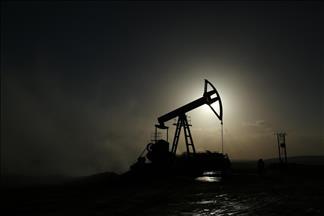
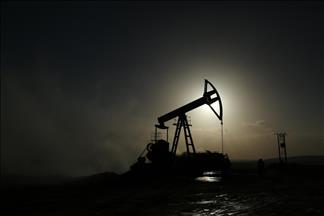
Saudi Arabia's state-owned oil company Aramco aims to gain more share in the oil market by boosting investment, while it prepares for a rise in oil prices when global demand increases, say experts.
Aramco's Chief Executive Officer Khalid al-Falih said on Jan. 27 that the company plans to invest $30-$50 billion a year to maintain its crude oil production level and to become the world's largest refiner.
Meanwhile, many global oil giants like ExxonMobil, Chevron, British Petroleum, and Royal Dutch Shell have cut their 2015 capital expenditures and investments in the last few weeks.
"Saudi Arabia is investing so that when the price of oil rises again, it will be able to gain more market share," Dr. Sijbren de Jong, a strategic analyst at The Hague Centre for Strategic Studies, told The Anadolu Agency.
The price of global benchmark Brent crude oil fell more than 60 percent since June, dipping below $46 per barrel on Jan. 13, the lowest point since March 2009, but rose 28 percent in the last three weeks, while American benchmark WTI rose 18 percent, facing weak U.S. oil rigs data and potential production losses.
"Aramco aspires to become a leading integrated energy and chemicals company," said Dr. Florence Eid-Oakden, a chief economist of Arabia Monitor, an economic research and strategy institution in London.
"It focuses on maximizing income, facilitating the sustainable and diversified expansion of the kingdom’s economy, and enabling a globally competitive and vibrant Saudi energy sector," she added.
She stressed that through the production of an average of 9.8 million barrels of crude oil a day, they play a critical role in supplying world oil markets.
The global oil output reached 93 million barrels per day in 2014, and more than 10 percent was supplied by Saudi Aramco.
"Al-Falih is waiting for world demand to pick up," said Ed Hirs, an energy economist at the University of Houston in Texas, U.S.
"He is waiting for a drop in production of high-cost plays, primarily the U.S. shale plays, because they are not economical to continue developing at the current price," he added.
The drop came last Friday as oilfield Services Company Baker Hughes said in its weekly report that the number of oil drilling rigs in the U.S. suffered the largest single-week drop since 1987 by falling 94 units week-on-week.
According to energy experts, the cost of oil production in the U.S. is much higher compared to other countries, thus less resilient to low oil prices.
"This means that the profitability of U.S. shale production will decrease. This is ultimately good for the Saudi market share," said de Jong.
"Saudi Arabia is essentially ramping up its production so that the pressure on more expensive producers, like non-OPEC countries, would increase," he added.
On Dec. 21, the kingdom's Oil Minister Ali al-Naimi blamed oil-producing nations outside the Organization of the Petroleum Exporting Countries for low oil prices and global oversupply.
"If OPEC fails to maintain capital investment, production will decline across OPEC," said Hirs, emphasizing that this strategy has created problems in the past for oil-producing countries like Venezuela, Mexico, and Russia, which did not reinvest in drilling new wells or building new refineries.