NEW YORK
U.S.-based international credit rating agency Standard & Poor's (S&P) lowered credit ratings for five countries on Wednesday.
While the ratings for Saudi Arabia, Oman, Bahrain, Kazakhstan and Brazil were lowered, the rating of Russia was affirmed, but with a negative outlook, and Qatar's rating was affirmed with a stable outlook.
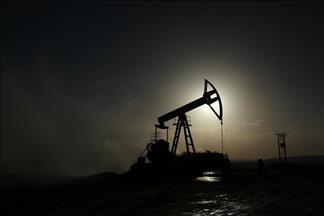
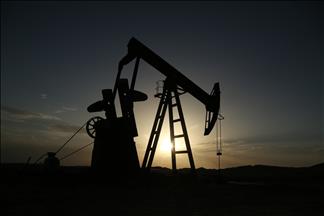
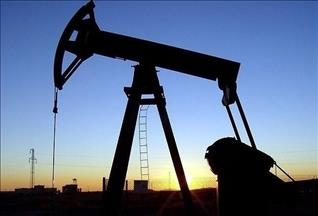
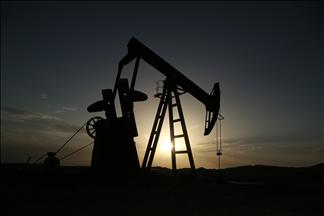
The main reason behind lowering the ratings was the plummeting of oil prices, which most countries are dependent on to generate revenues through oil sales and exports.
"The decline in oil prices will have a marked and lasting impact on Saudi Arabia's fiscal and economic indicators given its high dependence on oil," S&P said in a statement.
"We now expect that Saudi Arabia's growth in real per capita GDP will fall below that of peers and project that the annual average increase in the government's debt burden could exceed 7 percent of gross domestic product (GDP) in 2016-2019," it added.
The agency said it lowered the kingdom's foreign- and local-currency sovereign credit ratings to 'A-/A-2' from 'A+/A-1', and added: "The stable outlook reflects our expectation that the Saudi Arabian authorities will take steps to prevent any further deterioration in the government's fiscal position beyond our current expectations."
S&P also lowered ratings of Oman and Bahrain, due the negative effect of oil prices on their economies. The long- and short-term foreign and local currency sovereign credit ratings of Oman was lowered to 'BBB-/A-3' from 'BBB+/A-2', while the outlook was said to be stable.
"The decline in oil prices will have a significant impact on Oman's economic and fiscal indicators given its high dependence on oil. We now forecast that Oman's GDP per capita will fall to $14,600 in 2016 from $20,500 in 2014, while the annual average increase in general government debt will be about 5 percent of GDP in 2016-2019," the agency said.
Although S&P lowered Bahrain's long- and short-term ratings to 'BB/B' from 'BBB-/A-3', it remained hopeful that "Bahrain's stable economic growth projections will offset ongoing fiscal and external pressures over the coming 12 months".
Kazakhstan and Brazil also had their ratings lowered.
While Kazakhstan's long- and short-term ratings were lowered to 'BBB-/A-3' from 'BBB/A-2', S&P said "weak exports and shrinking consumption will significantly constrain the country's economic prospects, with output stagnating in 2016, followed by an only modest recovery."
Brazil's long-term foreign currency sovereign credit rating was lowered to 'BB' from 'BB+' and its long-term local currency rating was lowered to 'BB' from 'BBB-'.
S&P stated that the country's general government deficit and net debt could average 7 percent and 60 percent, respectively, of its GDP during 2016-2018.
The rating agency also warned that Brazil's ratings could fall further "because of the risk of potential key policy reversals given Brazil's fluid political dynamics and inconsistent policy initiatives, or as a result of greater economic turmoil than we currently expect".
Qatar and Russia ratings affirmed
S&P affirmed the ratings for Qatar and Russia, but while holding the outlook stable for the former, it said the latter has a negative outlook.
Stressing its net asset position and resilient economy, S&P said this "will help the country to weather the current lower hydrocarbon price environment," and affirmed Qatar's 'AA/A-1+' sovereign credit rating.
"Qatar’s economic growth of about 4 percent in 2016-2019 will be sustained by its large infrastructure investment program," it said.
Meanwhile, Russia's rating for long- and short-term foreign and local currency ratings were affirmed at 'BB+/B' and 'BBB-/A-3', respectively.
However, the ratings agency said the outlook of the Russian economy is negative, and the country's ratings could fall if sanctions on Russia were tightened.
"The negative outlook reflects our view that fiscal buffers could deteriorate faster than we currently expect, as well as that we could lower the ratings if geopolitical events were to result in foreign governments' significantly tightening the sanctions regime applied to Russia," S&P said.
It also added that low oil prices had a negative impact on Russian hydrocarbon exports last year.
"In Russia, the hydrocarbon sector accounted for about 50 percent of exports in 2015, down from 58 percent in 2014, owing to the sharp fall in oil prices...Oil and gas revenues were 43 percent of central government revenues in 2015, down from 51 percent in 2014," the agency added.