ANKARA
When structural problems are resolved Turkey’s growth rate can go up after 2015, the Turkish Central Bank governor said Wednesday.
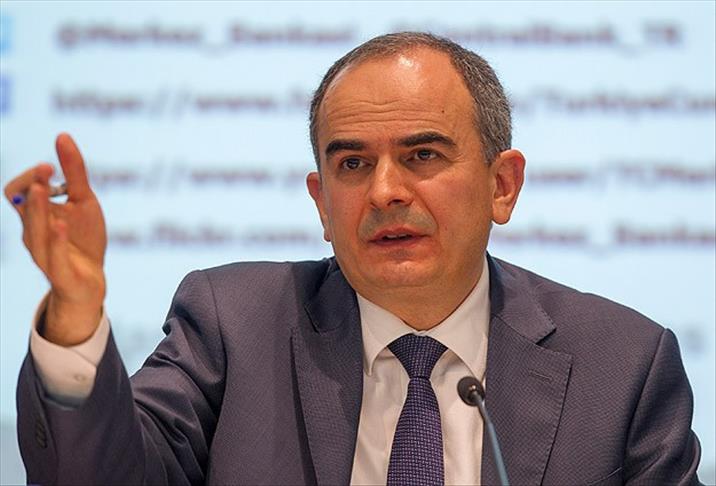
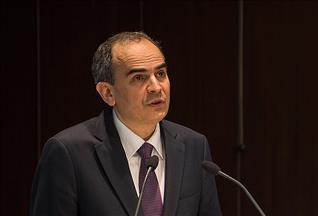
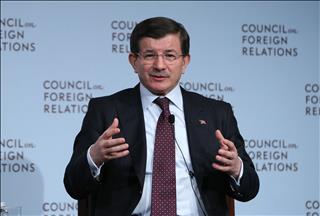
Addressing a press conference to present the bank's 2015 monetary and exchange rate policy in Ankara, Central Bank Governor Erdem Basci said "external demand is very important for stable growth. When structural problems are resolved, Turkey’s growth rate can go up after 2015."
Basci's remarks came after the Turkish Statistical Authority said the country's economy grew by 1.7 percent in the third quarter of 2014, which was much lower than what many analysts expected.
In the first quarter of 2014, the Turkish economy surprised authorities with a strong growth performance of 4.3 percent, but the figures dropped to 2.1 percent in the second quarter because of geopolitical crisis in Iraq and Syria, and a fragile economic recovery in Europe.
- Fight against inflation
In January this year, the Central Bank introduced drastic interest rate hikes in response to the rise of the U.S. dollar against the Turkish lira.
The bank has been under tight pressure from Turkey's high inflation levels, which have pushed above the seasonal average because of drought in the country this year that affected food prices.
According to the Turkish Statistical Institute, the 12-month moving average inflation in Turkey stood at 8.8 percent in November 2014.
"Initial findings suggest Turkey's inflation rate to stay under 8.9 percent by end of 2014," he said. "Turkey needs extra efforts to lower inflation amid dropping gas prices," he added.
Turkey spent nearly $56 billion on energy imports in 2013. Oil, natural gas and coal imports meet 70 percent of the country's energy needs.
"The bank's tight monetary policy is meeting its aims of controlling inflation forecast and the exchange rate....Turkey’s borrowing efforts for production, exports and investment have begun to yield results,” Basci said.
Basci talked about the possibility of a strong decline in the country’s inflation in the first four months of next year.
"But we will not relax the bank’s tight monetary policy," he added.
- Turkey's growth to accelerate under G20 presidency
Basci wished that Turkey would show a balanced growth in 2015 under the country’s G20 presidency. "It will be a very important achievement of Turkey to grow with balanced and structural reforms in 2015 during the G20 presidency. We have to strive for it," he said.
According to Basci, every $10 drop in the oil price improves the country’s inflation by 0.4 to 0.5 points and affects positively the current account deficit by 0.5 points.
Basci expected the export-led growth to accelerate next year.
"The Turkish Central Bank is ready to act for limiting effects of decision by the U.S. Federal Reserve, whether by hiking interest rates or by keeping monetary policy tight until the inflation outlook improves," Basci said.
He also said the Central Bank would encourage other banks in the country to borrow for longer periods.
Meanwhile, Turkey’s total current account deficit in the January-September period declined by $18.3 billion to reach $30.9 billion, according to the Turkish Central Bank.
The downward trend began in January and gained momentum after the Central Bank introduced interest rate hikes in response to the U.S. dollar’s rise against the Turkish lira in mid-January.
Turkish exporters performed well in the first 10 months of 2014 with an average increase of 5.6 percent. Exports stood at $131 billion in October.
The 2013 deficit was $65 billion, which is 34 percent higher than 2012's $48.5 billion.
Basci’s remarks gave a boost to the lira, which eased up to 2.2613 from 2.2663 against the U.S. dollar.
The U.S. Fed officials will meet on Dec. 16-17 to make a decision on whether to start raising short-term interest rates in 2015.
www.aa.com.tr/en