ANKARA
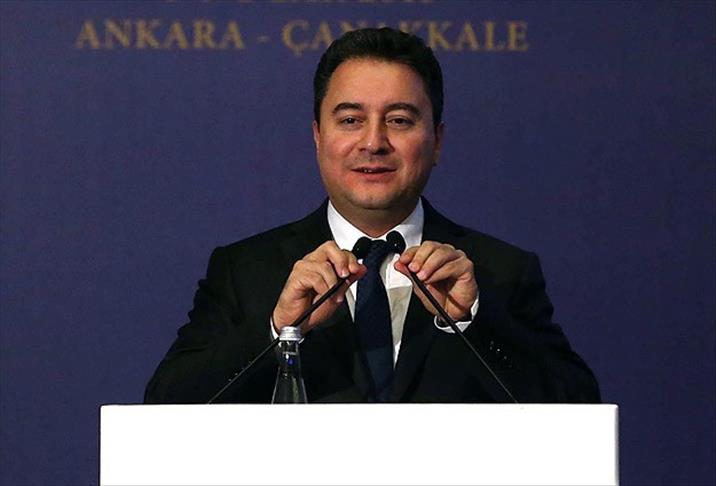
Turkey is in a very challenging geographical area of the world and it faces a dramatic transition which happens once every 100 years, Turkey's Deputy Prime Minister Ali Babacan said Tuesday.
His comments came as he addressed Turkish ambassadors on the second day of their week-long annual meeting in Ankara.
Babacan, the most senior voice on economic issues in Turkey's ruling AK Party, said the country needs to read the world economy very well during these times. He was referring to political tensions in the region, including Syria, Iraq, Ukraine, in addition to any interest rate hikes by the U.S. Fed in 2015.
"Turkey needs to follow political-economic trends in the region and around the world,” Babacan said. "Further on, implementing policies, based on accurate analysis, is very important."
- Turkey needs to follow Russia carefully
“Russia is our neighbor and the country is one of our largest trading partners," Babacan said. "It sends over 3.5 million tourists every year to Turkey and that is why it is an important country. Besides, strategically, Russia is an important neighbor and we need to follow it carefully in the coming period."
Babacan also said that many factors have influenced oil prices.
"Oil prices also fell below $60," he added. "We see a trend of $80 a barrel by 2019."
"Low oil prices are a very good thing for Turkey," Babacan said. "It may affect our trade with Russia adversely and perhaps less tourists from there will come to us, but when we look at the whole picture, low oil prices are extremely useful for Turkey."
- Turkey established credible medium-term programs
Babacan said Turkey maintained fiscal discipline and single-digit inflation rates before the 2008-2009 economic crisis.
"Turkey took on the crisis with strong public finances and a strong banking sector," said Babacan, emphasizing the political stability and strong political will Turkey saw during that period.
After 2010, Babacan said Turkey established credible medium-term programs, which have been updated every year, continued its fiscal discipline, innovative monetary policy, new capital market laws and state contribution in the private pension system.
What Turkey has done on fiscal adjustment, price stability, banking reform, social security reform, health care reform and public finance reform before the crisis, also helped Turkey to overcome the effects of the crisis.