By Andrew Jay Rosenbaum
ANKARA
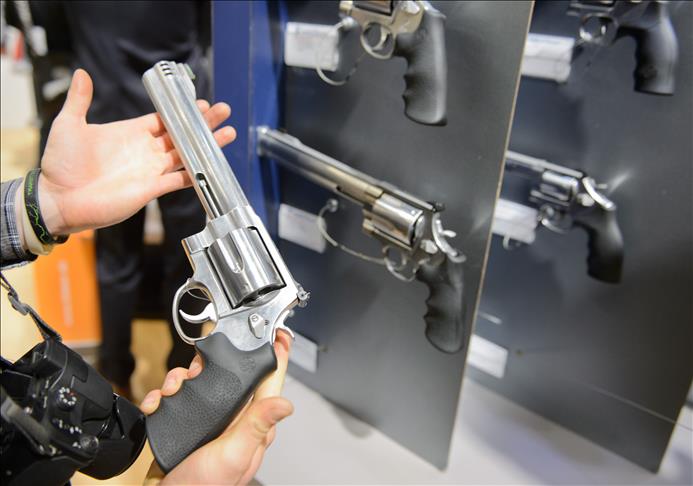
Colt, the famed manufacturer of pistols that tamed the American West, is stuck in bankruptcy proceedings as its bondholders take aim at its restructuring proposals.
West Hartford, Connecticut-based Colt went into "Chapter 11", a form of bankruptcy restructuring under U.S. law, Sunday. The company, which is out of cash, had proposed a zero-cash sale to its largest shareholder, the New York-based private equity firm Sciens which holds 87 percent of Colt.
Sciens would take on $250 million in bond debt from Colt in exchange for the remaining 13 percent of shares. Colt owes a total of $308 million in debts to various lenders. Colt also wanted to borrow $20 million from its current lenders which, the company said, was needed to meet payrolls. Colt also owes $70 million to investment bank Morgan Stanley, and may not be able to make its loan payment this month.
But bondholders are holding up the deal, asserting that the zero-cash sale would have forced them to take a haircut on the company's debt. In the Wilmington, Delaware, bankruptcy court on Tuesday Colt bond holders told the judge that Sciens was siphoning funds from Colt that should have been used for bond interest payments.
For now, Judge Laurie Silverstein ordered an interim loan from Sciens to enable Colt to meet its next payroll. But the deal with Sciens is not expected to survive bondholder objections.
Colt has been an arms manufacturer for 179 years. Founder Samuel Colt started the company in 1836, and created the Colt Single Action Revolver in the 19th century, and it became known as "the gun that won the West”.
Referred to by desperadoes and sheriffs as "the Peacemaker," the Colt became popular as it was the first revolver that could fire repeated shots without reloading.
The gun was carried by most of the well-known figures in the history of the American West, from outlaw Jesse James, to showman William "Buffalo Bill" Cody, to President Theodore Roosevelt, to the Texas Rangers.
Before World War I, Colt came out with the Browning M911 pistol that American and Canadian forces used in the conflict.
In World War II, and since, Colt has been a major supplier to the U.S. military, with its M4 and M16 lines of firearms widely used by front-line troops.
Colt .45 revolvers are still used extensively by Hollywood: Movie heroes like James Bond, and actors like John Wayne, Clint Eastwood, and Bruce Willis have all shot bad guys on the silver screen with Colts, as did Captain John Miller (Tom Hanks) in Saving Private Ryan.
But Colt's sales have declined since the 1990s, as competing arms manufacturers gained market share. Even as a regular supplier to the Pentagon, Colt profit shrank to as low as $10 million in 2004.
In 2007, Colt began borrowing and issuing corporate debt. Sciens also began acquiring a stake in the company, one that grew ever larger over the years.
For 2010, Colt had sales of $176 million, but lost $11 million.
The bondholders are offering a $55 million loan to take the company through its Chapter 11 restructuring. The move would prevent the sale of Colt to Sciens. Bondholders said in a court filing that this proposal would ensure financing for a much larger percentage of the debt they hold.
Lawyers for the bondholders also accused Sciens of misconduct at the last hearing Wednesday. Sciens' counsel said that bondholders were unfair to the company that has effectively run Colt for the past 21 years.
The holdup will end at the next hearing on June 22, and then a full-scale Far-West shootout -- in a legal sense -- is bound to occur.
Colt still has the brand, so it may emerge from legal battles with a management structure to keep it going, lawyer and industry analyst Andrew Schoulder of the Seattle firm, Bracewell & Giuliani, said in a note on June 12.