28 October 2015•Update: 05 November 2015
ANKARA
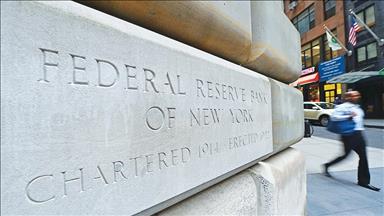
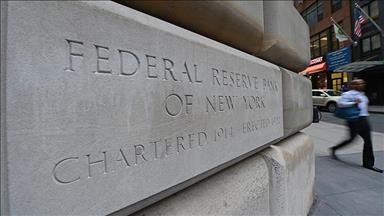
The U.S. Federal Reserve is due to meet Wednesday but few analysts expect it to raise interest rates.
“It is highly unlikely that the Fed will spring a surprise rate hike at next week's Federal Open Market Committee on Wednesday,” Paul Ashworth, an economist at Capital Economics in London, said in a note published on Oct. 22.
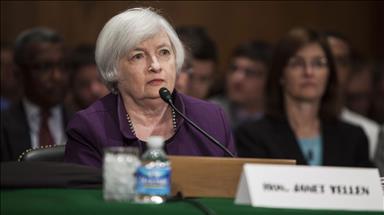
Although Federal Reserve Governor Janet Yellen announced in September that an interest rate rise should be expected this year, the U.S. economy has not yet performed at the level the Fed said would spur a hike.
“Inflation is still too low and the employment picture is still too cloudy,” Jan Hatzius, chief economist with Goldman Sachs, commented in a note published Monday.
In the minutes of the last meeting of the Federal Open Market Committee (FOMC) in September, 13 of the 17 committee members indicated they wanted rates to go up this year.
But dovish comments in the minutes suggested the economic conditions do not suit a hike.
“Real gross domestic product (GDP) was expanding at a moderate pace in the third quarter,” the committee said. “Labor market conditions continued to improve, but labor compensation gains were modest.
“Consumer price inflation remained below the committee’s long-run objective of 2 percent and was restrained by further declines in energy prices and non-energy import prices.”
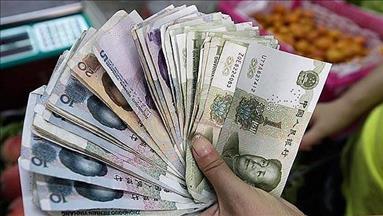
The committee was also concerned about international economic conditions, particularly in China, which it said “prompted an increase in financial market volatility and a deterioration in risk sentiment”.
It added: “Stock market indexes in most advanced and emerging market economies ended the period sharply lower.”
Economists said little had changed since those minutes were recorded. Growth is still low for the year, according to the U.S. Department of Commerce.
Inflation in the U.S. was at 0 percent on an annual basis in August, according to the department’s last report on Oct. 15. The Fed’s target for inflation is 2 percent.
Core inflation, excluding food and energy, is at 1.9 percent but much of that is attributed to the increased strength of the dollar.
The number of jobs added to the U.S. economy averaged 100,000 this year, according to the Department of Labor. The Fed was expecting double that figure as an indication of improving employment.
Most importantly, from the Fed’s point of view, wages rises have been flat. The Labor Department reported a 0.1 percent increase in real wages over the last three months.
Ashworth said the deterioration evident in recent economic data suggested the Fed will leave rates on hold for longer than previously expected.
“The Fed is now determined to hold interest rates until the inflation outlook improves significantly,” he said. The slowdown in growth and employment has made an improvement in inflation a key factor for the committee.
Hatzius predicted the Fed will hold rates until December when there is a 60 percent chance of a rate hike.
“The Fed has signaled that such a move is likely if the economy and markets evolve broadly as expected and our forecast is similar to theirs,” he said. “However, we are only about 60 percent confident. Most of the uncertainty relates to the possibility that the economic and market environment… will be worse than the FOMC’s (and our) expectations.”