The strongest El Nino events in modern history have shown how changes in Pacific Ocean temperatures can develop into a worldwide humanitarian and economic crisis.
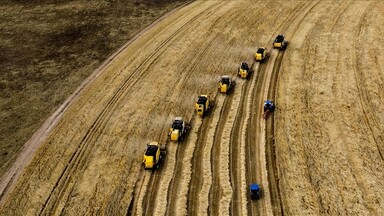
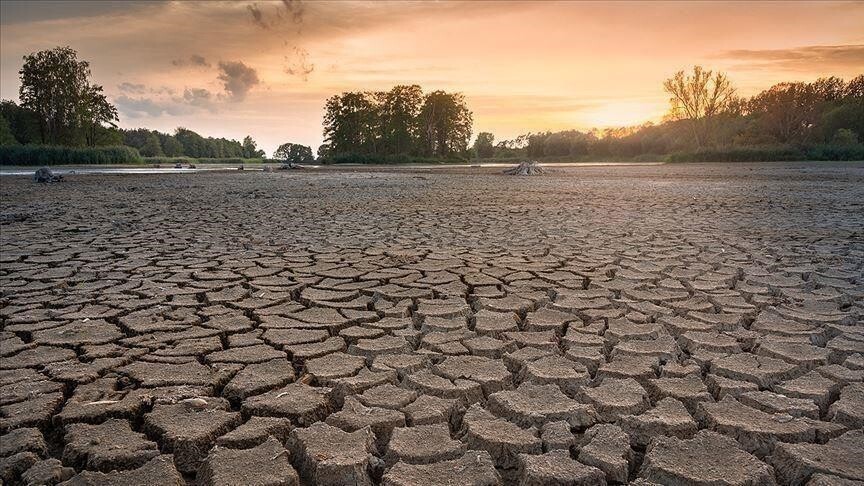
The 1982-83, 1997-98 and 2015-16 episodes brought destructive flooding to parts of the Americas and East Africa, while contributing to drought, wildfires and failed harvests across Australia, Southeast Asia and southern Africa.
Their consequences included tens of thousands of deaths, the displacement of millions of people and severe disruption to food production, public health, transport and national economies.
Those events are now attracting renewed attention as another potentially exceptional El Nino develops.
The US National Oceanic and Atmospheric Administration (NOAA) said on Aug. 13 that the 2026-27 El Nino is strengthening and has a greater than 90% chance of becoming very strong during the Northern Hemisphere autumn and winter.
NOAA also placed the probability that it will exceed the strength of every El Nino recorded since 1950 at 69% during the October-December period.
However, the agency stressed that the strength of an El Nino does not automatically determine the severity of its effects.
The 1982-83 El Nino was one of the strongest and most destructive climate events of the 20th century.
In Ecuador and northern Peru, as much as 100 inches of rain fell over six months. Flooding transformed normally dry coastal areas into lakes and grassland, while damaging roads, homes, crops and other infrastructure.
On the opposite side of the Pacific, shifts in rainfall contributed to severe drought and destructive forest fires in Indonesia and Australia, according to a NOAA historical assessment.
The World Health Organization has linked El Nino to the wider global food crisis, including the famines that affected the Horn of Africa and the Sahel during that period.
Close to 450,000 drought-related deaths were reported in Ethiopia and Sudan in 1983, according to the World Meteorological Organization.
That figure**, however,** represents the wider drought and famine emergency and cannot be attributed directly to El Nino.
Because disaster reporting was less comprehensive at the time, the exact impact of the event is difficult to gauge.
NOAA estimated direct global economic losses at more than $8 billion.
A later peer-reviewed study published in Science calculated a far larger economic impact, attributing $4.1 trillion in cumulative global income losses to the event over the following five years.
The figure does not represent destroyed buildings or crops. Instead, it reflects modeled losses from slower economic growth that persisted after the immediate disasters had ended.
The 1997-98 El Nino became a modern benchmark for a global climate emergency.
The UN attributed more than 20,000 deaths to the event, while NASA estimated about $36 billion in infrastructure damage.
Floods and landslides struck parts of Peru and Ecuador, while heavy rainfall caused emergencies across East Africa.
The UN Food and Agriculture Organization (FAO) estimated that about 10 million people in East Africa required emergency assistance.
In Somalia alone, flooding killed an estimated 2,000 people, displaced 250,000 and destroyed as much as 80% of crops in some of the worst-affected southern agricultural areas, it said.
The unusually wet conditions also contributed to one of East Africa's largest recorded outbreaks of Rift Valley fever.
The US Centers for Disease Control and Prevention estimated that as many as 89,000 people may have been infected in northeastern Kenya and southern Somalia.
In Indonesia, the opposite rainfall pattern produced severe drought. Fires deliberately started to clear forests and peatlands burned out of control, blanketing parts of Southeast Asia in toxic haze and damaging agriculture, transport and public health.
The environmental damage extended into the oceans. Around 16% of the world's coral reefs were effectively lost during a global bleaching event in 1998 as El Nino added to unusually warm marine conditions, according to the International Coral Initiative.
The economic effects continued long after the weather pattern faded.
The Science study estimated that the 1997-98 El Nino caused $5.7 trillion in cumulative global income losses over five years, with poorer tropical countries bearing a disproportionate share.
The 2015-16 El Nino was one of the strongest events ever recorded.
A World Food Program assessment estimated that it affected the food security of between 60 million and 100 million people.
The humanitarian effects were particularly severe in Africa. More than 40 million people in East and southern Africa were projected to be food insecure, according to a UN assessment.
In Ethiopia, repeated crop failures and livestock losses left 10.2 million people food insecure, according to UN figures.
Southern Africa experienced its worst drought in more than three decades, with widespread maize failures, water shortages, livestock deaths and sharp increases in food prices.
Indonesia again experienced extensive forest and peatland fires. Many of the fires were started by people clearing land, but severe El Nino-related drought allowed them to spread and burn for months.
Around 2.6 million hectares were burned. The resulting air pollution affected 43 million people**, and** more than 500,000 received treatment for respiratory illnesses.
The World Bank estimated that the fires cost Indonesia $16.1 billion, equivalent to 1.9% of its gross domestic product.
Official reports recorded several dozen immediate deaths, while later scientific modeling suggested that prolonged smoke exposure may have contributed to as many as 100,000 premature deaths across the wider region.
Flooding also affected South America. More than 150,000 people were displaced in Uruguay, Paraguay and Argentina in early 2016.
Unlike the 1982-83 and 1997-98 events, there is no single widely accepted estimate of total global economic losses from the 2015-16 El Nino.
Country-level figures, humanitarian costs and losses in agriculture, fisheries and health nevertheless amounted to tens of billions of dollars.
The history of the three strongest events shows that the greatest danger is not one isolated flood or drought. It is the possibility of simultaneous shocks across several continents.
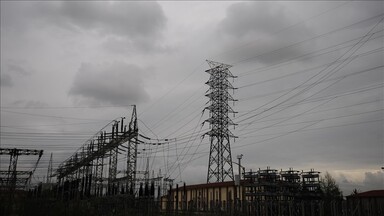
Failed harvests in major producing regions can raise food prices elsewhere. Drought can reduce hydropower production and river transport. Floods can destroy roads and health facilities, while standing water can create conditions for disease outbreaks. Wildfire smoke can cross national borders and disrupt schools, airports and businesses.
The events also demonstrate that extreme outcomes are not inevitable. Forecasting, early warnings, food reserves, drought-resistant seeds, livestock protection, disease surveillance and the preparation of flood defenses can substantially reduce casualties and economic losses.
The UN estimates that every $1 invested in anticipatory programs can save between $3 and $7 in avoided losses and emergency response costs.
The central lesson from 1982-83, 1997-98 and 2015-16 is therefore not that the same disasters will repeat in exactly the same places. It is that a powerful El Nino can expose and deepen existing vulnerabilities across the world, with consequences that continue for years after Pacific Ocean temperatures return to normal.
news_share_descriptionsubscription_contact