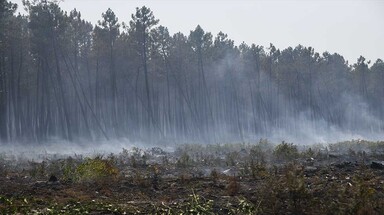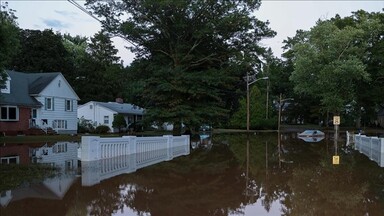
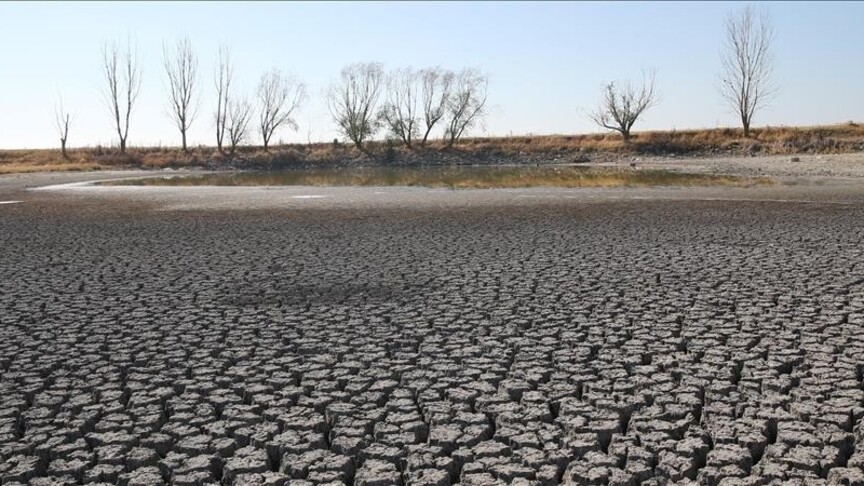
Before world leaders gather in Türkiye this November for COP31, the flagship UN climate summit, a lesser-known but increasingly important conference will begin Monday in a country most people associate with steppes, horses and the Gobi Desert.
The 17th Conference of the Parties to the UN Convention to Combat Desertification, or COP17, runs Aug. 17-28 in Ulaanbaatar, Mongolia's capital.
It is the first time a UNCCD COP has been held in East or Central Asia, and it comes to a country where nearly 77% of the land is already degraded.
The Convention to Combat Desertification is one of three "Rio Conventions" that emerged from the 1992 Earth Summit, alongside the climate change and biodiversity treaties. Adopted in 1994, it is the only legally binding international agreement that links environmental protection with land management and rural development, and it now counts 197 parties -- 196 countries plus the European Union.
Its conference of the parties has met roughly every two years since 1997, rotating among regions. COP17 will bring together delegations from nearly 200 countries, along with ministers, scientists, herders, farmers, Indigenous representatives and business leaders for two weeks of negotiations and side events under the theme "Restoring Land, Restoring Hope."
Unlike other climate COPs, which focus on greenhouse gas emissions, global warming and implementation of the Paris Agreement, the UNCCD framework focuses specifically on land degradation, desertification and drought.
This, however, does not mean it is separate from climate change. Drier conditions and rising temperatures can accelerate land degradation, while degraded land can worsen drought impacts, reduce food production and weaken ecosystems.
Desertification does not simply mean deserts expanding. Under the UNCCD definition, it is land degradation in arid, semi-arid and dry sub-humid areas caused by factors including climate variations and human activity. Overgrazing, deforestation, unsustainable farming, poor irrigation, soil erosion and prolonged drought can all contribute.
According to UNCCD, 1.3 billion people are directly exposed to land degradation, while 1.84 billion people endure persistent drought conditions.
It says up to 40% of the world’s land is degraded, undermining food production, water availability and livelihoods, adding that droughts have increased by nearly one-third since 2000.
The pressure is particularly significant for rural populations. Rangelands — grasslands, savannas, shrublands and other areas used extensively for grazing — cover more than half of the Earth's land surface, support about 2 billion people and provide nearly 70% of global livestock feed.
The consequences can extend well beyond the environment. Falling agricultural productivity can threaten food security and incomes, while water shortages and competition for natural resources can contribute to displacement and instability. Migration linked to desertification, land degradation and drought is therefore also on the COP17 agenda.
UNCCD warned that if current trends continue, almost 16 million square kilometers of land — an area roughly the size of South America — could be on a trajectory toward degradation by 2050.
Africa, particularly the Sahel, is among the hardest-hit areas, with millions at risk of displacement as arable land shrinks. African governments have organized as a bloc — the African Group of Negotiators — and have consistently pushed the hardest at recent COPs for binding international commitments and dedicated drought financing, arguing their countries carry the least responsibility for the crisis but suffer disproportionately.
Saudi Arabia, which hosted COP16 in Riyadh in December 2024, has positioned itself as a leading voice on drought and dust storm early warning systems and has backed elements of the African position, even as it drew separate criticism at climate talks over its stance on fossil fuels.
China, one of the countries with the longest experience combating desertification through large-scale afforestation programs such as its "Great Green Wall" shelterbelt project, is regularly cited by the UNCCD as a source of technical expertise for other affected nations.
Mongolia, this year's host, has about 90% of its territory in arid, semi-arid, dry or sub-humid climatic zones vulnerable to desertification. Its vast grasslands are also central to the country's economy and way of life. The country has made land restoration a national priority, committing in 2024 to spend at least 1% of its GDP annually on fighting climate change and desertification. It has also promoted domestic initiatives such as its “Billion Trees” campaign and programs aimed at food security and sustainable land use.
In the previous summit held in Riyadh, negotiators launched the Riyadh Action Agenda to restore 1.5 billion hectares of land by 2030, established a $12.15 billion drought resilience alliance, and officially created caucuses to incorporate Indigenous Peoples and local communities into formal decision-making.
But the summit's most closely watched item — a proposed global framework, or possibly a legally binding protocol, for managing drought — ended without agreement.
The idea, championed mainly by the African bloc and small island states and backed by Saudi Arabia, was opposed by the US, the European Union, Australia and several Latin American countries over concerns about the cost.
The disagreement prevented an agreement at COP16, and the issue will return to the negotiating table at COP17.
Beyond drought, the Ulaanbaatar program is organized around finance, water, land, people and food systems.
UNCCD estimates that at least $2.6 trillion in investment is needed by 2030 to restore more than 1 billion hectares of degraded land and build drought resilience. COP17 will test whether previous pledges can translate into actual projects and financing.
Finally, coinciding with the UN International Year of Rangelands and Pastoralists, COP17 is expected to focus heavily on nomadic herding, livestock management, and dryland soil health. A ministerial dialogue on restoring rangelands and improving the well-being of pastoralist communities is scheduled for Aug. 26.
news_share_descriptionsubscription_contact