Humeyra Ayaz
15 May 2026•Update: 15 May 2026
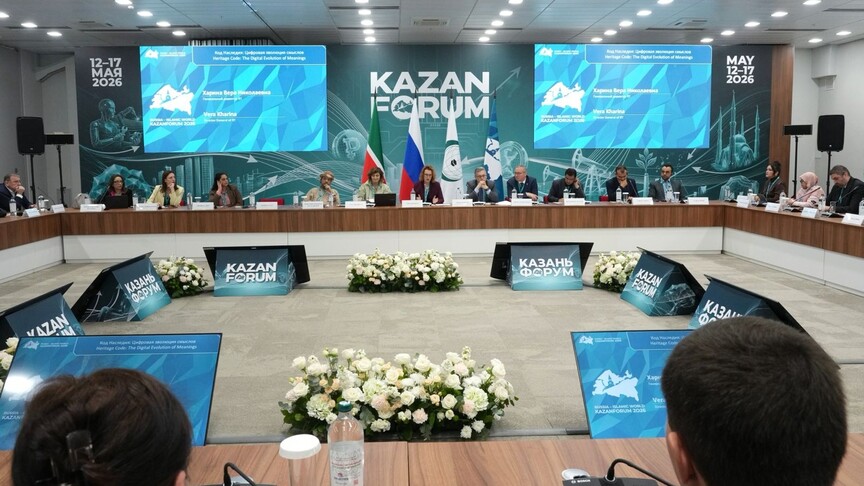
The International Economic Forum Russia-Islamic World: Kazan Forum held a session titled “Heritage Code: The Digital Evolution of Meanings” to discuss current issues in the media sector.
The session focused on efforts to develop cooperation between Russia and Muslim-majority countries, bringing together media executives, including representatives from member states of the Organization of Islamic Cooperation (OIC), to discuss opportunities for global cooperation, production of high-demand content and new media formats.
Participants said the growing cooperation serves as a “media bridge,” adding that long-standing ties have reached a more strategic level amid increasing opportunities for dialogue and joint production.
The event, held in the capital of Russia’s Republic of Tatarstan, was organized by the Russia-Islamic World Vision Group in collaboration with Tatarstan’s Tatmedia Republican Agency for Press and Mass Communications, with support from the Union of News Agencies of the OIC. Anadolu served as the event’s global communications partner.
The session also addressed the impact of artificial intelligence on media, examining how the technology could shape content production and transform the sector while discussing precautions against potential risks and ethical concerns.
Speakers included media professionals from Türkiye, Tatarstan, Qatar, Oman, Tunisia, Egypt, Algeria, Malaysia, Kazakhstan, Kyrgyzstan, Uzbekistan, Indonesia, Saudi Arabia, and Russia.
Marat Gatin, an adviser to the Tatar president, said the session was dedicated to examining how modern technological advances can be used to preserve cultural and spiritual heritage.
Gatin said that given AI’s growing role in media, organizers expect concrete proposals for cooperation in the field.
Erman Yuksel, Anadolu’s director of global news and marketing, said the agency established a new technology firm to support AI integration aimed at increasing the speed and efficiency of production.
He said AI-powered tools are already being used in content creation, translation, workflow optimization and multilingual publishing, adding that the transformation is expected to create a stronger and more sustainable business model for media organizations over the long term.
*Writing by Emir Yildirim in Istanbul