Burc Eruygur
08 July 2026•Update: 08 July 2026
The Kremlin said on Wednesday that the possible deployment of nuclear weapons in the Baltics will not enhance security in the region.
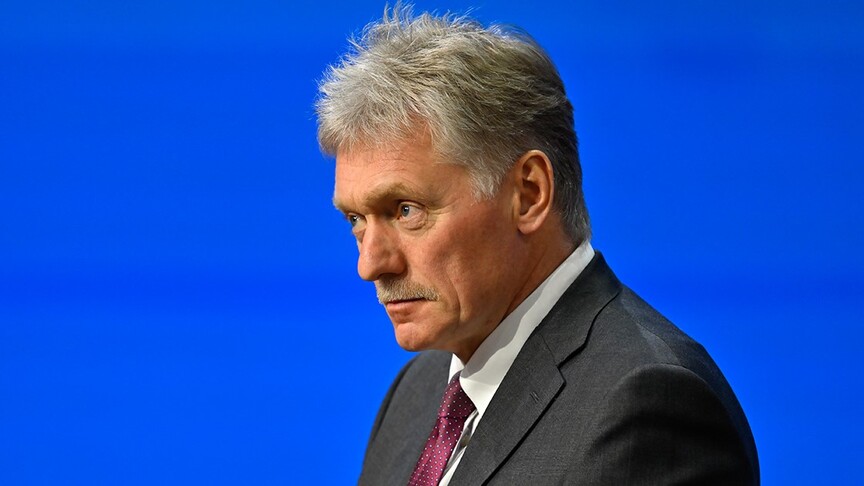
“Contrary to the expectations of these countries that make this decision, this will not add to their security,” Kremlin spokesman Dmitry Peskov told journalists at a press briefing in Moscow.
Peskov’s remarks came as a group of 50 Lithuanian lawmakers submitted a constitutional amendment on Friday to remove a provision banning the deployment of nuclear weapons in the country.
Supporters of the amendment argue that Lithuania's security situation has changed significantly since the provision was adopted.
Lithuanian President Gitanas Nauseda said Lithuania is now virtually the only NATO member with a constitutional ban on the deployment of nuclear weapons on its territory.
“On the contrary, it will significantly increase the level of danger for them, because countermeasures will be taken against such countries so that we can ensure our interests,” Peskov said, commenting on the move.
He argued that Baltic countries are simply “trying to catch up” with Finland, which he said previously made a similar decision.
Last month, Finland’s parliament also voted to remove a decades-old ban on nuclear weapons.
“This historic reform strengthens the security of Finland and NATO as a whole,” Finnish Defense Minister Antti Hakkanen wrote on US social media company following the vote.
'Important step'
Peskov also commented on the International Olympic Committee's (IOC) decision to provisionally lift the suspension of the Russian Olympic Committee (ROC), describing the move as an "important step toward restoring our athletes' legal rights to participate in international competitions."
"But the work will continue through our sports agencies – they are doing it constantly and consistently – and this work will continue," Peskov said.
He described the restoration of Russia's legal rights to take part in international competitions as a "major achievement."
"It is now very important that all our athletes have the opportunity to compete at major international events," he added.
On Tuesday, the IOC decided to provisionally lift the ROC's ban, saying in a corresponding statement that the IOC Executive Board took the decision after determining that "the ROC no longer includes as its members any regional sports organizations in territories falling under the jurisdiction of the National Olympic Committee (NOC) of Ukraine."
"In addition, the ROC confirmed that it does not, and will not, conduct any activities in these territories," it explained, giving the reasoning behind the decision.
The committee said the ROC must nevertheless ensure athletes selected for the Olympics "respect, uphold and promote a peaceful society through sport" in accordance with the Olympic Charter.
The IOC added that all Russian athletes returning to international competition must comply with strengthened anti-doping requirements while concerns over the governance of the Russian Anti-Doping Agency remain unresolved.
Commenting on the move, Ukraine's National Olympic Committee described the decision as "premature, unjustified, and adopted without due regard to the objective circumstances, which remain unchanged," referring to the ongoing Russia-Ukraine war.
"We also call upon international sports federations to act responsibly and uphold the principles of the Olympic Movement when making decisions regarding the participation of Russian athletes and teams in international competitions," it said.