Elena Teslova
01 May 2026•Update: 01 May 2026
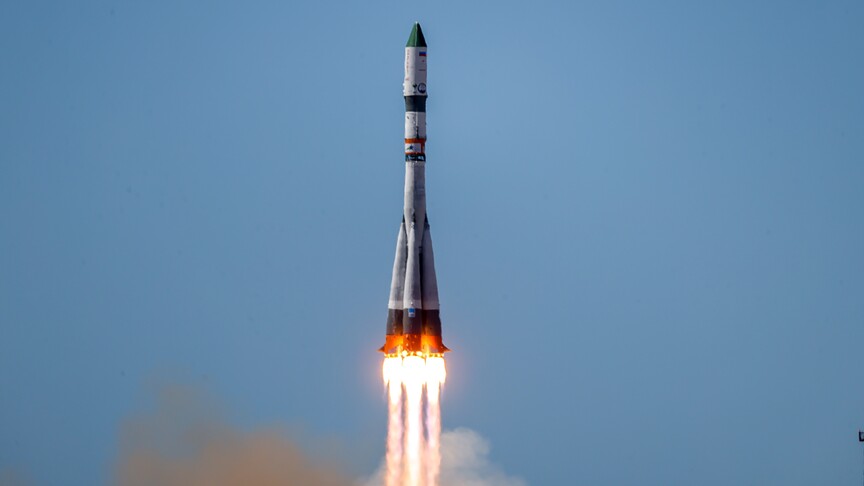
Russia and Kazakhstan on Thursday announced the successful launch of the Soyuz-5 rocket, developed as part of the joint Baiterek project.
Russian state corporation Roscosmos said in a statement that the Soyuz-5 medium-class launch vehicle was launched from the Baikonur Cosmodrome at 9.00 pm Moscow time (1800GMT).
"Today, a special launch took place – this is the first launch of the new Russian Soyuz-5 rocket with the most powerful liquid-propellant rocket engine in the world," the Roscosmos press service said in a statement.
The operation of the rocket will significantly reduce the specific cost of the payload being launched. This will have a positive effect on the economics of spacecraft launches, it added.
The Soyuz's delivery of its payload to a suborbital trajectory took 9.5 minutes, Roscosmos noted.
In a separate statement, the Ministry of Artificial Intelligence and Digital Development of Kazakhstan stated that the successful first launch of the Soyuz-5 launch vehicle under the joint Kazakhstan-Russia Baiterek project is "a new era for Kazakh cosmonautics, as well as for eco-friendly launches."
"The Baiterek complex is a successful start of a new era for Kazakh cosmonautics. Today, a historic event took place at the Baikonur Cosmodrome—from Site 45, the first test launch of the advanced Soyuz-5/Sunkar medium-class launch vehicle was carried out," it said in a statement.
During flight development tests, the first and second stages of the rocket operated normally, and the mass-dimensional mock-up was successfully placed on its designed trajectory, the ministry reported.
The ministry added that "the successful launch of the Baiterek rocket complex opens up new opportunities in space exploration."
"The technical characteristics of the Soyuz-5/Sunkar launch vehicle, developed at the Progress Rocket Space Centre, allow for the delivery of up to 17 tons of payload to low-Earth orbit," it noted.
The Baiterek complex and the Soyuz-5/Sunkar rocket embody the future of eco-friendly cosmonautics using non-toxic fuel such as kerosene and liquid oxygen, opening new prospects for the development of science and strengthening the country's industrial potential, the ministry said.