- ‘They keep talking about how bad it is, but then they keep cutting our resources, cutting our funds,’ university student Vivi tells Anadolu
- More than 13,000 march in Copenhagen, nearly 50,000 walk out of class at 61 high schools nationwide, organizers say
For more than half a century, Denmark has paid students a monthly grant to help cover their living costs.
Now Prime Minister Mette Frederiksen’s center-left coalition wants to cut that support for thousands of students living with their parents to help pay for other priorities, including higher defense spending to meet Denmark’s NATO commitments.
The proposed cuts would affect roughly 22,000 students, according to Ministry of Higher Education estimates. About 14,000 would lose their grants entirely and another 8,000 would receive less.
For students like Vivi, 18, the cuts are hard to reconcile with years of hearing politicians acknowledge the toll the pandemic took on young people.
“And then they keep talking about how bad it is, but then they keep cutting our resources, cutting our funds,” Vivi told Anadolu. “It feels like a really big break of trust, and for a lot of us, it's just – it's been too much.”
What the proposal would change
The student allowance, known by its Danish initials SU, has been part of Denmark’s welfare system since 1970.
Eligible students living with their parents receive a basic monthly grant of 1,154 Danish kroner ($172) before tax. Depending on parental income, the payment can reach 3,202 kroner ($478).
University students living independently receive 7,426 kroner ($1,108) a month before tax.
The government’s plan would eliminate the allowance for students living with parents earning over 700,000 kroner ($105,248) annually, maintain it for those under 419,589 kroner ($63,087), and progressively taper it for the income bracket in between.
Two parents earning around 30,000 kroner ($4,477) a month each could therefore earn enough for their child to lose the grant entirely.
Average monthly earnings for a full-time employee in Denmark were 53,916 kroner ($8,045) before tax in 2025, including pension contributions, according to Statistics Denmark.
Christian Mundus, a university student who said he was the first in nine generations of his family to pursue higher education, described the grant as a financial safety net. He said the prospect of losing it added to the uncertainty young people already feel about their future.
“How in the future will I, as a student, be able to contribute to society and like have a successful career?” he told Anadolu. “This is a clear mismatch that they are not investing in the future of young people.”
The government also wants to tie unemployment benefits for new graduates to whether they held a paid job during their studies.
Student representatives say the requirement could come at the expense of time spent studying, with the Danish union DM warning that students with disabilities would face particular difficulty meeting it.
The price of defense
The government argues that the Russia-Ukraine war and the threat it poses to Denmark’s security require a substantial increase in defense spending. Its proposed budget would raise spending on defense and preparedness to at least 5% of gross domestic product by 2030, including 3.5% for defense itself.
“This will cost a lot of money. We are prepared to make it a priority,” the government said in its budget proposal. “The cost of failing to act could be much higher.”
The government also wants to encourage investment and make Danish companies more competitive. Its budget proposes cutting the corporate tax rate by three percentage points from 2030.
For Vivi, those choices raise a question about who is being asked to pay.
“I think the defense excuse is a bad excuse because of course, we need to fund more money for this, but there are so many other places you can take the money from,” Vivi said.
“But the problem is that then you're taking money from the people with the money, with the power. I get the reasoning that we want to invest more in war, but why do we have to take from the youth instead of taking from the rich or taking from the company owners or the property owners?”
Students take to the streets
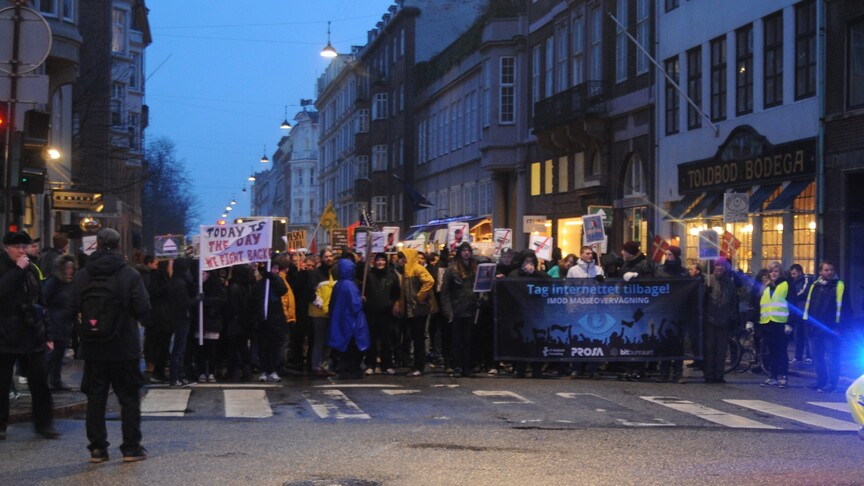
On Nov. 4, thousands of students marched from City Hall Square in Copenhagen to the Danish parliament under the banner “Enough is Enough.”
Protesters chanted “Broken promises” and held up signs reading “Save SU.”
For Julie Olesen, chair of the Student Council in Aarhus, the disappointment also comes from hearing parties that students counted on to protect the allowance propose cutting it.
“We think it's disappointing because a lot of the parties in the government right now have said that they wanted to defend our student allowances, so the fact that they don't do that now, it kind of feels like they've broken their promises for us, which we're very angry about,” she told Anadolu.
More than 13,000 people joined the Copenhagen march, while nearly 50,000 students walked out of class at 61 high schools nationwide, according to figures student organizations released the following day.
In an open letter, the groups asked four ministers to meet them before budget negotiations conclude.
“We're demanding that the government stops these proposals, that they don't go further with it,” student organizer Anton Stubbe Teglbjerg told Anadolu. “Right now they are in negotiations with other parties, and we want the government to drop these proposals from these deals that they are going to make with other parties.”
Organizers also want students to know where each party stands before the next election.
“We are organizing the students, and we want to share which parties are supporting these bad ideas and which parties are opposing it,” Teglbjerg said.
Teglbjerg said students make up a large part of the government’s voter base and warned that it could lose their support.
“They are risking to lose their power if they don't listen to young people, and if they don't stop the way of only giving tax cuts to older people and forcing austerity on younger people.”