Seyma Erkul Dayanc and Ilayda Cakirtekin
17 April 2026•Update: 17 April 2026
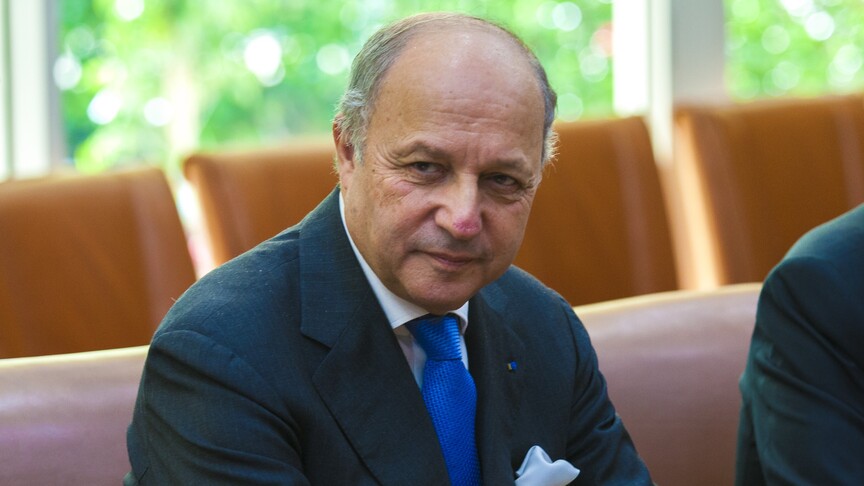
Former French Prime Minister Laurent Fabius on Friday said that the COP31 should focus on implementing climate goals that still persistently remain "theoretical," stressing that he expects a lot from the upcoming conference.
"The Antalya COP, which will take place in November, must set itself the objective of implementing the targets that have already been set but often remain somewhat theoretical," Fabius told Anadolu on the sidelines of Antalya Diplomacy Forum 2026.
He noted that the implementation of the climate goals should include a commitment to moving towards zero waste, using less coal and ensuring more climate-friendly agriculture and land use.
"Implementation also means mobilizing sufficient financial resources, which is not yet the case. So I am expecting a lot from this Turkish COP to implement the objectives set 10 years ago," Fabius noted.
He recalled that the COP21 he had chaired laid the foundations for what needed to be done, underlining that it was there that the 2°C (3.6°F), or even 1.5°C (2.7°F), target was set and that a gradual reduction in the use of polluting fossil fuels was agreed upon.
"So I am being very precise. Before the Paris COP, we expected that long-term global warming would be between +4 and +5°C, which would be an absolute catastrophe. Today, we consider that long-term warming will be around 2.5°C. That is much better," Fabius said.
Stressing that the expected long-term warming is still far too high compared to the target of 1.5°C (2.7°F) or 2°C (3.6°F), he reiterated the need to continue efforts and stay the course regarding climate goals while focusing on implementation.
"I know that Türkiye attaches great importance to this, and rightly so. Concretely, this means first reducing the amount of waste—for example, less plastic, less throwing things away," Fabius added.
He further stressed the need to better process the waste that exists, and in particular, methane.
"So I am expecting a lot from Türkiye’s action. And of course, this should not only be in Türkiye; it must be carried forward internationally," Fabius added.
He also pointed out that there are still many countries resisting such efforts. "So we need to use international influence—this is called diplomacy—to move in that direction. Not only governments, but also companies and individuals as well."