Melike Pala
30 April 2026•Update: 30 April 2026
The European Union reaffirmed its support for Lebanon's sovereignty and stability during a plenary session at the European Parliament on Wednesday, while several lawmakers sharply criticized the bloc for what they described as inaction in the ongoing conflict.
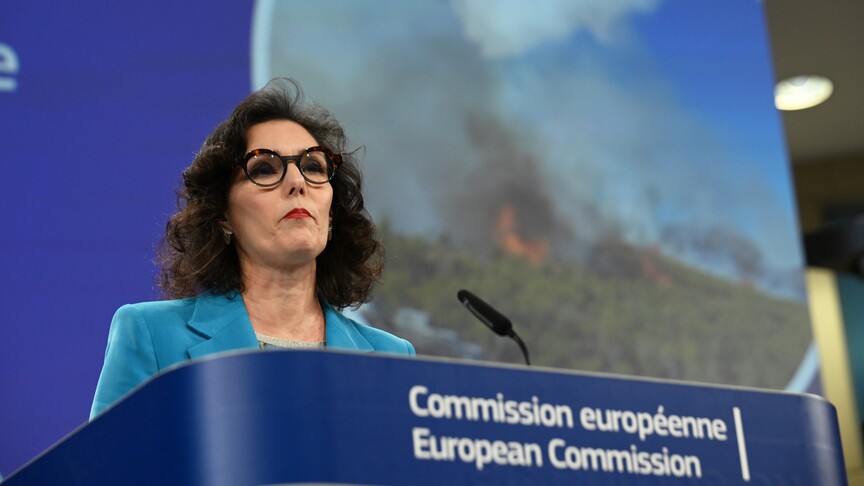
Speaking before Members of the European Parliament, European Commissioner Hadja Lahbib stressed that the escalation of hostilities in Lebanon and its impact on civilians remain "a source of grave concern," while calling for full respect for the ceasefire by all parties.
"The ceasefire must be respected by all parties. The recent violations put civilian lives at risk. They also undermine dialogue, de-escalation and diplomacy, the only path for world peace in the region," Lahbib said, adding that the EU remains committed to supporting Lebanon's sovereignty and territorial integrity.
She highlighted EU efforts to address humanitarian needs and economic fallout, including support for the Lebanese Armed Forces and post-conflict recovery planning.
"The Lebanese people deserve stability, security and a functioning state. The EU stands ready to accompany Lebanon on this path, but the time to act is now," she added.
However, several lawmakers voiced strong criticism of the EU's stance, accusing it of failing to take meaningful action.
Renew Group lawmaker Christophe Grudler warned that Lebanon is "slowly being removed from the map," citing civilian casualties and repeated ceasefire violations by Israel.
Left Group MEP Hana Jalloul pointed to what she called "double standards," comparing the EU's response to Lebanon and Gaza with its position on the Russian invasion of Ukraine.
"We want sanctions," she stressed.
Another Left Group lawmaker Rima Hassan urged the EU to suspend its association agreement with Israel and halt arms exports, arguing that "organized impunity" is fueling continued violence.
"We must break this impunity and suspend the association agreement with Israel. Stop arms exports and sanction the war crimes," she said.
"I think there's one thing that we can all agree on: There's been too much bloodshed in the Middle East, in Lebanon and also in Gaza," Lahbib said in her closing speech.
Rejecting criticisms that the EU had failed to act, she emphasized that responsibility lies not only with the European Commission but also with member states.
Lahbib noted that the commission had proposed measures including a partial suspension of the EU-Israel Association Agreement and participation in the Horizon program, but these initiatives were not approved by the EU Council.
"So please convince them, speak to your capitals and get them to change their minds, if you wish. But don't accuse the European Commission of doing nothing," she added.