Melike Pala
01 September 2026•Update: 01 September 2026
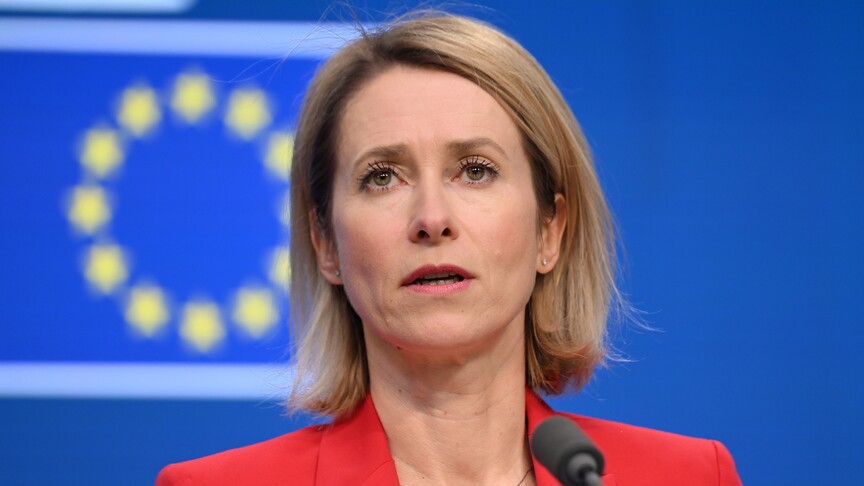
EU foreign policy chief Kaja Kallas said Tuesday that the bloc is planning a new mission to advise and train Lebanon's armed forces, stressing that the initiative is not intended to replace the UN peacekeeping force in the country.
Speaking at a press conference following an informal meeting of EU defense ministers in Wicklow, Ireland, Kallas said the planned mission would focus on strengthening the capacity of the Lebanese armed forces and state institutions to provide security across the country.
"The EU is not seeking to replace UNIFIL. We are investing in Lebanon's capacity to provide security for itself," Kallas said.
She said the mission could include training and support in areas such as border and maritime security, as well as strengthening Lebanon’s internal security capabilities.
Kallas said planning for the mission was progressing well and that the EU aims to secure an EU Council decision to launch it in October.
She said the EU is working closely with the Lebanese government to determine its needs and coordinate contributions from member states.
"There were more than 10 countries, when I counted, who are willing to contribute resources and people as well," she said.
The ministers also discussed developments in the Middle East and maritime security, Kallas said.
She described the flare-up in hostilities between the US and Iran as evidence of how fragile the regional situation remains, adding that diplomatic efforts to end the conflict had yet to produce a tangible breakthrough.
Kallas said EU defense ministers agreed on the need to increase support for Ukraine while investing in Europe's own defense capabilities.
She called on EU member states to review their military stocks and provide Ukraine with urgently needed air defense capabilities, particularly Patriot interceptors nearing their expiration dates.
Kallas also announced that she will launch a new high-level defense group next week, bringing together senior political and military leaders from several EU countries, as well as the UK and Ukraine.
"We have not been fast enough to cover the gaps in Europe's conventional power within NATO that we have identified," she said.
The group will seek to develop practical and innovative proposals for addressing those capability gaps as quickly and effectively as possible.
She said the group would look beyond institutional boundaries and focus on how Europe can deliver concrete results faster.