Melike Pala
27 October 2026•Update: 27 October 2026
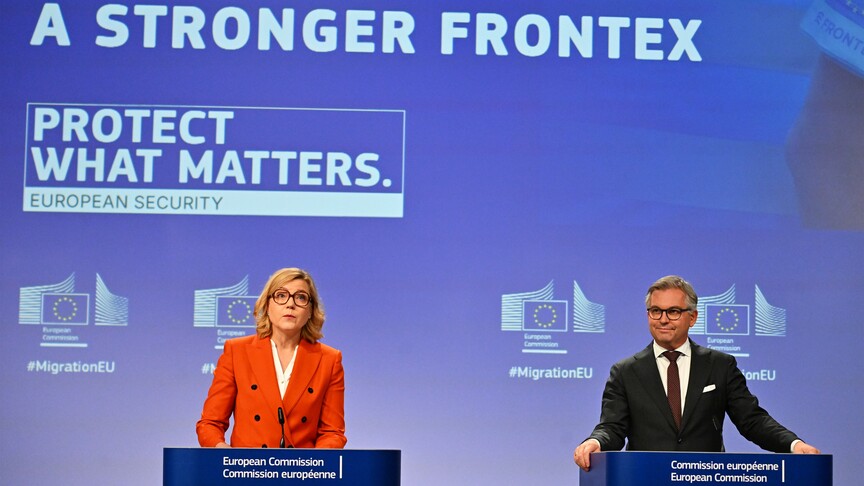
The European Commission proposed Tuesday expanding the mandate of the EU border agency Frontex to enable it to support third countries in returning migrants from their territories to other countries, as part of efforts to strengthen the bloc’s migration management policy.
Under the proposal, Frontex would be able to provide technical and operational assistance to third countries and help organize and carry out return operations from one non-EU country to another.
The new mandate would be subject to an agreement with the third country concerned and would have to comply with fundamental rights and international standards, according to the commission.
“Of course, the main objective for Frontex will still be to increase returns from member states, but we also introduce the ability for Frontex to support third countries on returns,” European Commissioner for Internal Affairs and Migration Magnus Brunner said while presenting the proposals in Brussels.
“This will only be possible if there is an international agreement and where this is in the interest of the EU,” he added.
The commission said the proposed changes would give Frontex a more proactive role in coordinating returns, covering the entire process from strategic planning and identification to return operations and reintegration assistance.
The proposal also envisages establishing a dedicated “Return Coordination Centre” within Frontex to collect and analyze operational information and improve coordination among EU member states.
The commission also proposed gradually increasing Frontex’s standing corps to 30,000 officers through the creation of a new European Border and Return Reserve comprising 17,000 officers who could be deployed to support member states when needed.
The proposal includes the creation of a Quick Reaction Force, which could be rapidly deployed to the EU’s external borders to help member states respond to emergencies and sudden surges in migration.
Alongside the Frontex reform, the commission proposed a separate regulation to digitize return, readmission and reintegration procedures across the EU.
The proposals will now be submitted to the European Parliament and the European Council for consideration.