How neutral does a country have to be to call itself neutral?
For Switzerland, a country whose neutrality has survived European wars, two world wars and the Cold War, the question has gained new urgency as Russia's war against Ukraine reshapes Europe's security landscape.
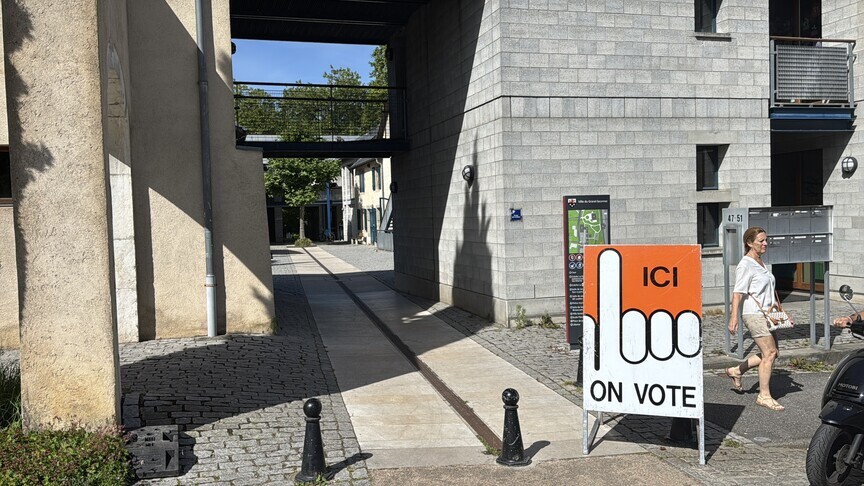
On Sept. 27, Swiss voters will decide whether the country's long-standing neutrality should be governed by stricter constitutional rules – potentially limiting its ability to impose sanctions and cooperate with military alliances.
The popular initiative, officially titled "Safeguard Swiss neutrality," would enshrine "perpetual and armed" neutrality in the Constitution and restrict Switzerland from joining or cooperating with military or defense alliances unless it came under attack or faced an imminent threat.
It would also generally prevent Switzerland from imposing sanctions against states involved in wars unless the measures were mandated by the UN, although measures to prevent other countries' sanctions from being circumvented through Switzerland would remain possible.
Lastly, the initiative says Switzerland should use its neutrality to its advantage in its role as a mediator.
The Federal Council and parliament oppose the initiative, arguing that Switzerland is already permanently neutral and that a more restrictive interpretation in the Constitution would reduce the flexibility that has allowed the policy to adapt to changing international circumstances.
The current form of neutrality "safeguards Switzerland’s freedom, security and independence," Foreign Minister Ignazio Cassis said in early August, shortly after the referendum campaign was launched.
“It is precisely the ability to respond appropriately to new challenges that has made our neutrality strong,” he added. “It has proved its worth, not because it was rigid, but because it was applied wisely and responsibly.”
Supporters, however, see that flexibility as precisely the problem. They argue that neutrality should not be interpreted differently depending on political circumstances or external pressure.
Switzerland's answer has changed considerably over time.
Its neutrality is traced back to the Confederates' defeat at the Battle of Marignano in 1515 and the Treaty of Westphalia of 1648, which ended the Thirty Years' War.
But modern Swiss neutrality developed gradually rather than emerging from a single event.
The decisive international recognition of Swiss permanent neutrality came in 1815, following the Napoleonic Wars, when Europe's major powers recognized and guaranteed it as part of the postwar settlement.
Neutrality subsequently became part of the constitutional framework of the modern Swiss federal state established in 1848, while the Hague Conventions of 1907 codified international legal obligations of neutral states during armed conflicts.
Neutrality became more than staying off the battlefield. It helped protect a small country surrounded by larger powers while allowing Switzerland to carve out a role as an intermediary, representing states that had severed diplomatic relations, facilitating contacts and hosting negotiations.
Together with its humanitarian tradition, it also contributed to Geneva's emergence as a center of international diplomacy.
The historical record is more complicated than the image of an unchanging neutral Switzerland might suggest.
When Switzerland joined the League of Nations in 1920, it practiced what became known as "differential neutrality." It was exempt from military sanctions but could participate in economic measures imposed by the organization.
That meant Switzerland participated in League sanctions against Italy following its invasion of Ethiopia in 1935.
Only three years later, as Europe moved toward another major war, Switzerland returned to "integral neutrality," distancing itself from economic sanctions as well.
Switzerland remained militarily neutral during World War II and avoided invasion, but its economic relations with Nazi Germany and Italy later came under scrutiny.
The Independent Commission of Experts Switzerland acknowledged that the country did not always strictly fulfill its duties under neutrality law.
"All the clearing credits were used by the German and Italian armies to buy Swiss machines, agricultural products and, above all, war materials, so that the loans granted by the Swiss government contravened the law of neutrality," the commission said.
Switzerland stayed outside military alliances during the Cold War but was politically and economically oriented toward the West. In 1951, under US pressure, it agreed to restrictions on exports of strategic goods to the Soviet bloc.
Following the Cold War, a 1993 Federal Council report concluded that neutrality was not a rigid concept and should be adapted to changing international circumstances, while remaining consistent and predictable.
The distinction between the relatively narrow law of neutrality and the broader, politically determined policy of neutrality remains central to today's dispute.
The 2022 Ukraine war turned what had often been an abstract debate into an immediate political controversy.
Switzerland largely adopted EU sanctions against Russia, including restrictions targeting individuals, companies, financial transactions and trade.
Bern maintained that adopting the sanctions was compatible with Switzerland's neutrality policy, arguing that its existing approach provided enough room for maneuver to respond to the consequences of the war in Ukraine.
Yet the war also exposed the limits of that flexibility.
While Switzerland adopted EU sanctions against Russia, it rejected requests from European countries to re-export Swiss-made war materiel to Ukraine, citing both neutrality law and its War Materiel Act.
The Sept. 27 initiative would significantly narrow the room future Swiss governments have to navigate such crises.
Supporters say clearer constitutional boundaries would prevent Switzerland from gradually aligning itself with geopolitical blocs, while opponents warn that greater predictability would come at the price of flexibility.
The question is particularly consequential when it comes to sanctions.
Under the initiative, Switzerland could continue implementing sanctions mandated by the UN Security Council. But geopolitical rivalry among its five permanent members – China, France, Russia, the UK and the US – can prevent the Council from agreeing on measures during major international crises.
That could leave Switzerland unable to join sanctions imposed outside the UN framework, including those adopted by the EU, even following serious violations of international law.
Switzerland is not a member of NATO but participates in its Partnership for Peace program and cooperates with other states on training and security.
The Federal Council argues that “the rigid practice of neutrality that the initiative seeks to enshrine in the Constitution would weaken Switzerland’s defense capabilities.”
Initial polling suggested the initiative faced an uphill battle.
A mid-August Tamedia and 20 Minuten survey found 62% of respondents opposed, while 36% supported it. A separate SRG survey conducted in late August, showed a narrower margin, with 54% against and 42% in favor.
The latest polling suggests opposition to the initiative has strengthened as the vote approaches.
Another SRG survey, published Sept. 16, found 63% opposed and 34% in favor. The poll also found that 83% of respondents intending to participate had a firm voting intention, indicating that views have increasingly solidified ahead of the vote.
As a constitutional amendment, the initiative must secure both a nationwide majority of voters and a majority of Switzerland's cantons.
Opposition to the initiative should not be confused with rejection of neutrality itself. Instead, the referendum confronts voters with competing ideas of how the deeply rooted principle should operate in a world where sanctions, military partnerships and geopolitical alignments increasingly complicate the traditional distinction between participating in a conflict and remaining outside it.
For centuries, Switzerland has repeatedly adjusted how neutrality is interpreted. On Sept. 27, voters will decide whether that ability to adapt is a strength worth preserving – or whether, in today's more divided world, being neutral requires drawing firmer lines.
news_share_descriptionsubscription_contact

contact_the_ombudsman
is_there_an_error_in_this_story